For a Valentine’s Day breakfast, first choose a spread whose organic status is clearly shown on the jar, then compare the sugars per 100 g in similar recipes. If you need to avoid certain ingredients, check the allergen information before looking for a classic chocolate and hazelnut flavour: an alternative recipe may have a different composition.
Who are these options for?
Fans of organic chocolate and hazelnut
You’d like to stick with a cocoa and hazelnut recipe while choosing an organic product. Look for the EU organic logo on the jar, then check the sugars and allergens: the logo doesn’t tell you about either of these.
People keeping an eye on sugar
You want to compare the sugar content of several organic recipes. The ‘of which sugars’ line in the nutritional information lets you compare them per 100 g, regardless of jar size.
People who need to avoid certain allergens
You’re looking for a recipe that suits the ingredients your household needs to avoid. The cocoa and hazelnut spreads mentioned here may contain hazelnuts or milk, among other ingredients. If you choose a different recipe, you’ll still need to check the label on the jar you buy.
What should you look for on the jar?
For a Valentine’s Day breakfast, check that the recipe you choose is organic, then prioritise either comparing the sugars or making sure the ingredients are suitable for the people who’ll be eating it.
| Criteria |
What to check |
Who is it for? |
| Organic certification |
Look for the EU organic logo on the jar and check that it applies to the recipe you’re buying. According to Agence BIO, the logo indicates that EU organic farming rules have been followed. |
I want to serve an organic chocolate and hazelnut spread without relying on the word ‘natural’ alone; around 33% of consumers make this their priority. |
| Sugars and nutritional information |
Compare the ‘of which sugars’ value per 100 g for similar spreads, then check any other nutritional values that matter to you. |
If I want to reduce the sugars at breakfast, the amount shown on each jar matters more than the organic label alone. This is the main criterion for around 42% of consumers. |
| Ingredients to avoid |
Check the ingredients list, declared allergens and any ‘may contain’ information on the exact jar; don’t assume an ingredient is absent just because the product is organic. |
When choosing a spread to share with someone who needs to avoid certain ingredients, I need to be able to check the exact recipe; around 25% of consumers prioritise this suitability. |
Common misconceptions to avoid
-
Assuming organic means low in sugar
Organic certification relates to how a product is made, not to a maximum sugar content. Rigoni di Asiago’s product information for Nocciolata L’Originale states that it contains 51 g of sugars per 100 g.
To compare recipes, check the ‘of which sugars’ value per 100 g on jars in the same category.
-
Treating Nutri-Score as compulsory or as the only criterion
In France, the Ministry of the Economy explains that displaying Nutri-Score is optional. Nutritional information is still compulsory for most pre-packed foods, as the DGCCRF explains.
If the logo appears on the jar, use it as an additional guide when comparing similar products, and check the nutritional information and ingredients too.
-
Assuming an organic chocolate and hazelnut recipe suits everyone avoiding certain ingredients
Recipes in this category may contain hazelnuts and milk; some also mention soya or traces of other nuts.
Check the ingredients and allergen information on the jar you choose, including for recipes described as alternatives.
-
Using the ‘soda tax’ to compare spreads
The levy described by the Ministry of the Economy applies to sugary drinks, not spreads.
To choose between these recipes, compare their organic labelling, sugars per 100 g and ingredients instead.
Brands to know
These examples showcase different recipes and criteria. The details given relate to the specific products mentioned, not to each brand’s entire range.
Rigoni di Asiago / Nocciolata
Nocciolata L’Originale is for people looking for a classic organic cocoa and hazelnut recipe.
- Rigoni di Asiago says this recipe is organic and palm oil-free.
- Its product information states that it contains 51 g of sugars per 100 g and lists hazelnuts, milk and soya lecithin.
Jardin BiO étic
The chocolate and hazelnut recipe from Jardin BiO étic offers an organic option described as reduced in sugars.
- Jardin BiO étic’s product information states that this recipe contains 33 g of sugars per 100 g.
- ‘Reduced in sugars’ doesn’t mean sugar-free; the recipe contains hazelnuts and milk.
Ethiquable
Ethiquable’s hazelnut spread combines an organic recipe with a fair-trade approach highlighted by the brand.
- Ethiquable says that 65% of this recipe’s total weight comes from fair-trade ingredients.
- The recipe contains hazelnuts, milk, butter and whey, among other ingredients; also check the ‘may contain’ information on the jar.
Kâliner
Kâliner’s organic chocolate and buckwheat recipe offers an alternative to cocoa and hazelnut spreads.
- Kâliner describes this plant-based recipe as being made in a dedicated facility where none of the 14 major allergens are handled.
- Its ingredients differ from a hazelnut recipe; check the information on the exact jar against the ingredients you need to avoid.
Spreads available on Joybuy
This selection includes cocoa and hazelnut, praline, and cocoa and peanut spreads for breakfast. Organic claims in product names don’t replace checking the jar’s label; compare sugars per 100 g and allergens according to what matters most to you.
 Image unavailable
Rigoni di Asiago Nocciolata cocoa and hazelnut spread 250 g
A cocoa and hazelnut recipe to consider if you’re looking for this classic flavour. The jar contains 250 g; check its organic labelling, sugars per 100 g and allergens before choosing.
View on Joybuy
 Image unavailable
Lucien Georgelin hazelnut and cocoa spread 400 g
Another hazelnut and cocoa recipe to compare for breakfast. The jar contains 400 g; check its organic labelling, the ‘of which sugars’ value per 100 g and the declared allergens.
View on Joybuy
 Image unavailable
FUNKIE Smooth hazelnut and cocoa spread 200 g
This hazelnut and cocoa variety could be included in a comparison of spreads. The jar contains 200 g; check the organic labelling, sugars per 100 g and allergens for the product you choose.
View on Joybuy
 Image unavailable
FUNKIE Smooth praline spread 200 g
Consider this variety if you’re looking for a praline-style spread rather than a classic cocoa and hazelnut recipe. The jar contains 200 g; check its ingredients, organic labelling and sugars per 100 g.
View on Joybuy
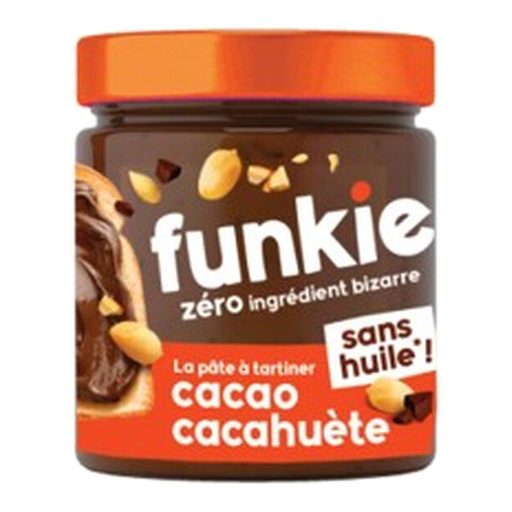 Image unavailable
FUNKIE Smooth cocoa and peanut spread 200 g
This variety combines cocoa and peanut rather than cocoa and hazelnut, so it isn’t suitable if you need to avoid peanuts. The jar contains 200 g; check the organic labelling, sugars per 100 g and all allergen information.
View on Joybuy
Frequently asked questions
How can you identify an organic spread in France?
Look for the EU organic logo on the jar and make sure it applies to the recipe you’re buying. According to Agence BIO, the logo indicates that EU organic farming rules have been followed.
Does an organic spread always contain less sugar?
No. Organic certification alone doesn’t set the sugar content. To compare two recipes in the same category, check the ‘of which sugars’ value per 100 g on their labels.
Is Nutri-Score compulsory on these jars?
No, displaying it is optional in France, according to the Ministry of the Economy. Nutritional information is compulsory for most pre-packed foods, however, so check it even when a Nutri-Score is shown.
Does the ‘soda tax’ apply to spreads?
No. The levy described by the Ministry of the Economy applies to sugary drinks. For a spread, check the sugar content directly in the nutritional information on the jar.


