People looking for both organic ingredients and protein
You want to check that both apply to the same bar, rather than assuming that words such as “natural” or “sports” meet your needs.


For Friday drinks and nibbles, choose a bar based on what matters most to you: verifiable organic status, a protein content suited to the portion, or a recipe that meets your guests’ allergy needs. An organic cereal bar isn’t necessarily a protein bar, so check the organic label, nutritional information and allergens separately for the specific product you choose.
You want to check that both apply to the same bar, rather than assuming that words such as “natural” or “sports” meet your needs.
You’re serving a selection of snacks and need to read the ingredients and precautionary allergen labelling before offering a recipe to anyone with an allergy.
You’re looking for a pack size that suits the number of guests and checking that your chosen product is available at your usual shop.
Start with the factor that will determine your choice, then check the portion size and ingredients for the exact product.
| What matters | What to check | Who is it for? |
|---|---|---|
| Organic ingredients and protein | The organic label on the packaging, and the protein content per 100 g and per portion. | For drinks and nibbles, I want to confirm that it’s organic without assuming that this guarantees a specific amount of protein; around 40% of consumers prioritise checking both. |
| Allergens | The ingredients list and precautionary allergen labelling for the flavour and pack size you’re buying. | If a guest needs to avoid certain ingredients, I need to know what each bar contains before offering it to them; around 30% of consumers put allergen suitability first. |
| Pack size and availability | The number of bars, portion weights and availability at your chosen shop. | When I’m preparing snacks for a group, I want to know how many portions I’ll have and be able to buy the product I’ve planned for; around 30% of consumers prioritise this practical need. |
These terms describe different characteristics. A cereal bar marketed as organic won’t necessarily meet your needs if you’re looking for a protein bar.
Check the organic label, then look at the protein content in the nutritional information. EU rules on nutrition claims set a separate threshold for the claim “source of protein”.
The GOOD MOOV recipe featured by Carrefour contains peanuts; other products reviewed mention milk, wheat or soya. Organic status alone doesn’t tell you whether a product is suitable for someone with an allergy.
Read the label on the exact product and plan an alternative snack if a guest needs to avoid an ingredient or a listed trace.
Bars that weigh different amounts aren’t the same size portion. The number of bars in a box also doesn’t tell you how much protein is in each one.
Check the weight of one portion and compare the protein content per portion and per 100 g.
The range may vary depending on the shop you choose, which matters when you’re shopping for a particular get-together.
Check availability with your shop before counting on this product for your guests.
These examples refer to specific products. They don’t mean that every bar from each brand has the same characteristics.
Carrefour’s Crunchy Peanut Bio bar is worth considering if you’re looking for a recipe presented as organic.
The dark chocolate product featured by E.Leclerc is an organic cereal bar sold in a box of six.
Auchan’s caramel product is an option if you’re focusing on protein content and don’t require it to be organic.
This filled cereal bar could be part of your drinks-and-nibbles selection if this is the type of recipe you prefer. The word “Organic” in the product name doesn’t mean you can skip checking the organic label, protein content and allergens on the packaging.
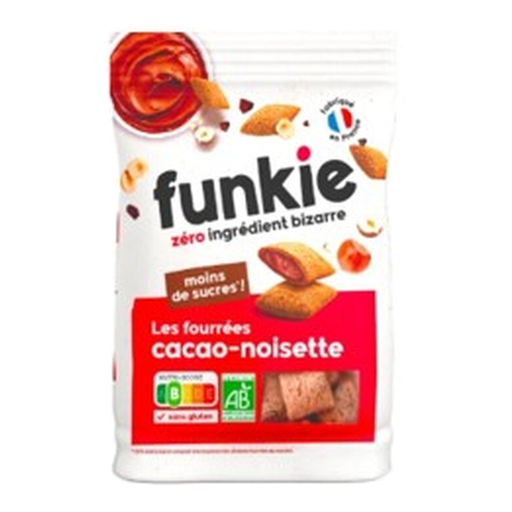 Image unavailable
Worth considering if you’d like to serve a cereal bar with drinks and nibbles, rather than aiming for a specific amount of protein. The pack states 250 g; before sharing it, check the organic label, protein per portion and allergen information for the exact product.
No. Regulation (EU) 2018/848 covers organic production and labelling, while Regulation (EC) No 1924/2006 deals separately with nutrition claims. For a product to be labelled “source of protein”, at least 12% of its energy value must come from protein. So check each characteristic separately.
Check the protein content per 100 g and per portion, then look at the weight of that portion. For example, Auchan states that a 32 g Eat'N Move portion contains 11 g of protein: don’t confuse this amount per bar with a value per 100 g.
Read the ingredients and precautionary allergen labelling on the packaging of every product you serve. Depending on the product, the recipes featured by Carrefour and Auchan mention peanuts, milk, wheat or soya, as well as possible traces of other allergens.
Check availability at the shop where you plan to buy it. First choose the shop you’ll be using or contact them, then plan an alternative snack if you’re preparing for a specific date.