
Livraison le jour même ou le lendemain

Qualité garantie

Débloquez vos offres de bienvenue: Livraison GRATUITE | Jusqu'à -80 % | 30 jours d'essai gratuits à JoyPlus
Téléchargez l'application
The organic-shaped mirror is the new star of interior design. With its fluid, nature-inspired lines, it breaks up the monotony of right angles to transform a simple wall into a true style statement. But be warned: with an overwhelming number of options available, it's easy to make a misstep, and a promising purchase can quickly turn into a disappointment. To avoid the pitfalls, let's review the most common mistakes.
To make the right choice, focus on the technical criteria that make all the difference, both for the style and the longevity of your mirror.
Finding the perfect piece requires a keen eye for detail. Here are the three checkpoints to ensure you're investing in a piece that will enhance your home for years to come.
The clarity of the reflection is directly linked to the quality and thickness of the glass. For a large designer wall mirror, a thickness of 4?mm is the minimum to limit the risk of distortion. Superior quality glass guarantees a sharp, true-to-life image, which is essential for the mirror to fulfill its primary function while visually enlarging the room.
Before any purchase, always check two things: the weight of the mirror and the type of mounting hardware provided or recommended. A heavy mirror requires a solid wall (concrete, brick) and appropriate wall anchors. Most quality models feature a sturdy back panel, often made of Medium Density Fiberboard (MDF), which ensures even weight distribution and includes secure anchor points. Some mirrors even offer vertical or horizontal installation, a versatility that is always a plus.
For an asymmetrical or free-form mirror, the finish of the edges is paramount.
These details, often overlooked, are what distinguish a high-end decorative piece from a simple functional object.
To put theory into practice, here are a few models that cater to different profiles and needs.
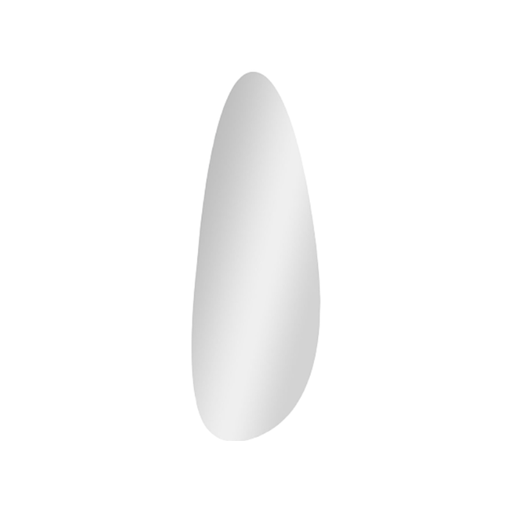
Why we chose it: Ideal for those looking to create a strong visual impact. Its large vertical size (160 cm) makes it a sculptural piece, perfect for a living room, bedroom, or grand entryway to add depth and an artistic touch.
The product is delivered ready to hang, but the instructions emphasize using fixings appropriate for the weight (6.1 kg) and wall type, which prevents the risks of improper installation. The high-quality glass ensures a distortion-free reflection.
Its free-form shape and generous dimensions make it a decorative object in its own right, capable of enlarging the space and reflecting light spectacularly.
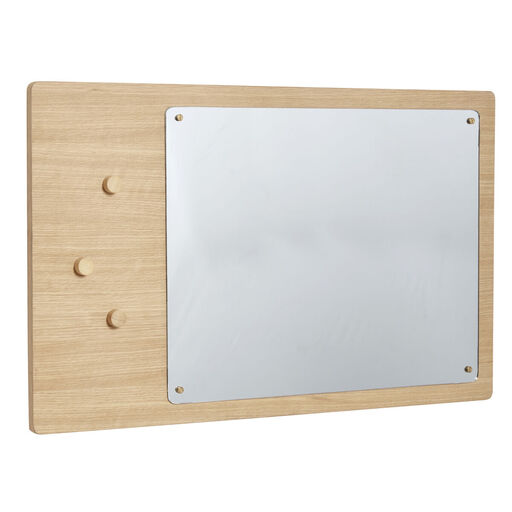
Why we chose it: Perfect for those who love objects that are both stylish and functional. This mirror is an excellent choice as an original entryway mirror or for an office, where you need a final glance while keeping notes or photos close at hand.
Its dual function justifies its unique design and avoids the "style over substance" trap. The oak veneer and FSC certified MDF structure guarantee an impeccable finish and durability.
It combines a wall mirror and a magnetic notice board, offering a two-in-one solution that is as practical as it is aesthetic.
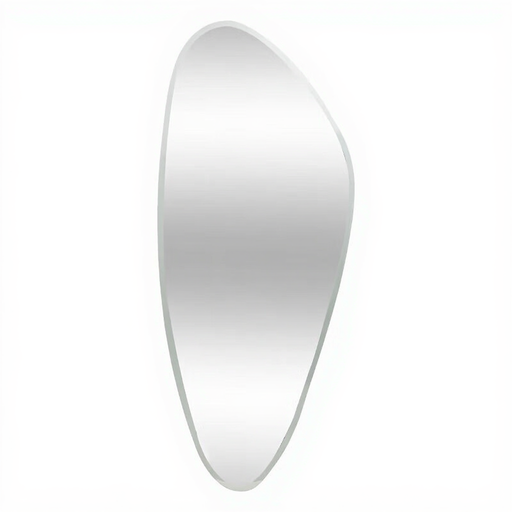
Why we chose it: For those who want the impact of a large mirror without the visual weight of a frame. Its clean design and crafted edges make it a sophisticated piece that fits into many styles, from contemporary to classic.
The elegant beveled finishes sidestep the trap of neglected edges. The E1 MDF back panel and 4 mm thick glass are guarantees of quality and durability, preventing issues with distortion and fragility.
Its great versatility: it can be mounted in all four directions, allowing you to adapt it perfectly to your space and desires, whether vertically in a bedroom or horizontally above a sideboard.
We've compiled a selection of products that meet our quality criteria and safety standards.
Safety first. First, identify the type of your wall (plasterboard, brick, concrete). Use wall anchors and screws specifically designed for that material and capable of supporting the mirror's weight (this information is always indicated on the hardware packaging). For heavy mirrors, it is strongly recommended to have two people for the installation to avoid any accidents.
Not necessarily. Its sturdiness depends mainly on the thickness of the glass and the quality of its finish. A frameless mirror with polished or beveled edges is treated to be much less likely to chip than a mirror with raw edges. Handle it with care during installation, holding it by the widest parts rather than by the thinnest points or curves.
For an entryway, a mirror that allows you to see yourself at least from the waist up is ideal. A vertical model around 100-140?cm in height is often a good choice. In a living room, the mirror becomes a major decorative element. A large decorative mirror (over 140?cm) can be placed above a sofa or console to reflect light and create a sense of space, or simply leaned against the floor for a more casual look.