To stock up on pulses for cooking, start with lentils, chickpeas, split peas or dried beans with verifiable organic certification. If you’re often short on time, add ready-cooked or heat-and-serve products, checking their ingredients, allergen information and storage instructions after opening.
Who are these formats for?
For a cupboard stocked with ingredients to cook
You want to keep several varieties of organic dried pulses in your cupboard and make your own salads, soups or side dishes. Dried pulses in bags are a good choice if you can plan ahead for cooking time.
For quick meals
You’d rather open a jar of ready-cooked pulses or heat a pouch than start with a dried product. Ingredients and storage instructions after opening therefore become important factors in your choice.
For keeping an eye on ingredients
You’re looking for a short ingredients list or keeping track of salt, allergens and possible traces. Check the label for each product, even when it carries organic certification.
What should you look for?
When stocking your cupboard, first distinguish dried pulses that need cooking from products that are ready to eat. Check the organic certification and then the ingredients for the specific product, whatever its format.
Dried pulses in bags
Choose these if: you want to stock up on lentils, chickpeas, split peas or beans to cook for your recipes.
Bear in mind: they take time to prepare, and soaking or cooking times vary between pulses.
Jars and tins
Choose these if: you want to add ready-cooked pulses to a salad, soup or side dish.
Check: recipes and storage instructions after opening vary from product to product.
Ready-made pouches
Choose these if: your priority is a quick meal or side dish that’s ready to heat.
Check: these recipes may combine pulses, grains and other ingredients; they’re not a substitute for a bag of plain dried pulses.
| What to consider |
What to check |
Who it’s for |
| Organic certification |
Look for the EU organic logo or the AB mark, and check the product description. The French Ministry of Agriculture notes that organic farming is governed by European regulations. |
If I’m looking for organic dried pulses, I want to be able to identify this feature before choosing a format. Around 30% of consumers put it top of their list. |
| Ingredients to cook |
Choose varieties to suit your recipes and check the net weight and preparation instructions. |
When stocking my cupboard, I’d rather have several dried pulses to cook than just one ready-made recipe. This is the top priority for around 30% of consumers. |
| Quick to prepare |
Tell ready-cooked pulses apart from prepared meals, then check how to prepare them. |
When I have little time to prepare a meal, I choose a product that’s already cooked or quick to heat. Speed is the priority for around 20% of consumers. |
| Ingredients |
Check the ingredients, nutritional information, salt per 100 g, allergens and any precautionary ‘may contain’ statements. |
If I need to avoid an ingredient or want to keep an eye on seasoning, I can’t rely on the word ‘organic’ alone. Around 20% of consumers put ingredients first. |
Common mix-ups to avoid
-
Assuming ‘organic’ means plain or allergen-free
A single-ingredient dried pulse, a jar and a prepared meal can all carry organic certification without having the same ingredients. Some recipes contain grains, salt or allergens, for example.
Check the ingredients list and allergen and trace information on every pack.
-
Treating a bag of dried pulses and a jar as the same product
Dried pulses in a bag still need preparing, while a jar contains ready-cooked pulses. The stated weight and the time needed before a meal therefore relate to different uses.
First decide whether you want ingredients to cook or something quick to prepare, then compare products in similar formats.
-
Forgetting storage instructions after opening
An opened ready-to-use product won’t keep in the same way as an unopened pack in the cupboard.
Choose pack sizes that suit the quantities you use, and follow the manufacturer’s instructions for refrigeration and use.
A container opened in too large a quantity may not be fully used within the stated time.
Brands to know when choosing
Carrefour Bio
The Carrefour Bio range includes dried pulses for cooking at home, including green lentils.
- Carrefour’s range makes it easy to find several varieties of organic dried pulses.
- Check which products and formats are available at your chosen store or collection service.
Bio Village
Bio Village, an E.Leclerc brand, offers organic pulses in bags, including lentils.
- The E.Leclerc product listing for Bio Village red lentils describes peeled red lentils from organic farming.
- This product may contain traces of gluten-containing cereals. Check the label if this is relevant to you.
Auchan Bio
The Auchan Bio range includes dried green and red lentils.
- These two varieties let you choose according to the recipes you have in mind.
- Check the format and preparation instructions for the product you choose.
Goldensun
Goldensun is a brand in Lidl’s range of organic dried pulses.
- Lidl’s range includes several varieties, such as lentils and chickpeas.
- Check which varieties and formats are available when you shop.
Bjorg
Bjorg offers an organic quinoa and chickpea dish designed for quick preparation.
- This type of dish is a good choice if you want something ready to heat rather than dried pulses to cook.
- It’s a recipe that also contains wheat bulgur, oil and salt, not a bag of plain chickpeas.
BIO® ALDI
BIO® is ALDI’s organic range, covering a variety of food categories.
- The range can be a useful starting point when looking for organic products while shopping.
- For this kind of product, check that the specific item is organic dried pulses and comes in the format you want.
An option for cooking from dried pulses
This Joybuy selection features dried green lentils in a bag, ready to prepare for easy cupboard meals.
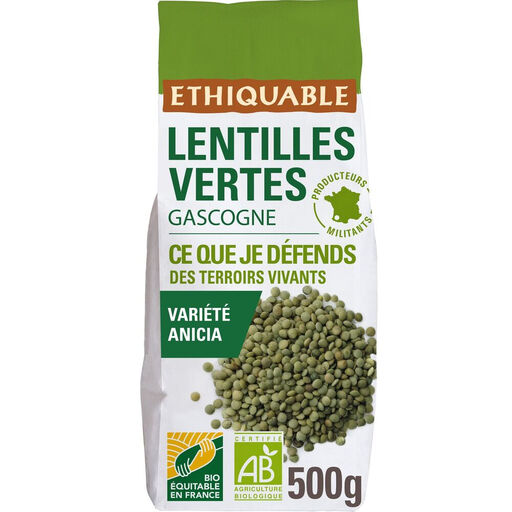 Image unavailable
ETHIQUABLE Organic Green Lentils, 500 g
A handy way to stock up on green lentils to cook, rather than choosing a ready-made product.
500 g bag. Check the organic certification on the pack before buying.
View on Joybuy
Frequently asked questions
How can I identify organic dried pulses in France?
Look for organic certification, such as the EU organic logo or the AB mark, then check the product description and ingredients. The French Ministry of Agriculture explains that organic farming is governed by European regulations. This certification alone doesn’t tell you about seasoning or allergens.
Can a jar replace dried pulses in a bag?
Yes, if you mainly want ready-cooked pulses for a quick meal. For a cupboard stocked with ingredients to cook, dried pulses in a bag serve a different purpose. For jars, check the ingredients, salt, drained weight and storage instructions after opening.
What should I check if I’m keeping an eye on salt or allergens?
Read the label for every product, including any precautionary ‘may contain’ statements. Auchan lists D’Aucy organic chickpeas with no added salt, while the listing for a Jardin BiO étic lentil and chickpea pouch mentions sesame and possible traces of soya. Organic certification doesn’t remove the need to check the recipe you choose.
How should I store a ready-cooked product after opening?
Follow the instructions on the pack and refrigerate it if required. Auchan’s listing for the Jardin BiO étic pouch says to keep it chilled and consume it within two days of opening. Don’t assume the same time limit applies to other products.


