Cyclists who prepare meals for training
You’re looking for organic pulses to cook as part of your usual meals, and can plan their preparation ahead of training.


For a meal prepared in advance and eaten well before a ride, dried organic pulses let you choose a simple recipe. For a quick meal, a jar or tin saves you the cooking, but you’ll need to compare the ingredients and salt content. Look for the EU organic logo (the Euroleaf) on the packaging, then adjust your portion and mealtime to suit your digestive tolerance, particularly before a race.
You’re looking for organic pulses to cook as part of your usual meals, and can plan their preparation ahead of training.
You prefer lentils or chickpeas that are already cooked, so you can put a meal together quickly. In that case, the ingredient list, salt content and storage instructions after opening all matter when choosing.
You choose how much to eat and when based on your experience during training, rather than trying a new portion just before an important ride.
For a savoury breakfast or another meal around your training, first consider when you’ll be eating in relation to your ride. Then compare the preparation time and the label for the specific product.
| Criteria | What to check | Who it matters to |
|---|---|---|
| Digestive tolerance | Mealtime and portion size already tried during training; fibre content listed for the product you’ve chosen. | If a ride is coming up, I’d rather have a portion I know I can tolerate than try a new recipe. Around 33% of consumers are said to put digestive tolerance at the top of their list of concerns. |
| What makes up the meal | Nutrition information per 100 g and the state of the product being compared—dried or prepared—as well as whether to include a grain-based product in the meal. | When putting together a plant-based meal around training, I want to know what my chosen portion provides and what I’ll serve it with. This is said to be the main priority for around 27% of consumers. |
| Organic status and ingredients | The Euroleaf logo, ingredient list and origin, if stated on the product you’re buying. | I want to be able to recognise the organic certification on the packaging and tell plain pulses apart from a seasoned recipe. Around 20% of consumers are said to prioritise these checks. |
| Preparation time | Cooking instructions for dried pulses; salt content and storage instructions after opening for a product that’s already cooked. | When I don’t have much time to prepare a meal, an already-cooked product saves me having to plan for cooking. Speed is said to be the main criterion for around 20% of consumers. |
Pulses contain fibre. Manger Bouger warns that eating too much can cause bloating or stomach pain; INSEP highlights the importance of digestive tolerance on competition day.
Try the recipe and portion size first with meals around your regular training sessions, then take your tolerance into account before a race.
Auchan’s product listings include both organic chickpeas with sea salt and a d’aucy product described as having no added salt. So the word “organic” doesn’t tell you how a product is seasoned.
Compare the ingredient list and the “salt” line in the nutrition information per 100 g for the products you’re considering.
For Bio Village, E.Leclerc lists a French origin for one ready-to-use lentil product, while the stated origin for red lentils may vary depending on supply.
If origin influences your purchase, check the information on the specific product and batch you choose.
An Auchan listing for chickpeas in a jar says to refrigerate after opening and consume within two days.
Check the instructions for the product you buy, and choose a format that suits the meals you’re planning after opening.
An opened jar that you can’t finish within the stated time may go to waste.
Dried organic green lentils in a 500 g pack, for meals you can prepare in advance.
The range sold by E.Leclerc includes ready-cooked organic lentils and red lentils for cooking.
Organic chickpeas in a 330 g jar, ready to drain and rinse for a cold dish.
An organic chickpea product in a jar, described as having no added salt.
This green lentil option is suited to a meal for which you can plan the cooking time. If you’re choosing an organic product, also check for the Euroleaf logo on the packaging.
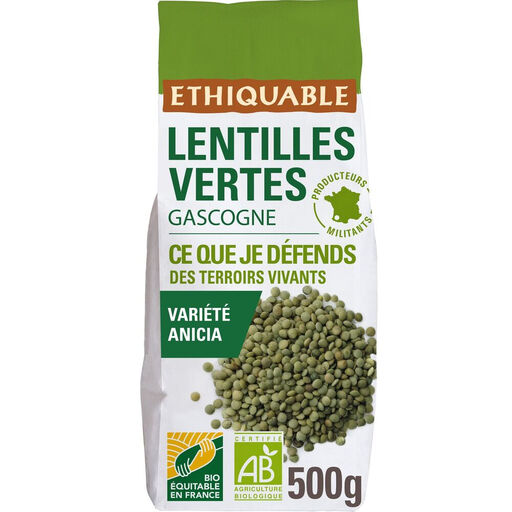 Image unavailable
Worth considering if you prepare your lentils in advance for a meal well before your ride. The pack contains 500 g; check the cooking instructions, nutrition information and allergen information before choosing your portion.
Look for the EU organic logo, known as the Euroleaf. Agence Bio says that its presence on the label certifies compliance with the European Union’s regulations on organic farming. Check the ingredients and origin separately if these are important to your purchase.
Choose the timing and portion to suit your digestive tolerance rather than trying a new recipe just before setting off. INSEP highlights this on competition day; you should also bear in mind the fibre in pulses if you’re prone to bloating.
Choose dried pulses if you can plan the cooking and want to put together your own recipe. A jar is more convenient when you need to prepare a meal quickly. For jarred pulses, compare the ingredients and salt content, then follow the storage instructions after opening.