People who put their own bowl together
Plain organic oats let you choose your milk or plant-based drink, fruit and other toppings separately. Carrefour, Bjorg and Terres et Céréales list organic wholegrain oats with a short ingredient list.


If you want to manage what goes into your porridge as part of your weight-management approach, certified organic wholegrain oats let you choose and measure your own toppings. A ready-made blend is more convenient. Organic certification tells you how a product is made, not whether it affects your weight, so also compare the ingredients, sugars, portion you prepare and allergens.
Plain organic oats let you choose your milk or plant-based drink, fruit and other toppings separately. Carrefour, Bjorg and Terres et Céréales list organic wholegrain oats with a short ingredient list.
If fibre content matters to you, compare the nutrition information per 100 g across products. Manger Bouger says fibre can help you feel fuller between meals; that doesn’t make porridge a weight-loss product.
Check the details on the exact pack, even if it carries an organic label. Carrefour Bio’s product listing says its oats may contain traces of other cereals containing gluten, tree nuts, soya, sesame and mustard.
To choose organic porridge as part of a weight-management approach, start with what matters most to you, then check the details of the product you’re considering.
| What to consider | What to check | Who is it for? |
|---|---|---|
| Ingredients and toppings | Check the organic certification and ingredients list: are these plain oats, or a recipe that already contains other ingredients? | If I want to decide what goes into my bowl, a plain base lets me measure out my own toppings. Around 36% of consumers would put this control over additions first. |
| Wholegrains and fibre | Look for the words ‘wholegrain oats’ and compare the fibre per 100 g where this information is provided. | For a wholegrain breakfast, I check the ingredients and fibre content before choosing a recipe. This would be the top priority for around 29% of consumers. |
| Allergens and traces | Read the allergen and possible trace information for the exact product; an organic label does not mean ‘gluten-free’. | If I need to avoid an ingredient, I can’t rely on the brand name or the word ‘organic’ alone. Around 21% of consumers would check allergens first. |
| Pack size and texture | Compare the net weight, oat size and storage instructions with how often you plan to use it. | If I rarely make porridge, a large pack could stay open for a long time; if I make it often, pack size matters more. Around 14% of consumers would prioritise pack size or texture above all else. |
According to the Ministry of Agriculture, organic certification relates to a regulated method of production. It says nothing about the portion you serve or the ingredients you add to your porridge.
Choose a base that suits you, then consider your toppings and the amount you actually prepare.
Whether a product is suitable depends on the specific product and its allergen information. Carrefour, for example, says one of its organic oat products may contain traces of cereals containing gluten.
If you need to avoid gluten or another allergen, check the pack of the product you’re buying rather than assuming it’s suitable because it’s organic.
A large pack makes sense if you use it often, but it could stay open for a long time if you rarely make porridge.
Choose a net weight that suits your habits and follow the storage instructions on the pack. The product listing for Bjorg’s 900 g pack recommends keeping it away from moisture and closing it tightly.
A 500 g pack of organic wholegrain oats can make a good base for homemade porridge.
The brand offers organic wholegrain oats in 500 g and 900 g packs.
A 1 kg pack of organic wholegrain oats is one option to consider if you use them regularly.
This organic range from E.Leclerc can help you find organic products in its stores.
Quaker Oats offers a point of comparison for plain oats, without assuming they are certified organic.
These two products suit different needs: plain organic oats so you can put your own bowl together, or organic fruit and chia porridge if you’d rather choose a ready-made recipe.
 Image unavailable
For making porridge with toppings you choose yourself. This product is described as organic wholegrain oats; check the pack for certification details, allergens and nutrition information for the product you buy.
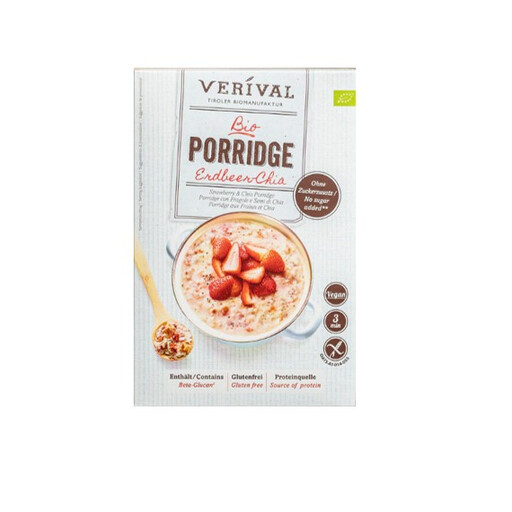 Image unavailable
For anyone who prefers a fruit and chia recipe to plain oats with their own toppings. Check the ingredients list, allergens and sugars per 100 g on the product you buy: the blend’s name alone doesn’t tell you everything about the bowl you prepare.
An organic label doesn’t promise weight loss: according to the Ministry of Agriculture, it relates to how a product is made. When comparing porridges, also look at the ingredients and what you add to the portion you prepare.
Look for the EU organic logo and check the pack details and ingredients list. The Ministry of Agriculture explains that organic farming is governed by European regulations.
No. Santé publique France says displaying it is voluntary for producers. Also check the ingredients, nutrition information, allergens and the portion you plan to prepare.
No: organic certification doesn’t guarantee a product is gluten-free. Check the details for the exact product; Carrefour’s listing for its organic oats notes possible traces of other cereals containing gluten.
Follow the instructions for the product you buy. For its 900 g oats, Bjorg recommends keeping the pack away from moisture and closing it tightly after opening.