If you need to avoid certain ingredients, choose your organic porridge by checking the ingredients list and any allergens highlighted, rather than relying on the word ‘organic’ alone. Plain oats let you choose your own toppings, while fruit or multigrain recipes call for a closer check of the ingredients. If you need to avoid gluten strictly, look for a ‘gluten-free’ label on the finished product and take care when preparing it.
Who are these options for?
People who need to avoid specific allergens
If you avoid certain nuts, seeds or cereals, compare the ingredients and any ‘may contain’ warnings for each product. The word ‘organic’ alone doesn’t tell you whether it’s suitable for your dietary requirements.
People who need to avoid gluten strictly
A recipe made with oats isn’t enough to establish that the finished product is gluten-free. Look for this claim on the product you buy, and take care to avoid cross-contamination during preparation.
People who make their own porridge
Plain organic oats let you choose the liquid and toppings separately, without committing to a fruit or multigrain recipe from the outset. You’ll still need to check the ingredients and allergens.
What should you check before buying?
Start with the ingredients you need to avoid. Then check separately for a gluten-free claim, if you need one, and confirm that the product is organic. According to the European Union’s Your Europe portal, allergens present in prepacked food must be emphasised in the ingredients list.
| What matters to you |
What to check |
Who is it for? |
| Personal allergens |
Check the ingredients, highlighted allergens and any ‘may contain’ warnings for the specific product you’re buying. |
If I need to avoid a specific ingredient, I want to be able to spot it before choosing a recipe. Around 31% of consumers put avoiding their personal allergens at the top of their list of concerns. |
| Avoiding gluten |
Look for a ‘gluten-free’ claim on the finished product and plan how to prepare it while limiting cross-contamination. |
If I need to avoid gluten strictly, regular organic oats alone won’t meet my needs. This is the top priority for around 25% of consumers. |
| Organic status |
Check the organic information for the product on its product page and packaging, then review its ingredients. |
I want to confirm first that the product I’ve chosen is organic, without assuming that it’s suitable for my allergies. For around 25% of consumers, this is their main priority. |
| A recipe you can customise |
Compare plain oats with mixes that already include fruit, other cereals or seeds. |
If I prefer to choose my own toppings, a plain base gives me more control over what goes into my bowl. Around 19% of consumers prioritise this flexibility above all else. |
Common mix-ups to avoid
-
Confusing ‘organic’, ‘gluten-free’ and allergen-free
The European Commission explains that the EU organic logo applies to certified organic products. It doesn’t mean that a recipe contains no oats, wheat or other ingredients you need to avoid.
Check these three things separately for the product you’re buying: whether it’s organic, its ingredients and allergens, and whether it’s labelled gluten-free if you need it to be.
-
Looking only at the word ‘oats’ on the front of the pack
Oat porridge can contain other cereals too. For example, Carrefour France says that Bjorg’s organic three-cereal porridge also contains wheat and spelt, while a Jordans recipe featured by Auchan France contains barley.
If you avoid any of these cereals or gluten, read the full ingredients list rather than relying on the recipe name alone.
-
Relying only on product information you checked before
Recipes and online product information can change. This matters particularly if your choice depends on the absence of a specific ingredient or trace.
Read the label on the pack you receive or pick up in store, even if you’ve already bought another product from the same brand.
-
Forgetting about preparation after you buy
For people with coeliac disease, AFDIAG stresses the importance of avoiding cross-contamination at home, even after choosing a gluten-free product.
Keep relevant products separate and clean the worktop and utensils you use. Use dedicated equipment where necessary.
Brands to consider by recipe
These examples relate to specific products: within the same brand, a plain recipe and a fruit mix may have different ingredients and ‘may contain’ warnings.
Carrefour Bio
Carrefour France lists a 500 g pack of organic oat flakes made from 100% organic wholegrain oats.
- With just one ingredient, it’s easier to check what you’ll be adding yourself.
- Another Carrefour Bio product warns that it may contain traces of other cereals containing gluten, nuts, soya, sesame and mustard. Check the specific product.
Terres & Céréales Bio
Carrefour France lists organic wholegrain oat flakes labelled ‘gluten-free’.
- This claim lets you consider a product that meets a need separate from organic certification alone.
- The claim applies to this specific product: check the pack you buy and any other allergens relevant to you.
Jordans
Auchan France lists plain organic oat flakes as well as organic oat and fruit cereal.
- The plain oat flakes product reviewed lists 100% organic wholegrain oat flakes.
- A fruit recipe reviewed also contains barley. Don’t assume the ingredients in the plain oats apply to other Jordans products.
Bjorg
The products described by Carrefour France include organic fig and raspberry porridge and organic three-cereal porridge.
- The fig and raspberry recipe reviewed combines oats, figs, raisins and raspberries.
- The three-cereal recipe contains wheat and spelt, so it isn’t suitable if you need to avoid these cereals or gluten.
Bio Village
E.Leclerc lists Bio Village organic wholegrain oat flakes in a 500 g pack.
- The ingredients listed for this product are limited to organic wholegrain oat flakes.
- Check the allergen information on the exact pack you plan to buy.
Two organic porridge options on Joybuy
These two products suit different needs: organic oat flakes for making your own porridge, and organic fruit and chia porridge, where you’ll need to check the added ingredients.
 Image unavailable
BJORG Organic Oat Flakes 500 g
Worth considering if you want to choose your own porridge toppings. The product information lists gluten from oats, so don’t treat it as a gluten-free option. Check the packaging for any other allergens and ‘may contain’ warnings that matter to you.
View on Joybuy
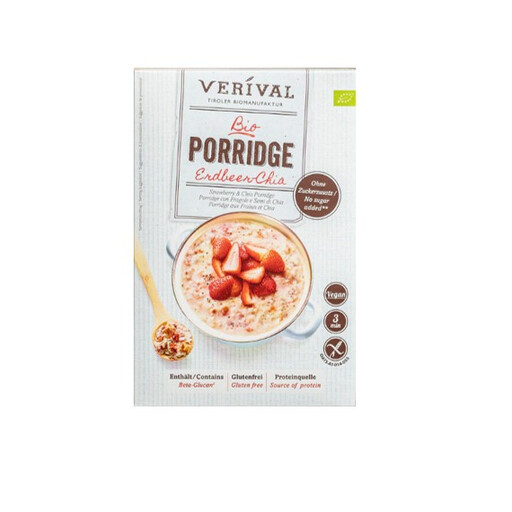 Image unavailable
VERIVAL Organic Fruit and Chia Porridge 350 g
Worth considering if you’re looking for a ready-made fruit recipe. The product information lists almonds and possible traces of sesame, soya and other nuts. The gluten-free claim for the oat flakes doesn’t confirm that the finished porridge is gluten-free: check the packaging if you need to avoid gluten strictly.
View on Joybuy
Frequently asked questions
Does the organic logo guarantee that porridge is allergen-free or gluten-free?
No. According to the European Commission, the EU organic logo relates to organic certification, not the absence of allergens or gluten. Check the ingredients and look separately for a ‘gluten-free’ claim if you need one.
Where can you find allergens on prepacked porridge?
According to the European Union’s Your Europe portal, allergens present must be emphasised in the ingredients list. Check the list for the product you’re buying: two recipes from the same brand may differ.
Are all organic oat flakes suitable if you need to avoid gluten strictly?
No: ‘organic’ and ‘gluten-free’ are two different claims. Look for a ‘gluten-free’ claim on the finished product. AFDIAG also recommends limiting cross-contamination during storage and preparation for people with coeliac disease.
Can you count on Lidl to always stock gluten-free products?
Lidl France says gluten-free products aren’t part of its permanent range and may only be available from time to time. Check what your store has before planning to buy, then check the organic information and allergens for the product you find.


