To choose organic pasta while paying attention to sugars, first check the certification details on the pack, then compare the ‘of which sugars’ value per 100 g for pasta of the same type. Organic status relates to how the product is made; it does not mean the pasta contains less sugar. If a reduction is claimed, check the wording and what it is being compared with rather than assuming it follows from the organic label.
Who is this choice for?
Consumers who value organic certification
If organic status is important to you, look for the relevant certification details on the pack. For prepacked food sold as organic in the European Union, the European Commission identifies the EU organic logo, together with the code of the control body and an indication of the agricultural origin, as details worth checking.
Consumers keeping an eye on declared sugars
If you’re comparing sugar levels, check the ‘of which sugars’ value per 100 g for pasta of the same type. The DGCCRF explains that nutritional values are given per 100 g or 100 ml; the organic label answers a different question from the sugar content.
Consumers looking for a convenient option
If preparation time matters too, compare the shape and cooking time of each product while keeping your organic requirements in mind. Also check the ingredients and allergen information on the pack you choose.
What should you look for?
When choosing pasta as part of an organic approach, with particular attention to sugars, check the certification, compare the nutritional information and consider any preparation requirements separately.
| Criteria |
What to check |
Who it matters to |
| Organic certification |
For the prepacked product in question, look for the EU organic logo, the control code and an indication of agricultural origin; check the ingredients too. |
When I’m looking for organic pasta, I want to be able to recognise its certification rather than relying on the product name alone. Around 44% of consumers would make this a priority. |
| Declared sugars |
Compare the ‘of which sugars’ value per 100 g for pasta of the same type; if a reduction is claimed, check the exact wording and what it is being compared with. |
I want to compare sugar levels without assuming that organic means ‘less sugar’. This would be a priority for around 33% of consumers. |
| Use and ingredients |
Check the shape, cooking time and allergen information for the specific product. |
If I’m preparing a meal to fit the time I have available, the shape matters; if I need to avoid an ingredient, its presence matters too. This would be a priority for around 23% of consumers. |
Mistakes to avoid
-
Assuming ‘organic’ means ‘reduced sugar’
Organic certification and the ‘of which sugars’ value tell you about two different characteristics of pasta.
Check the organic status of the pack, then compare the sugar values per 100 g for similar products.
-
Taking a reduction claim at face value without checking the details
The European Commission regulates nutrition claims: a keyword or organic status alone is not enough to establish that sugars have been reduced.
Check the wording on the product, the nutrition declaration and any details explaining the comparison.
-
Overlooking allergens in a short ingredients list
The wheat pasta sold by Barilla France and Carrefour Bio contains wheat; information about possible traces varies between products.
If you need to avoid an ingredient, check the ingredients and allergen information on the exact pack before choosing.
-
Assuming a product’s features apply to its whole brand
Auchan France states that the wheat used for its Auchan Bio Cultivons le Bon spaghetti is French in origin and that the product is made in France; these details apply to this specific product.
Check the origin, certification and cooking time separately for each pack you’re considering.
Brands to consider when comparing products
Barilla
Barilla France describes organic spaghetti made with organic durum wheat semolina and water.
- The product information lists the ingredients and gives a cooking time of 8 minutes.
- It contains wheat and may contain traces of soya and mustard; its organic status does not prove that it has a reduced sugar content.
Carrefour Bio
Carrefour France lists a product of dried organic pasta made with organic durum wheat semolina.
- The ingredients list lets you check the composition of the product in question.
- Check its allergen information and any possible traces; ‘organic’ is not a promise of reduced sugar content.
Auchan Bio
Auchan France lists Auchan Bio Cultivons le Bon spaghetti made with French organic durum wheat grown in Vendée.
- The product is described as made in France, with an al dente cooking time of 8 minutes.
- These details apply to this specific product; also check the pack for information about allergen traces.
Panzani
The Panzani range includes pasta in a variety of shapes and product lines.
- The different ranges make it easy to compare shapes for the meal you have planned.
- If you’re looking for organic pasta, check the certification of the specific product rather than assuming it from the brand or range name.
Lustucru
Lustucru Sélection offers fresh tagliatelle for a quick meal.
- The Tagliatelles 600 g product has a cooking time of 3 minutes and is made with fresh eggs from free-range hens.
- This product contains wheat and eggs; if you’re looking for organic pasta, check the status of the specific product before choosing it.
Marque Repère / E.Leclerc
Marque Repère is an E.Leclerc own-label brand.
- A pasta product from this brand can be assessed using its own ingredients and nutritional information.
- Don’t assume a product is organic or has a reduced sugar content based on the brand name alone; check the details for the product you choose.
A Joybuy product related to this topic
This Joybuy product is a pack of Hakubaku udon noodles described as organic. Udon are not the dried spaghetti mentioned above, so check the information on their own packaging before deciding whether they suit what you’re looking for.
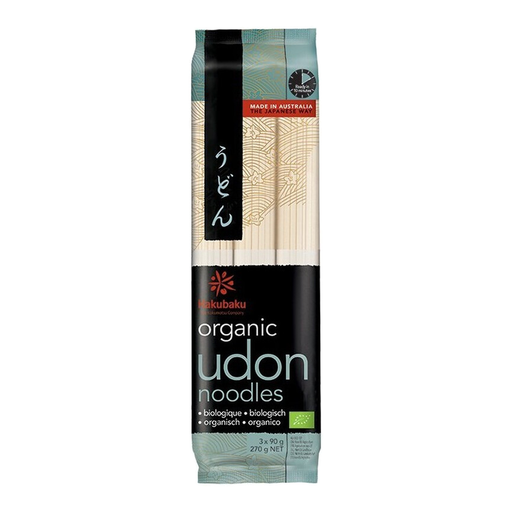 Image unavailable
Hakubaku Organic Udon Noodles 270 g
This 270 g pack contains udon noodles rather than dried spaghetti. If you’re looking for organic certification details that apply in France or keeping an eye on sugars, check the packaging and the ‘of which sugars’ value; the word ‘Organic’ alone does not establish that the product has a reduced sugar content.
View on Joybuy
Frequently asked questions
How can you tell if pasta is organic from the pack?
For prepacked pasta sold as organic in the European Union, look for the EU organic logo, along with the control body’s code and an indication of agricultural origin nearby. The European Commission explains that use of the logo is subject to organic certification rules.
Does organic pasta always contain less sugar?
No: organic status alone does not tell you the sugar content. To compare pasta of the same type, check the ‘of which sugars’ value per 100 g in the nutritional information.
Is a ‘reduced sugar’ claim enough to make a choice?
No: check the wording on the pack and the details that explain the comparison being made. The European Commission regulates nutrition claims; a product does not become ‘reduced sugar’ simply because it is organic.
Which allergens should you look for in organic pasta?
Check the ingredients and allergen information for the exact product: the wheat pasta sold by Barilla France and Carrefour Bio contains wheat, while details of any possible traces vary by product. Organic status is no substitute for checking the label.


