What should you look for?
For a student dinner featuring organic pasta, check the certification and pack size first. Then compare the options based on preparation time and whether you prefer wholegrain cereals.
| Criteria |
What to check |
Who it matters to |
| Pack size and storage |
Net weight and storage instructions on the pack. |
I want to make several dinners from one pack that I can keep in the cupboard. Around 40% of consumers would put this need first. |
| Organic certification |
EU organic logo and, if present, the AB logo; product name and ingredients. |
Before choosing a pasta shape, I want to be able to identify its organic certification on the pack. This would be the main priority for around 30% of consumers. |
| Preparation time |
Stated cooking time and whether the pasta is dried or fresh. |
When I’m making dinner in a hurry, the stated cooking time matters most, even if a fresh option needs to be stored differently. Around 20% of consumers would prioritise speed. |
| Type of grain |
“Wholewheat” or “semi-wholewheat” on the pack, separately from organic certification. |
I’m specifically looking for wholewheat or semi-wholewheat pasta for the recipes I usually make. Around 10% of consumers would put this preference ahead of the other criteria. |
Brands to consider
These brands can help you find products to compare; their inclusion here doesn’t mean that all their ranges are organic.
Carrefour Bio
A range to explore if you’re looking for dried organic pasta for several meals.
- Carrefour offers organic penne rigate and coquillettes in 500 g packs, among other options.
- The shapes and pack sizes available may vary by store and collection method.
Bio Village / Marque Repère (E.Leclerc)
An option for dried organic pasta, including coquillettes and wholewheat spaghetti.
- The E.Leclerc product information for Bio Village coquillettes lists a 500 g pack made with organic durum wheat semolina.
- For this product, E.Leclerc states that it is made in Belgium and that the wheat comes from “Asia and/or Europe”, depending on supply. Organic certification alone doesn’t tell you whether the wheat is from France.
Auchan Bio
A range to explore for classic organic spaghetti or wholewheat pasta shapes.
- The Auchan product information for its 500 g organic spaghetti displays the EU organic logo and the AB logo; the retailer also offers organic wholewheat penne rigate.
- Check the pasta type and ingredients for each product: “organic” and “wholewheat” refer to two distinct criteria.
Barilla
An option if you’re specifically looking for organic spaghetti from this brand.
- Barilla’s Organic Spaghetti comes in a 500 g pack, is made with organic durum wheat semolina and has a stated cooking time of 8 minutes.
- If you’re looking for wholewheat pasta, check this on the product you choose rather than assuming it from the organic label.
Lustucru
A brand to consider for quick-cooking fresh pasta, separately from your choice of certified organic pasta.
- Lustucru Sélection offers 600 g of fresh tagliatelle containing eggs, with a stated cooking time of 3 minutes.
- The product information doesn’t describe this option as organic. Check the ingredients and storage instructions before choosing it, too.
Pasta and noodles available on Joybuy
These options include two quinoa spaghetti varieties and an udon noodle option. If organic certification is essential for your dinner, check the packaging of the product you choose for certification marks. Udon won’t work as a substitute for spaghetti in every recipe.
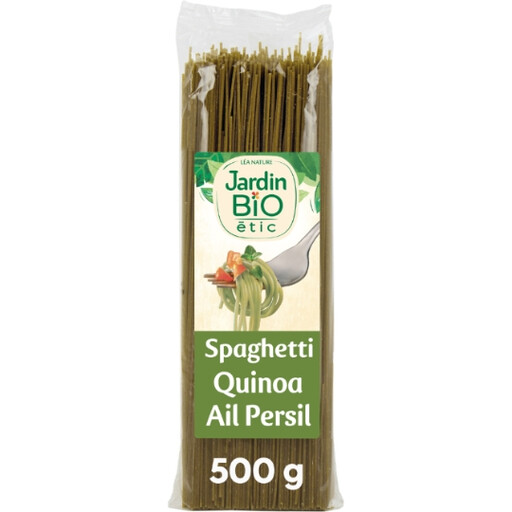 Image unavailable
JARDIN BIO ETIC, quinoa spaghetti with parsley and garlic, 500 g
This spaghetti variety is worth considering if you’d like to bring quinoa, parsley and garlic together in your dinner. Check the packaging for organic certification and any ingredients you need to look out for.
View on Joybuy
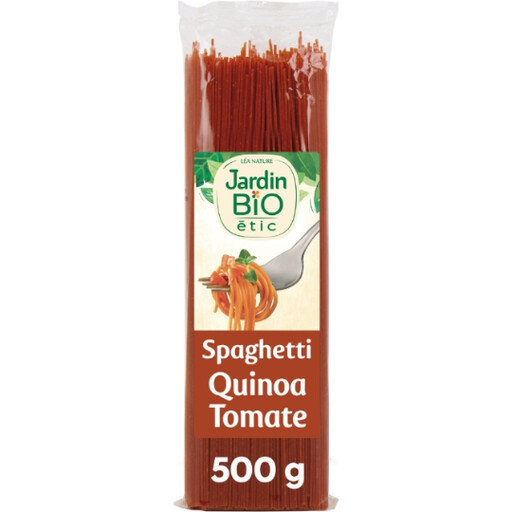 Image unavailable
JARDIN BIO ETIC, quinoa and tomato spaghetti, 500 g
Another spaghetti option for a dinner combining quinoa and tomato. The pack contains 500 g; check the organic certification and ingredient list for this variety.
View on Joybuy
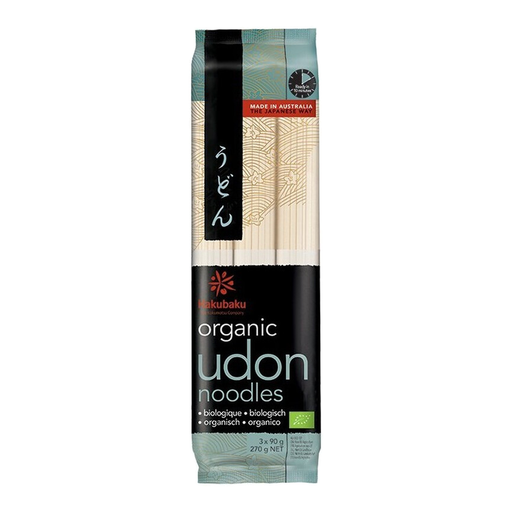 Image unavailable
Hakubaku, Organic udon noodles, 270 g
Worth considering if you’d like to make udon rather than a spaghetti dish. The pack contains 270 g; if organic certification is important to you, check the information on the packaging.
View on Joybuy
Frequently asked questions
How can you identify organic pasta in France?
Check the organic marks on the pack, including the EU organic logo and, where used, the AB logo. Then read the product name and ingredients. The French Ministry of Agriculture explains that organic farming is governed by European regulations; Agence Bio says that Regulation (EU) 2018/848 covers areas including inspection and labelling.
Is organic pasta always wholewheat or made with French wheat?
No. “Organic” refers to a certified production method, while “wholewheat” describes the type of grain and the origin depends on the product. For example, E.Leclerc states that the wheat in its Bio Village coquillettes comes from “Asia and/or Europe”, depending on supply.
Which ingredients and allergens should you check before choosing?
Read the ingredients list and allergen information on the specific pack, particularly if you’re deciding between dried and fresh pasta. The fresh tagliatelle featured by Lustucru Sélection contains wheat and eggs, among other ingredients; don’t assume another product has the same ingredients.
How should you store dried organic pasta after opening?
Follow the instructions on the pack you’ve bought. For its organic spaghetti, Auchan recommends keeping the pasta away from heat and moisture, then resealing the pack securely after opening, or storing it in an airtight container.


