What should you look for?
For organic pasta served on New Year’s Eve, check the organic labelling first, then choose the shape and texture to suit your recipe. Check the pack size and origin for each product separately.
| Criteria |
What to check |
Who is it for? |
| Organic certification |
Look for the EU organic logo or the AB mark, and read the product description and ingredients list. A claim such as “ingredients of natural origin” is no substitute for organic labelling. |
I want to serve pasta that’s clearly identified as organic on the pack, rather than relying on a vague promise about its ingredients. Around 36% of consumers would make this their top priority. |
| Shape and serving style |
Choose to suit the sauce: spaghetti for a runny sauce, or penne or fusilli for a thick or chunky sauce. Check the cooking time for the specific product. |
If I’m serving a dish to share, I want to be able to mix the pasta with the sauce and serve it easily. Around 29% of consumers would put matching the pasta to the recipe first. |
| Pack size and origin |
Check the weight, availability, country of manufacture and origin of the ingredients as separate details. |
When cooking for several guests, I need to make sure I have enough packs and know where the product I’ve chosen comes from. Around 21% of consumers would prioritise these practical details. |
| Texture and degree of refinement |
Look for “semi-wholewheat” or “wholewheat” on the pack, and check the cooking instructions: organic certification doesn’t tell you how refined the pasta is. |
I’m looking for a particular texture for this dish and don’t want to assume that all organic pasta cooks in the same way. This would be the main priority for around 14% of consumers. |
Spaghetti for a runny sauce
These two JARDIN BIO ETIC products are 500 g packs of spaghetti with different ingredients. Their shape could work well with a runny sauce for New Year’s Eve. Before choosing for your guests, check the organic labelling and ingredients on each pack.
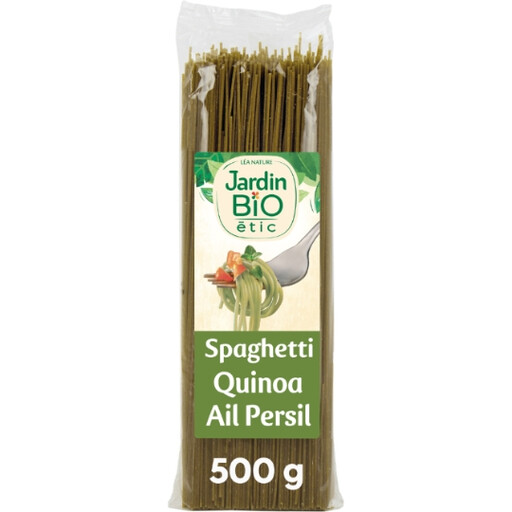 Image unavailable
JARDIN BIO ETIC Spaghetti with quinoa, parsley and garlic, 500 g
A shape to consider with a runny sauce, with quinoa, parsley and garlic listed in the name of this variety.
If any of your guests have dietary requirements, check the wheat information and whether the product may contain traces of egg, soya and mustard, as well as the organic labelling on the pack.
View on Joybuy
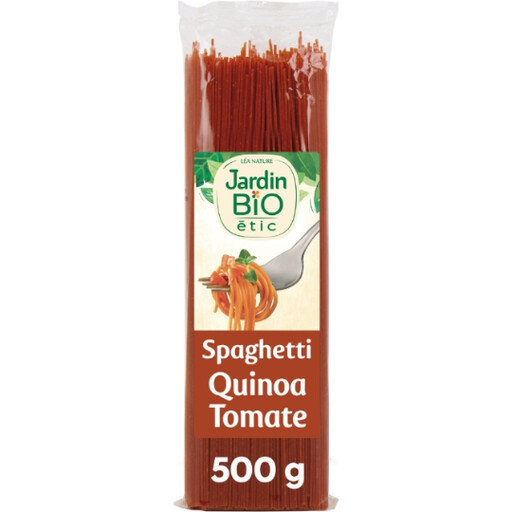 Image unavailable
JARDIN BIO ETIC Spaghetti with quinoa and tomato, 500 g
Another spaghetti option for a runny sauce, with quinoa and tomato listed in the name of this variety.
If any of your guests have dietary requirements, check the wheat and egg information and whether the product may contain traces of soya and mustard, as well as the organic labelling on the pack.
View on Joybuy
Frequently asked questions
How can you tell if pasta is organic from the pack?
Look for the EU organic logo, also known as the Euro-leaf, and organic claims on the product, then read the product description and ingredients. The Ministry of Agriculture explains that organic production is covered by European regulations and inspections. A claim that simply refers to natural ingredients is no substitute for this labelling.
Is organic pasta always gluten-free?
No. The durum wheat semolina products mentioned here contain wheat, and organic doesn’t mean “gluten-free”. If this matters to your guests, check the ingredients and allergen information for the specific product.
Should you choose wholewheat pasta for New Year’s Eve?
No. Choose classic, semi-wholewheat or wholewheat pasta to suit the texture you want and your recipe. The degree of refinement is separate from organic certification. Carrefour, for example, offers organic semi-wholewheat spaghetti, but always check both details on the pack you choose.
How should you store organic pasta after opening?
Keep dry pasta away from heat and moisture, and seal the bag carefully after opening. Auchan gives these instructions for its organic spaghetti. Check the directions on the pack you’ve bought, too.
Does a French retailer always sell pasta made in France?
No. Auchan states that the organic spaghetti mentioned here is made in Spain, while E.Leclerc says its Bio Village small pasta shapes are made in Belgium. Check the country of manufacture and ingredient origins separately for each product.


