When doing your food shop in retirement, check the organic labelling first, then decide whether you want classic, semi-wholemeal or wholemeal pasta: organic labelling alone doesn’t tell you how refined the pasta is. Look for “wholemeal” or “semi-wholemeal” if you want less refined starchy foods. In every case, check the ingredients, allergens and pack size.
Who are these options for?
People who also want less refined pasta
If you’re looking for organic pasta and would also like to choose more wholemeal or semi-wholemeal starchy foods, look for these terms on the pack. Organic labelling and the degree of refinement are two separate criteria, as highlighted by the French Ministry of the Economy’s information on organic products and Manger Bouger’s guidance on starchy foods.
Retirees who prefer familiar recipes
Classic organic durum wheat pasta can be a good fit for your usual meals. Still, check the ingredients and allergen information: “organic” doesn’t mean “wholemeal” or “gluten-free”. Barilla and Panzani’s organic spaghetti product information lets you check the ingredients in these products.
People who choose according to their local shop
If you regularly shop at the same retailer, check which shapes and pack sizes are available locally. Carrefour and E.Leclerc catalogues feature classic organic pasta as well as wholemeal and semi-wholemeal options. What’s available depends on the store and how you choose to collect your shopping.
What should you look for?
Start by checking the organic labelling, then decide whether you want classic, semi-wholemeal or wholemeal pasta. Next, check the allergens and choose a pack size that suits your shopping needs.
| Criterion |
What to check |
Who is it for? |
| Organic labelling |
Look for the EU organic logo, then read the product name and ingredients. The French Ministry of the Economy explains that the organic designation is governed by EU regulations. |
I want to be able to recognise that the pasta I put in my basket is organic, rather than relying on wording that simply suggests it’s natural. Around 36% of consumers would put this check first. |
| Degree of refinement |
Look for “wholemeal” or “semi-wholemeal”, then compare the fibre listed per 100 g. Manger Bouger distinguishes these starchy foods from refined varieties. |
I want to know whether my pasta is wholemeal, semi-wholemeal or classic, so I can add some variety to the starchy foods I usually eat. This would be the priority for around 29% of consumers. |
| Pack size and shop |
Check the net weight, pasta shape and availability at the store or collection service you’ve chosen. |
I prefer a pack size that suits how often I eat pasta and is available during my usual shop. Around 21% of consumers would prioritise this practical option. |
| Allergens and preparation |
Check the allergens and any possible traces listed on each pack. Also read the cooking and storage instructions. |
Before cooking, I need to be able to check which ingredients to avoid and the instructions for the specific product I’ve bought. This would come first for around 14% of consumers. |
Common mix-ups to avoid
-
Assuming “organic” means “wholemeal”
Pasta can be organic without being wholemeal. The production method and degree of refinement are not the same thing.
If you want less refined pasta, look for the term “wholemeal” or “semi-wholemeal”, and check the ingredients and nutritional information.
-
Assuming “organic” means “gluten-free”
The durum wheat products from Barilla, Panzani and Lustucru contain wheat or gluten. Depending on the product, the label may also mention other allergens or possible traces.
If you need to avoid an ingredient, check the label on the specific product. The organic logo is no substitute for reading it.
-
Choosing a pack without checking what’s in store
Carrefour and E.Leclerc catalogues feature several shapes of organic pasta, but what’s available may vary depending on the store and your chosen collection method.
Before completing your shop, check the pack size and product available at the store you plan to use.
Organic pasta brands to compare
Barilla
Spaghetti Bio is a durum wheat pasta option to consider if you’re looking for a classic recipe.
- Barilla France’s product information lists durum wheat semolina from organic farming and water.
- This ingredient list alone doesn’t make the spaghetti wholemeal; wheat is also relevant when checking for allergens.
Panzani
Panzani’s organic range includes spaghetti, penne, fusilli and farfalle.
- The Spaghetti BIO product information lists a recipe made with durum wheat semolina from organic farming.
- This product contains wheat and gluten; the organic designation doesn’t mean it’s wholemeal.
Lustucru
Penne Bio Complètes is explicitly labelled as both organic and wholemeal.
- Lustucru describes these penne as pasta made with wholemeal durum wheat semolina.
- This applies to Penne Bio Complètes, not every Lustucru pasta product. Check the label for allergen information.
Carrefour Bio
The Carrefour catalogue lets you browse several shapes of organic pasta, including less refined options.
- Products featured include organic semi-wholemeal spaghetti and organic wholemeal wheat coquillettes.
- Check which product and pack size are available at your store or through your chosen collection method.
Bio Village (E.Leclerc)
The E.Leclerc catalogue features classic and wholemeal Bio Village pasta in a range of shapes.
- Options include organic spaghetti and organic wholemeal twists.
- Check what your store stocks before counting on a particular shape or variety.
Auchan Bio
Auchan Bio Penne is a durum wheat option. Its product information lets you check the ingredients and storage instructions.
- Auchan’s product information lists organic durum wheat semolina.
- It warns that the product may contain traces of egg, soya and mustard. Check the label if these ingredients are relevant to you.
Spaghetti to explore on Joybuy
These two JARDIN BIO ETIC products are 500 g packs of spaghetti with different recipes. If organic certification or the degree of refinement is important to you, check the relevant details on each pack.
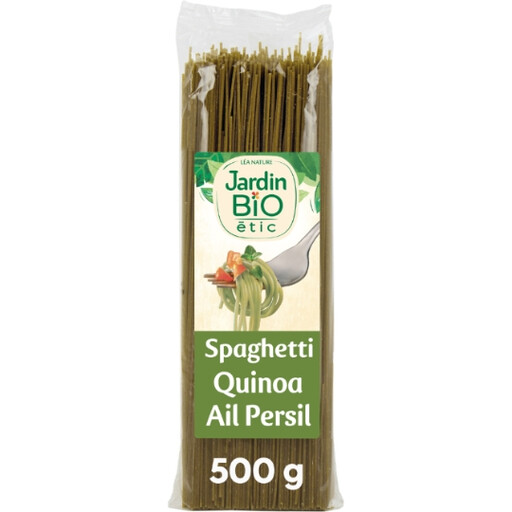 Image unavailable
JARDIN BIO ETIC Quinoa, parsley and garlic spaghetti, 500 g
A recipe to consider if you’d like a change from plain spaghetti while keeping the same pasta format. Check the organic and semi-wholemeal details on the pack before choosing it on that basis.
The product information lists wheat and gluten, as well as possible traces of egg, soya and mustard. Read the label if these allergens are relevant to you.
View on Joybuy
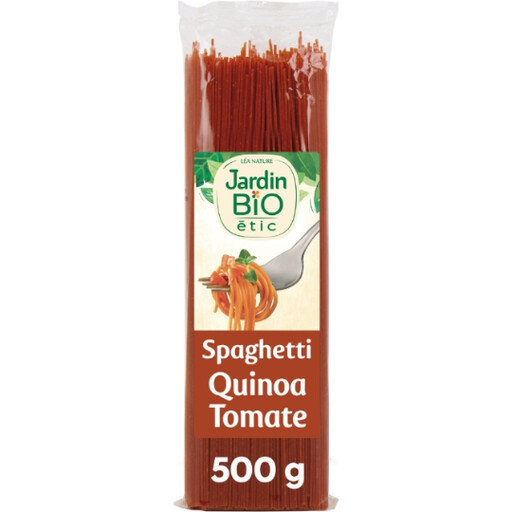 Image unavailable
JARDIN BIO ETIC Quinoa and tomato spaghetti, 500 g
Another 500 g spaghetti recipe to compare with the parsley and garlic version, depending on the ingredients you’d like to cook with. Check the organic and semi-wholemeal details on the pack if these are important to your choice.
The product information lists wheat, gluten and egg, as well as possible traces of soya and mustard. Check the label if these allergens are relevant to you.
View on Joybuy
Frequently asked questions
How can you identify organic pasta in France?
Check the labelling, including the EU organic logo, product name and ingredients. The French Ministry of the Economy explains that the organic designation must meet the requirements of EU regulations on organic farming.
Is organic pasta always wholemeal?
No. “Organic” refers to the production method, while “wholemeal” or “semi-wholemeal” tells you how refined the pasta is. If this distinction matters to you, look for the relevant wording and compare the fibre listed per 100 g.
Is organic durum wheat pasta suitable if I need to avoid gluten?
The durum wheat products mentioned here aren’t suitable if you need to avoid gluten: the product information for Barilla and Panzani organic spaghetti and Lustucru Penne Bio Complètes lists wheat or gluten. Choose a product with labelling that meets your requirements, and check for any other declared allergens too.
How should you store organic pasta after opening?
Follow the instructions on the pack you’ve bought. For Auchan Bio Penne, Auchan advises keeping the pasta away from heat and moisture, then sealing the bag tightly or transferring the pasta to an airtight container after opening.


