People who compare fat content first
You’re looking for organic dried pasta and want to check the fat and saturated fat per 100 g before choosing a shape or brand. Nutrition information per 100 g makes comparisons easier, as the DGCCRF points out.


When choosing organic pasta and keeping an eye on fat, check that the exact product is labelled organic, then compare the figures per 100 g of dry pasta. The Auchan Bio coquillettes, Barilla Organic Spaghetti and Bio Village wholewheat spaghetti featured here contain between 1.6 and 2.0 g of fat per 100 g. Fibre, allergens and what you serve with them are separate considerations.
You’re looking for organic dried pasta and want to check the fat and saturated fat per 100 g before choosing a shape or brand. Nutrition information per 100 g makes comparisons easier, as the DGCCRF points out.
You enjoy the texture of wholewheat pasta and want to compare fibre content without losing sight of fat. According to E.Leclerc, Bio Village wholewheat spaghetti contains 8.0 g of fibre and 2.0 g of fat per 100 g.
You prefer a familiar shape and an easy-to-read ingredients list. Before buying, check the allergens for the exact product too: organic wheat pasta still contains wheat, while precautionary trace warnings vary by product.
Start by checking the organic label and the nutrition information per 100 g of dry pasta. Then choose between classic and wholewheat pasta based on the fibre, texture and ingredients that matter to you. The figures for the pasta don’t include those for the sauce.
| Criterion | What to check before buying | Who it matters to |
|---|---|---|
| Fat in the pasta | Compare the fat and saturated fat per 100 g of dry pasta. Assess the seasoning separately. | If my main aim is to limit the fat in the pasta itself, I want to compare labels on a like-for-like basis. Around 42% of consumers prioritise this criterion. |
| Fibre and wholewheat pasta | Check the ingredients, then the fibre and fat per 100 g. “Wholewheat” doesn’t mean “gluten-free”. | Wholewheat pasta appeals to me if I like the texture and want to take its fibre content into account. This is the main criterion for around 33% of consumers. |
| Shape and ingredients | Check the shape, cooking time and allergens for the exact product; don’t assume its composition based on the organic label alone. | For everyday meals, I want a practical shape with ingredients that suit my household. This is the top priority for around 25% of consumers. |
Organic certification relates to how a product is made; it doesn’t tell you how much fat the pasta contains or how much is in the finished dish.
Look for the organic label on the product, then check the “fat” and “of which saturates” lines in its nutrition information separately.
Figures per serving don’t allow a direct comparison between two products if the serving sizes differ. The DGCCRF points out that nutrition information is given per 100 g or 100 ml to make comparisons easier.
For dry pasta, first compare the figures per 100 g, then choose how much to cook.
Wholewheat pasta made from wheat contains gluten. Other allergens and possible traces depend on the product: Lustucru, for example, states that its Penne Bio Complètes are made in a facility that uses eggs and may contain traces of celery.
If an allergen is relevant to you, read the ingredients and warnings on the exact product’s packaging rather than relying on the words “organic” or “wholewheat” alone.
A product listing may describe pasta without confirming that it’s available at your chosen store. E.Leclerc specifically asks customers to check availability of its Bio Village wholewheat spaghetti with the relevant store or Drive service.
Check the product and its availability at your chosen store before planning a meal around it.
These examples refer to specific products, not every item in each brand’s range. To compare their labels, use the same 100 g basis and check the ingredients for the shape you’ve chosen.
According to Barilla France, the range includes 500 g packs of Organic Spaghetti made with organic durum wheat semolina and water.
Lustucru describes its Penne Bio Complètes as pasta made from whole durum wheat semolina.
The Carrefour France catalogue includes Carrefour Bio fusilli, penne rigate, coquillettes and farfalle.
The range includes 500 g packs of organic wholewheat spaghetti made from organic whole durum wheat semolina.
Auchan France’s range includes organic coquillettes made with French organic durum wheat.
These two Jardin Bio Etic products are coloured quinoa spaghetti, made with different combinations of ingredients. Compare the variety and the information on the packaging; the nutrition figures for the pasta don’t include those for what you serve with it.
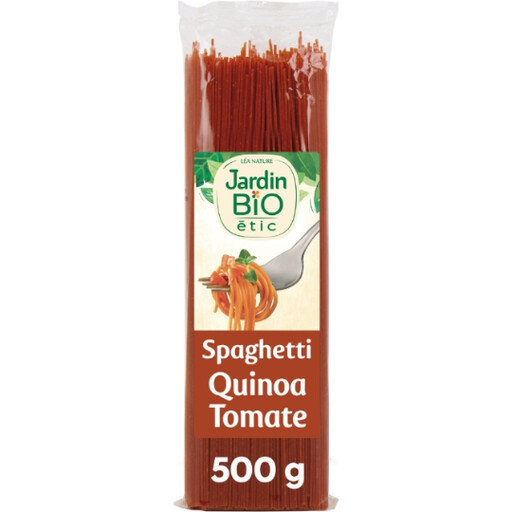 Image unavailable
Worth considering if you’re looking for organic spaghetti with quinoa and tomato. The Joybuy France product listing states that it contains 1.9 g of fat and 4.5 g of fibre per 100 g. It lists wheat and eggs as allergens, so check the packaging if this information matters to your choice.
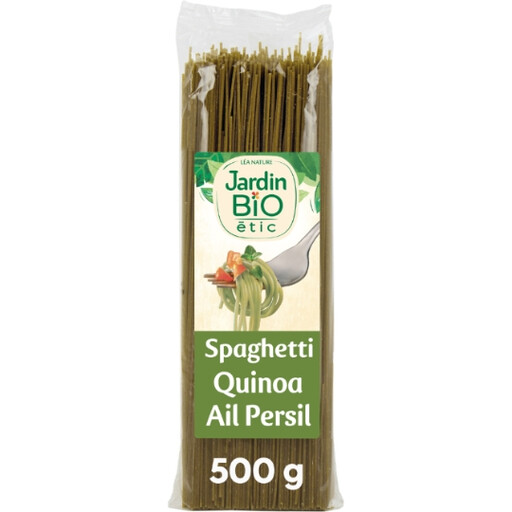 Image unavailable
This 500 g variety is a good choice if you prefer a recipe combining quinoa, parsley and garlic to the tomato version. If you’re comparing the two spaghetti varieties for fat content or need to avoid an allergen, check the figures per 100 g and the packaging information for this specific product.
No. Organic certification relates to how a product is made, not to a specific fat content. To choose between two organic pasta products, compare their nutrition information per 100 g and consider what you serve with them separately.
Check the organic information for the exact product, including the EU organic logo if it appears on the packaging, and read the ingredient details. The French Ministry of Agriculture explains that organic certification is governed by EU regulations applied in Member States; a general description of a range is no substitute for checking the pack you’ve chosen.
No. If it’s made from wholewheat, it contains gluten. Lustucru states this for its Penne Bio Complètes: if you need to avoid gluten, check the ingredients and allergens for each product rather than relying on the word “wholewheat”.
When comparing two packs of dry pasta, start with the figures per 100 g, even if you have different serving sizes in mind. The DGCCRF says this common basis in the nutrition information makes comparisons easier. The amount you actually cook and any ingredients you add will depend on the meal you’re preparing.