For a world cuisine evening, first choose pasta with organic certification that you can identify on the packaging, then pick a shape to suit the recipes you have planned. Spaghetti can be the base for a main course, while shorter shapes are useful if your menu includes other dishes. Check the ingredients and allergens separately: ‘organic’ does not mean ‘wheat-free’ or ‘gluten-free’.
Who is this choice for?
Hosts who care about organic certification
You want to tell the difference between a certification and a vague reference to natural ingredients. The European Commission says that the code of the control body and the origin of the agricultural raw materials appear next to the EU organic logo.
Hosts planning a buffet with several dishes
You’re planning a main course alongside other dishes. The ranges featured by Carrefour and E.Leclerc include organic spaghetti and several short shapes. Choose your pasta shapes once you’ve settled on the recipes.
Hosts who need to check ingredients
You’re serving guests with dietary requirements. The organic durum wheat pasta products described by Barilla, Carrefour and Auchan contain wheat; any warnings about possible traces vary by product.
What should you look for?
Decide on your recipes and take your guests’ dietary requirements into account before choosing shapes. Then check the certification and label on each pack.
| What to consider |
What to check |
Who it matters to |
| Organic certification |
Look for the EU organic logo, the control body code and an indication of agricultural origin nearby. The AB mark may also appear. |
If I choose organic pasta for the evening, I want to be able to identify the certification on the pack rather than rely on the product name. Around 40% of consumers would make this a priority. |
| Shapes and recipes |
Choose shapes to suit the dishes you have planned, and check the cooking time on the pack to help organise serving. |
When serving several dishes, I want pasta shapes that work with my recipes without making cooking unnecessarily complicated. This would be a priority for around 30% of consumers. |
| Ingredients and serving |
Read the ingredients, allergens, any possible trace warnings and the storage instructions on the specific pack. |
Before serving my guests, I need to know whether the pasta contains wheat or has any other allergen warnings. Around 30% of consumers would make these checks a priority. |
What should you watch out for?
-
Assuming ‘organic’ means ‘gluten-free’
The organic spaghetti products described by Barilla and Auchan, as well as the Carrefour Bio pasta mentioned here, are made with durum wheat. Some product listings also warn that other allergens may be present in traces.
If you or your guests have dietary requirements, check the ingredients and allergen information on every pack, even when switching to a different variant.
-
Relying on the word ‘natural’ alone
The word does not replace certification details. The European Commission explains that the EU organic logo is accompanied by a control body code and an indication of agricultural origin.
Check that these details appear on the packaging of the product you plan to serve.
-
Choosing shapes before deciding on recipes
An evening with several dishes doesn’t necessarily call for several types of pasta: each extra shape means another cooking time to organise.
Decide on the dishes and how you’ll serve them first, then add a short pasta shape only if one of your planned recipes calls for it.
Pasta brands to consider, product by product
A brand may offer several shapes or variants. Check the certification, ingredients and allergen information for the specific product you’re considering.
Barilla
Barilla’s Organic Spaghetti are a long pasta option for a main course. The brand lists a 500 g pack with a cooking time of 8 minutes.
- The product listing gives the ingredients as organic durum wheat semolina and water.
- This product contains wheat; Carrefour warns that traces of soya and mustard may be present on the listing for the product it sells.
Carrefour Bio
The range featured by Carrefour includes organic spaghetti, penne rigate, fusilli, farfalle and coquillettes, as well as semi-wholewheat spaghetti.
- The range of shapes lets you choose according to the recipes you have planned.
- One organic durum wheat pasta listing warns that traces of other cereals containing gluten, soya, eggs, mustard and lupin may be present. Check the label of the specific product you choose.
Bio Village (E.Leclerc)
The range featured by E.Leclerc includes organic spaghetti, coquillettes, penne, wholewheat twists, wholewheat farfalle and tagliatelle.
- These shapes offer plenty of options for a menu with several dishes.
- Check the ingredients, allergens and certification details on each pack.
Auchan Bio
Auchan offers organic durum wheat spaghetti and a separate organic wholewheat spaghetti variant.
- The 500 g organic spaghetti listing gives a cooking time of 8 to 10 minutes, depending on your preferred texture; the wholewheat variant displays the Euro-leaf and AB logos.
- The organic spaghetti listing warns that traces of eggs, soya and mustard may be present.
Panzani
Panzani offers a range of dried pasta in different shapes, including long and short varieties, to help you put a meal together.
- The choice of shapes can help you find the right pasta for your planned recipes.
- If you want to include a product in an organic menu, check its certification on the packaging.
Lustucru
Lustucru Sélection offers fresh pasta, gnocchi and filled pasta. These are different categories from the dried pasta featured elsewhere in this selection.
- These categories could work well in another dish on your menu.
- If you need organic certification, check it on the specific product before choosing it.
Spaghetti available on Joybuy
These two JARDIN BIO ETIC variants are intended for a spaghetti dish. Their names include ‘Organic’; before choosing them for an organic menu, check the packaging for the EU organic logo, the control body code and an indication of agricultural origin. Also check the ingredients and allergen information for each variant.
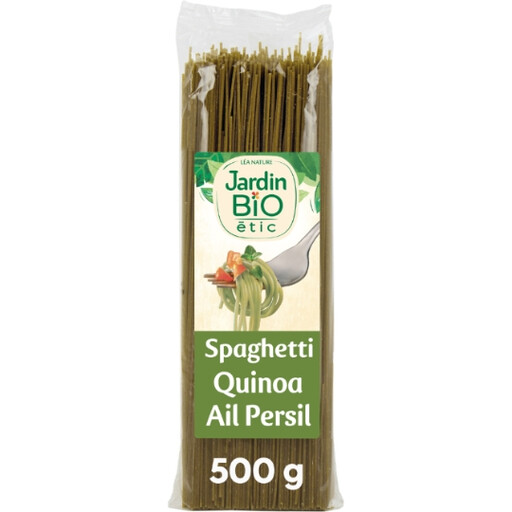 Image unavailable
JARDIN BIO ETIC Organic Coloured Spaghetti with quinoa, parsley and garlic, 500 g
A variant to consider if your planned dish calls for spaghetti with quinoa, parsley and garlic.
The product name lists a 500 g pack. Before serving guests with dietary requirements, check the ingredients, allergens and any possible trace warnings on the label.
View on Joybuy
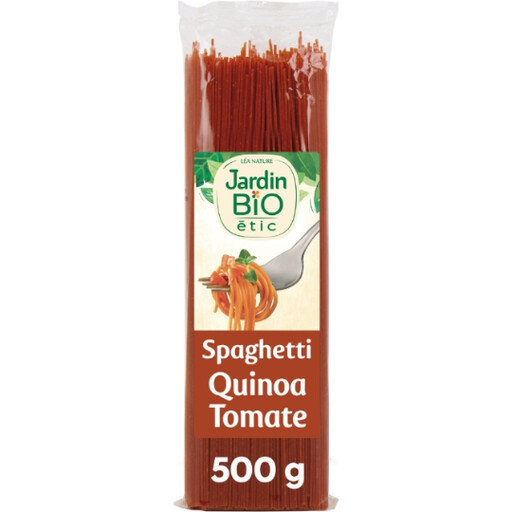 Image unavailable
JARDIN BIO ETIC Organic Coloured Spaghetti with quinoa and tomato, 500 g
Another spaghetti variant to consider if tomato suits your planned recipe.
The product name lists a 500 g pack. Check the ingredients and allergen information for this variant on the label; don’t assume they’re the same as for the parsley and garlic product.
View on Joybuy
Frequently asked questions
How can you tell if pasta is certified organic?
For pre-packed pasta sold as organic in the European Union, look for the EU organic logo on the pack. The European Commission says the control body code and the origin of the agricultural raw materials appear nearby; the AB mark may also be shown in France.
Can organic pasta contain gluten?
Yes. The organic durum wheat pasta products featured by Barilla, Carrefour and Auchan contain wheat. If you need to avoid wheat or gluten, check the ingredients and allergen information on the specific product rather than relying on the organic logo.
Do you need to choose wholewheat pasta for an organic menu?
No. ‘Wholewheat’ and ‘organic’ describe two different characteristics. If you want to offer a wholewheat or semi-wholewheat option, check both details on the pack. Carrefour Bio offers semi-wholewheat spaghetti, while Auchan Bio offers organic wholewheat spaghetti.
How should you store dried pasta after opening?
Follow the instructions on the pack you’ve chosen. For its organic spaghetti, Auchan recommends keeping the product away from heat and moisture and sealing the bag securely after opening.


