For an everyday organic cupboard
You’re looking for dried pasta to keep on hand for everyday meals. The organic logo, ingredient list, best-before date and storage instructions can help you decide which packs to stock up on.


To stock your cupboard with organic pasta, first choose a product whose organic status is clearly shown on the pack. Then check whether it’s made with refined, semi-wholemeal or wholemeal semolina, depending on the meals you usually make. The word ‘organic’ alone doesn’t tell you how refined the pasta is: check the ingredients and allergens too, and follow the storage instructions on the pack.
You’re looking for dried pasta to keep on hand for everyday meals. The organic logo, ingredient list, best-before date and storage instructions can help you decide which packs to stock up on.
You want a particular level of refinement. Check the product description and the type of semolina listed in the ingredients: pasta labelled organic isn’t necessarily wholemeal.
Start by checking the product’s organic status and ingredients, then choose the level of refinement you want. If you’re stocking up for the cupboard, check the date and storage instructions too.
| What to check | Look for | Who is this for? |
|---|---|---|
| Organic status and ingredients | Look for the Euro-leaf or AB logo, then check the product’s ingredients and allergen information. | I want to make sure the pasta fits my organic shopping list and find out which grain it’s made from before putting it in the cupboard. Around 50% of consumers are said to make this their top priority. |
| Level of refinement | Look for ‘semi-wholemeal’ or ‘wholemeal’ in the product description, and check the type of semolina listed in the ingredients. | For my usual meals, I prefer to choose deliberately between refined, semi-wholemeal and wholemeal pasta. This is said to be the top priority for around 25% of consumers. |
| Storage | Check the best-before date and storage instructions, particularly for after opening. | If I keep several packs in reserve, I want to be able to store and use them in the right conditions. Around 25% of consumers are said to put this need first. |
Organic pasta can be made with refined, semi-wholemeal or wholemeal semolina. The organic logo alone won’t tell you whether it has the recipe or texture you’re looking for.
If you want semi-wholemeal or wholemeal pasta, check for these terms in the product description and ingredient list.
Auchan Bio product information advises keeping dried pasta away from heat and moisture, and closing the pack securely after opening.
Follow the instructions on the pack. Once opened, seal it carefully or transfer the pasta to an airtight container.
According to the DGCCRF, dried pasta is among the products that carry a best-before date. After this date, a product with intact packaging may have lost some of its flavour, but a best-before date is not the same as a use-by date.
Read the date on the pack and check its condition before using pasta that is past its best-before date.
Barilla describes its organic spaghetti as made in Italy from durum wheat grown using organic farming methods.
Panzani offers several pasta ranges as well as organic cooking sauces and bases.
Lustucru offers classic pasta and fresh egg pasta, among other products. The brand also features organic wholemeal penne.
Carrefour Bio product information features classic and semi-wholemeal organic dried pasta.
E.Leclerc product information features Bio Village classic organic spaghetti and organic wholemeal spaghetti.
Auchan Bio product information features classic and wholemeal dried pasta. Auchan describes one product, coquillettes, as made with organic durum wheat grown in the Vendée region.
These products add a little variety to your cupboard, with two recipes for colourful spaghetti and some udon noodles. Udon aren’t made from durum wheat semolina like spaghetti, so check the organic information and ingredients on each pack to make sure it suits your needs.
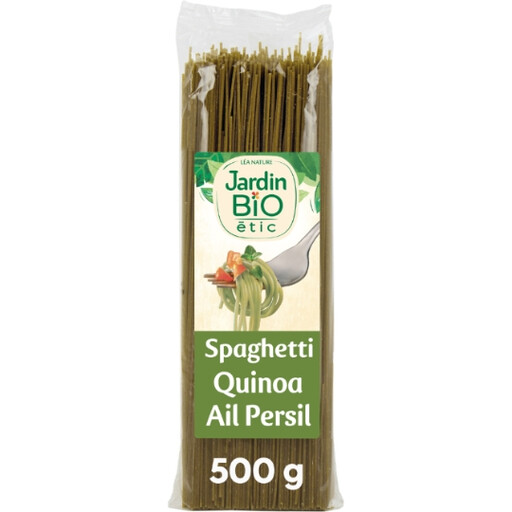 Image unavailable
A tasty twist on spaghetti to add variety to your dried pasta cupboard. Check the ingredients, allergens and applicable organic logo for France on the pack.
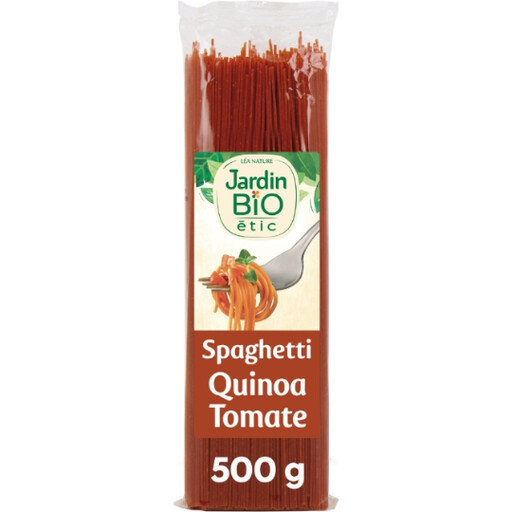 Image unavailable
Another tasty spaghetti recipe to keep in the cupboard, following the storage instructions on the pack. If you avoid certain ingredients, check the label and organic information for this variety carefully.
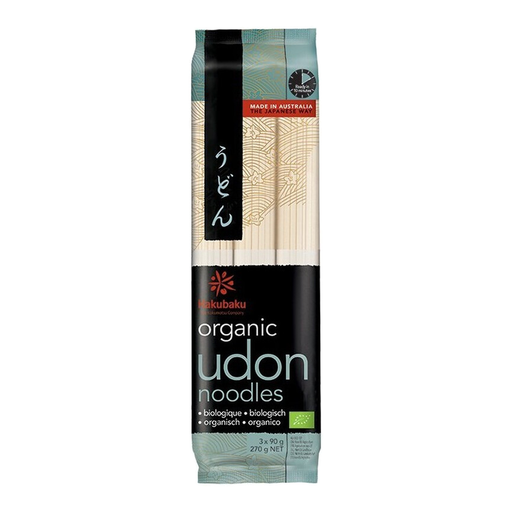 Image unavailable
These dried udon noodles are worth considering if you fancy something other than classic spaghetti. Before adding them to your organic shop, check the ingredients and applicable organic logo for France on the pack.
Look for the Euro-leaf or AB logo on the pack, then read the ingredients list. The French Ministry of the Economy presents these logos as guides to identifying products from organic farming. Always check the label on the product you buy.
No. The organic pasta featured by Carrefour Bio and Bio Village includes refined, semi-wholemeal and wholemeal varieties. To find out which one you’re choosing, look for the relevant description and check the type of semolina in the ingredients.
Follow the instructions on the pack and seal it carefully. The Auchan Bio product information we checked advises keeping pasta away from heat and moisture. Once opened, it recommends closing the pack securely or transferring the contents to an airtight container.
It’s usually a best-before date, worded ‘best before’. According to the DGCCRF, a product may still be safe to eat after its best-before date if the packaging is intact, although its flavour may have deteriorated. Check the pack and the product before use.
Don’t assume that ‘organic’ means ‘gluten-free’: the product information for Lustucru organic wholemeal penne says it naturally contains gluten. If this matters to you, check the ingredients, allergen information and label on every product.