Older people who enjoy tea with breakfast
They want mint green tea with ingredients they can read and organic certification they can check. The drink should remain an accompaniment to the meal.


For an older person’s breakfast, choose mint green tea if they enjoy the taste of tea and caffeine is suitable for them. Check the organic certification on the packaging. If avoiding caffeine is the priority, mint herbal infusion labelled ‘caffeine-free’ is another option. If they are taking oral iron, ask for advice on when to drink tea. In either case, the drink should accompany breakfast, not replace food.
They want mint green tea with ingredients they can read and organic certification they can check. The drink should remain an accompaniment to the meal.
If caffeine is a concern, particularly when it comes to sleep, mint herbal infusion labelled ‘caffeine-free’ offers a mint drink without a green tea base. Anses notes that caffeine can disrupt sleep.
According to Assurance Maladie, people taking oral iron should pay particular attention to when they drink tea. If appetite decreases, don’t let your choice of drink distract from the food at breakfast; Manger Bouger highlights the importance of dietary intake for older people.
Start by choosing the type of drink: mint green tea contains caffeine, while mint herbal infusion explicitly labelled caffeine-free meets a different need. In either case, check the organic certification and ingredients on the packaging.
Choose this if: the person enjoys the taste of tea and caffeine is suitable for them.
Bear in mind: according to Anses, caffeine can disrupt sleep; Assurance Maladie says green tea can interfere with the absorption of oral iron.
Choose this if: avoiding caffeine matters more than enjoying the taste of green tea.
Bear in mind: mint herbal infusion has no green tea base and does not replace breakfast foods.
| Criterion | What to check | Who it matters to |
|---|---|---|
| Organic certification and ingredients | Look for organic certification on the packaging, then read the ingredients: tea, mint and any natural flavouring. | I want to recognise organic certification on the box and understand what the recipe contains. Around 42% of consumers are said to put certification and ingredients at the heart of their choice. |
| Caffeine and oral iron | Tell the difference between green tea and an infusion labelled ‘caffeine-free’. If taking oral iron, follow the instructions and ask for advice on how long to leave between taking it and drinking tea. | If caffeine affects my sleep or I take oral iron, my choice of drink needs to take this into account. Compatibility with these needs is said to be the main priority for around 33% of consumers. |
| Its place at breakfast | Make sure the meal includes food rather than relying on tea or herbal infusion to replace it, especially if appetite decreases. | When my appetite drops, I want my drink to accompany a breakfast made up of food. For around 25% of consumers, its place in the meal is said to be the main consideration. |
Mint or packaging that suggests natural ingredients does not mean a product is organic. The Ministry of Agriculture notes that organic farming is governed by European regulations.
Check the organic certification on the packaging and read the ingredients list.
Assurance Maladie says green tea can interfere with the absorption of oral iron. Organic certification does not change this advice.
Follow the treatment instructions and ask a pharmacist or prescriber how long to leave between taking iron and drinking tea.
Green tea naturally contains caffeine. According to Anses, caffeine can disrupt sleep, although sensitivity varies from person to person.
If avoiding caffeine is a priority, look for an infusion explicitly labelled ‘caffeine-free’, bearing in mind that it is not tea.
Tea or herbal infusion does not replace the food you get from a meal. Manger Bouger notes that the nutritional needs of people over 75 do not necessarily decrease.
If appetite or weight decreases, pay attention to the meals you eat and speak to a healthcare professional.
Organic mint green tea in 20 sachets (40 g), with Auchan’s product listing showing the Euro-leaf and AB marks.
Organic mint green tea in 20 sachets, with stated proportions to help you compare the recipe.
Organic mint green tea in 20 sachets, with the ingredients specified on Auchan’s product listing.
Mint green tea described on its Joybuy product listing as organic and fair trade.
An infusion of three mints, rather than mint green tea, for people who prefer a drink labelled caffeine-free.
This selection includes one mint green tea and two mint herbal infusions. Product names are no substitute for checking the organic certification on the packaging. To avoid caffeine, choose a product explicitly labelled ‘caffeine-free’.
 Image unavailable
For a breakfast where mint green tea is the flavour of choice and caffeine is suitable.
The product name indicates a matcha recipe in a 20-sachet format. Check the organic certification on the packaging. If the person takes oral iron, ask for advice on when to drink the tea.
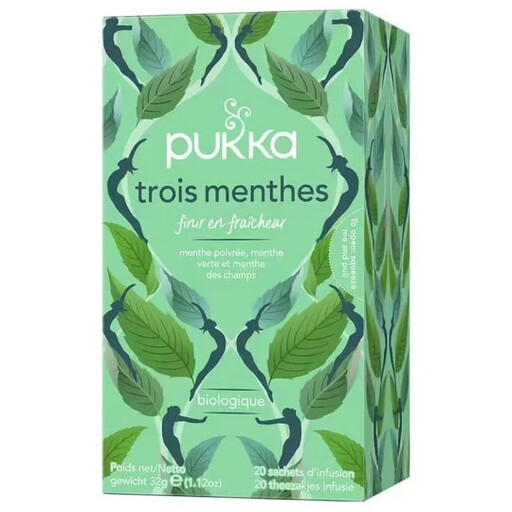 Image unavailable
For people who prefer mint herbal infusion labelled caffeine-free to green tea.
Joybuy’s listing for this three-mint infusion labels it ‘caffeine-free’ and says it contains organic ingredients. It is not green tea, so check the organic certification on the packaging.
 Image unavailable
For someone who wants a mint and verbena infusion without a green tea base.
The product comes in a 20-sachet format. If avoiding caffeine is essential, check for the relevant claim before buying. Also check the organic certification and brewing instructions on the packaging.
Look for organic certification on the packaging, such as the EU organic logo and, where applicable, the AB mark, then read the ingredients. The Ministry of Agriculture notes that organic farming is governed by European regulations; simply saying ‘natural’ is no substitute for organic certification.
No. Mint tea is a drink to accompany breakfast, not a replacement for food. Manger Bouger says that the nutritional needs of people over 75 do not necessarily decrease. If appetite or weight drops, speak to a healthcare professional.
Don’t decide on your own to drink green tea at the same time as taking the tablets: Assurance Maladie says green tea can interfere with the absorption of oral iron. Follow the instructions and ask a pharmacist or prescriber how long to leave between taking the tablets and drinking tea.
Choose mint herbal infusion explicitly labelled ‘caffeine-free’ rather than mint green tea. Anses notes that caffeine can disrupt sleep. Check the product type and claims on the box, as mint herbal infusion is not green tea.