People who make their own breakfasts
If you add matcha to a latte, porridge, smoothie or baked treat, a powder with clearly listed ingredients lets you choose what else goes into your recipe.


Whether you’re making breakfast or a winter recipe, first choose a matcha whose organic labelling and ingredients suit what you want to prepare. A small pack is ideal for trying it out or occasional use, while a 100 g size makes more sense if you cook with matcha regularly. Matcha is still a caffeinated tea, and how you store it is another factor to consider when choosing a size.
If you add matcha to a latte, porridge, smoothie or baked treat, a powder with clearly listed ingredients lets you choose what else goes into your recipe.
If organic certification matters to you, check the product label rather than relying on the word “matcha” alone. The Ministry of Agriculture notes that organic farming is covered by European regulations governing certification.
As matcha is a tea, take its caffeine content into account alongside your other caffeinated drinks. Anses notes that caffeine can affect how quickly you fall asleep and the quality of your sleep.
For homemade recipes, start by checking the organic labelling and ingredients, then choose a quantity that suits how often you’ll use the matcha.
| Criteria | What to check | Who it matters to |
|---|---|---|
| Organic status and ingredients | Check the organic labelling and the ingredients list. The Carrefour Bio listing states that its 55 g jar contains 100% green tea matcha from organic farming. | If I make my own breakfast, I want to know what’s in the powder before adding other ingredients. Around 42% of consumers might make this their top priority. |
| Cooking uses | Check the suggested uses and preparation instructions for the product you’re considering. Auchan’s listing for the 100 g pack of 110 Graines organic matcha mentions drinks and savoury or sweet recipes. | If I want to switch between lattes, porridge and baking, I mainly need a powder that suits my recipes. This could be the top priority for around 33% of consumers. |
| Pack size and availability | Compare pack sizes with how often you’ll use the matcha, and check that the product is still available before making a trip. Carrefour Bio and Lidl list 55 g and 40 g sizes respectively. | When I’m trying matcha for the first time or only use it occasionally, I prefer to choose an amount I can use up. Around 25% of consumers might prioritise pack size and availability. |
The name “matcha” alone doesn’t tell you whether a product is certified organic or contains other ingredients. This matters if you want to control what you add to your recipe.
Check the organic labelling and the full ingredients list for the product you’re thinking of buying.
A 100 g pouch is a different quantity from a small jar intended for just a few recipes. Make sure you can use it up and store it as directed.
Think about how often you’ll make matcha recipes before choosing a pack size, and follow the product’s storage instructions.
Powder that isn’t used often or isn’t stored properly could go to waste.
Lidl’s listing for 40 g of LOYD organic matcha shows an offer dated 2 October 2026. This date doesn’t confirm that the product will be available when you shop.
Check with the store before making a trip.
Organic certification doesn’t remove the caffeine from tea. According to Anses, caffeine can delay sleep and reduce its duration or quality.
If you’re sensitive to caffeine, take the other caffeinated drinks you consume into account too.
Carrefour’s listing features a 55 g jar of organic matcha for making recipes at home.
Auchan’s listing features 100 g of organic matcha powder, with suggestions for drinks and cooking.
Lidl lists 40 g of Japanese organic matcha powder for hot or cold drinks.
Aldi lists a 40 g pack of Asia Green Garden matcha powder.
These two organic matcha powders suit different routines: a 30 g pack for trying out recipes and a 100 g pack to consider if you make them regularly.
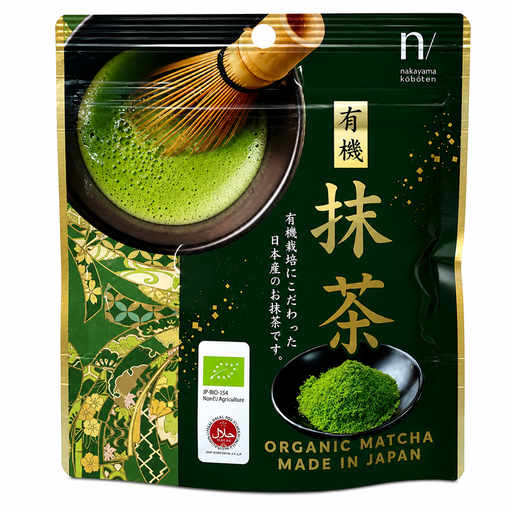 Image unavailable
The 30 g pack could be a good way to try matcha in a latte or baked treat. The Joybuy listing for JP Nakayama states that it contains 100% organic green tea, with no flavourings or other ingredients.
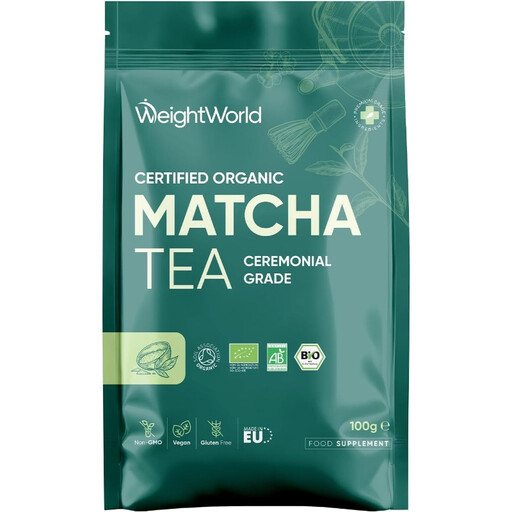 Image unavailable
The 100 g pack is worth considering if you regularly make matcha drinks or recipes. Choose this quantity to suit how often you’ll use it, and follow the storage instructions on the product.
Check the product’s organic labelling and ingredients list on the product page, then check the packaging too. The Ministry of Agriculture notes that organic certification is governed by European regulations; the word “matcha” alone isn’t enough to confirm that a product is organic.
A powder labelled as 100% organic green tea matcha lets you choose what to add to your latte or porridge. If you’re buying a ready-mixed product, read the full ingredients list before deciding whether it suits your recipe.
Follow the instructions for the product you’ve bought. Auchan’s listing for 110 Graines matcha recommends mixing around 2 to 4 g with 50 ml of water at 70 °C. It also recommends keeping the powder away from heat, light and moisture; these instructions may differ from those for other products.
Yes. Being organic doesn’t remove the caffeine that’s naturally present in tea. Anses notes that caffeine can affect how quickly you fall asleep and your sleep, so if you’re sensitive to it, take all your caffeinated drinks into account.