For a meal on the train, choose organic matcha powder if you want matcha with no added ingredients and can prepare your drink before setting off. Pre-measured sticks save you from measuring the powder, but you’ll still need a liquid and a container. Tea containing matcha is a better choice if you prefer an infusion and have access to hot water. Check the ingredients, as the Pukka blend featured by Auchan contains 2% matcha. In all cases, check the organic labelling on the packaging and bear caffeine in mind.
Who are these formats for?
If you’re looking for pure matcha
If you want to prepare a drink or breakfast before setting off, you’ll need to distinguish between a powder whose declared ingredient is organic matcha and an infusion that contains only a small amount. The ingredient lists shown by Carrefour and Auchan illustrate why the difference matters.
If you want to keep preparation to a minimum on board
You might prefer to measure out your powder before setting off, use a pre-measured stick or take a ready-made drink with you. The best option mainly depends on what liquid and container you’ll have during the journey.
If you’re keeping an eye on your caffeine intake
If you’re travelling late or already have coffee or tea as part of your day, take all your caffeinated drinks into account. Anses notes that caffeine’s effects on sleep vary from person to person.
What should you check before choosing?
For a meal on the train, first decide whether you’ll prepare your drink before boarding or during the journey. Then distinguish pure matcha from tea containing matcha, and check the packaging of the product you’re thinking of taking with you.
Organic matcha powder
Choose this if: you want matcha with no added ingredients and can prepare your drink before setting off or take what you need to mix it.
Bear in mind: a stick saves you from measuring the powder, but neither a stick nor a large pouch means you can do without liquid and a container.
Tea containing matcha
Choose this if: you prefer an infusion and can get hot water before or during your journey.
Good to know: its ingredients are different from those of pure powder. The Pukka tea featured by Auchan contains 2% matcha, and its product information recommends infusing it for up to 15 minutes.
| Priority | What to check | Who this matters to |
|---|
| Preparation and travel |
Consider whether you’ll have a suitable container and liquid. For powder, check the measuring and mixing instructions; a stick doesn’t remove these steps. |
If I’m having a meal on the train, I want to avoid measuring powder or working out how to mix it on board; around 42% of consumers would make this simplicity their priority. |
| Certification and ingredients |
For a prepacked product sold as organic, look for the Euro-leaf, the code of the inspection body and the indication of agricultural origin, then read the ingredients list. |
When I choose organic matcha to take with me, I want to be able to distinguish certification and ingredients from a product name alone; around 33% of consumers would put this check first. |
| Type of drink and caffeine |
Check whether it’s pure matcha or a blend intended for infusion. Also consider what other caffeinated drinks you’ll have that day. |
I want to know whether I’ll be drinking pure matcha or tea that contains matcha, while keeping my caffeine sensitivity in mind; around 25% of consumers would put their choice of drink first. |
Common mix-ups to avoid
-
Mistaking matcha tea for pure matcha
The product name alone doesn’t tell you what’s in it. Carrefour’s product information for SIPSTA lists 100% organic matcha green tea, while Auchan’s product information for Pukka tea lists 2% matcha in a green tea blend.
If you’re looking for pure powder, read the ingredients list and check that matcha is the only ingredient.
-
Taking powder with you without planning how to prepare it
Auchan’s product information for 110 GRAINES powder says to mix it with hot water at 70 °C. Mixing it during your journey may be less convenient than preparing your drink before setting off.
Decide in advance whether you’ll take a ready-made drink or a portion of powder to mix with a liquid you’ll have to hand.
Preparing it on board means you’ll need a container for mixing and, depending on your chosen method, a way to prevent lumps.
-
Assuming the organic logo tells you about the taste
According to the European Commission, the Euro-leaf appears alongside the code of an inspection body and an indication of agricultural origin. These details don’t, by themselves, tell you how it will taste or how much matcha a blend contains.
Check the organic labelling, stated origin and ingredients list separately before choosing a format to take with you.
-
Forgetting about other sources of caffeine
Organic tea still contains caffeine. Anses notes that caffeine can disrupt sleep and that its effects vary from person to person.
If caffeine is a factor in your choice, also consider the coffee, tea and other caffeinated drinks you have throughout the day.
Brands to know
SIPSTA
Carrefour offers organic matcha in pre-measured sticks, designed for making an individual drink on the go.
- Carrefour’s product information lists 100% organic matcha green tea for this product.
- The portion is pre-measured, but you’ll still need a liquid and a container to mix it in.
110 GRAINES
Auchan offers 100 g of organic matcha powder, which you can use in a drink or in something prepared before setting off.
- The product information recommends mixing around 2 to 4 g with 50 ml of hot water at 70 °C.
- The powder needs to be mixed; the product information recommends storing it away from heat, light and moisture.
Pukka
Auchan offers organic green tea containing matcha, packed in 20 tea bags for brewing.
- The format offered by Auchan lets you choose an infusion instead of powder that needs mixing.
- The product information lists 2% matcha in the blend, so this isn’t the same as pure matcha powder.
Joybuy products to suit these choices
These products let you explore two ways to enjoy a drink on your journey: prepare matcha before setting off or choose green tea with matcha to infuse. Check the ingredients and organic labelling on the packaging of the product you choose; a product name is no substitute for this information.
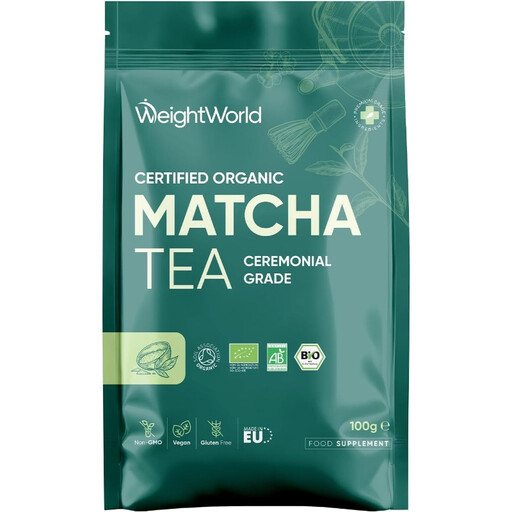 Image unavailable
WeightWorld Certified Organic Ceremonial Matcha Tea, powder 100 g
Worth considering if you can prepare your drink before setting off instead of mixing the powder on the train.
Format stated in the product name: 100 g. Before buying, check the organic labelling on the packaging and the preparation instructions to make sure they suit your journey.
View on Joybuy
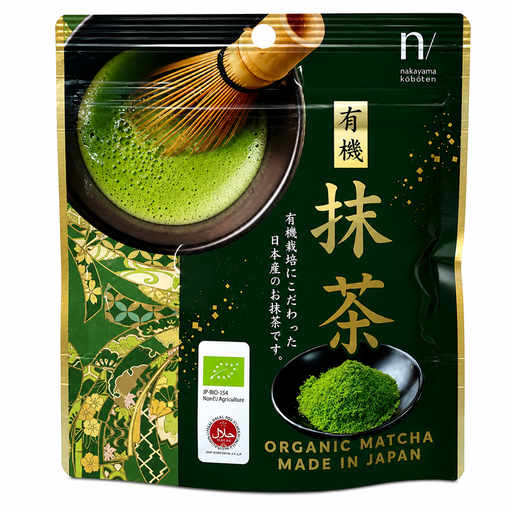 Image unavailable
JP Nakayama Organic Matcha 30 g
Consider this if you’d like to prepare a matcha drink before getting on the train.
Format stated in the product name: 30 g. Check the packaging for the ingredients, organic labelling and preparation instructions before planning to make it on board.
View on Joybuy
 Image unavailable
Pukka Matcha Green Tea, Organic, 30 g
Worth a look if you’d prefer green tea with matcha to pure matcha powder for your journey.
Format stated in the product name: 30 g. If you’re counting on individual portions, check the packaging; also read the ingredients and brewing instructions for the product on offer.
View on Joybuy
Frequently asked questions
How can you check the organic labelling on prepacked matcha?
For a prepacked product sold as organic in the European Union, look for the Euro-leaf, along with the inspection body’s code and the indication of agricultural origin displayed with the logo. The European Commission specifies these details; on their own, they don’t tell you about the taste or the product’s exact ingredients.
Can matcha tea bags replace pure matcha powder?
Not if you’re specifically looking for a product made with pure matcha. The Pukka tea featured by Auchan is a green tea blend containing 2% matcha, so it’s better suited to anyone who fancies an infusion. Read the ingredients list to find out what’s in the product you choose.
How can you avoid preparing powder on the train?
Prepare your drink before setting off in a suitable container, or measure out a portion in advance if you’ll be able to mix it during the journey. Instructions vary by product: Auchan’s product information for 110 GRAINES powder recommends around 2 to 4 g for 50 ml of hot water at 70 °C.
Does organic matcha contain caffeine?
Yes. Organic labelling doesn’t remove the caffeine naturally found in tea. Anses notes that caffeine can delay falling asleep and that sensitivity varies from person to person; take into account any other caffeinated drinks you have during the day.


