People who cook savoury breakfasts
You want to control how much matcha you add to eggs, a spread or a sauce, without buying a blend that also contains sugar, flavourings or other plants.


To add matcha to a savoury breakfast, choose a powder whose ingredient list contains only matcha green tea, then check the organic certification details on the packaging. A powdered latte or a matcha infusion won’t give you the same control over the quantity or ingredients. You should also choose a format that suits how often you’ll use it and follow the storage instructions.
You want to control how much matcha you add to eggs, a spread or a sauce, without buying a blend that also contains sugar, flavourings or other plants.
You want to distinguish organic certification from a product simply being described as natural. In that case, the details on the packaging and the ingredients list matter just as much as the product name.
You’re looking for a powder you can measure out to suit each recipe, and Japanese origin may be one of your selection criteria. Check the ingredients and format separately: origin alone won’t tell you whether a powder is suitable for your savoury recipe.
For cooking, start with the ingredients list, then check the organic certification details and choose an amount you can store in line with the instructions on the packaging.
| Criteria | What to check | Who it matters to |
|---|---|---|
| Ingredients | If you want a pure powder to measure out yourself, look for a list containing only matcha green tea. Make sure you don’t mistake it for a latte mix or a flavoured infusion. | When seasoning eggs or a spread, I want to decide for myself how much matcha and which other ingredients to use. Around 42% of shoppers put this control over the recipe first. |
| Organic certification | The certification details on the packaging, the product description and its ingredients list. | If certification is the reason I’m buying, a green colour or the word “natural” isn’t enough. Checking the organic certification details is the priority for around 33% of shoppers. |
| Format and origin | The net quantity, origin if it matters to you, and storage instructions once opened. | I cook with matcha more or less often, and don’t want to choose a format without thinking about how to store it. Origin may also influence my choice. These are the main considerations for around 25% of shoppers. |
Matcha may make up only a small part of a blend: according to Carrefour’s product listing, Pukka Matcha Mint infusion contains 2% matcha, alongside sencha and mint. You can’t measure this blend into a recipe in the same way as pure matcha powder.
If you’re cooking a savoury breakfast, check the ingredients before relying on the product name.
References to nature don’t replace information about organic farming. France’s Ministry of the Economy explains that products described as organic must meet EU rules.
Look for organic certification details on the packaging and check the ingredients list of the product you’re buying.
The amount you buy should suit how often you use the powder and the storage conditions specified.
Read the instructions on the packaging before choosing a format. Auchan’s product listing for 110 GRAINES matcha recommends storing it away from heat, light and moisture.
Organic certification doesn’t change that. Anses notes that excessive caffeine consumption can disrupt sleep, among other effects.
Consider how much matcha you use and what other caffeinated drinks you have during the day.
These examples show different ingredients, formats and uses to compare. A brand’s inclusion here isn’t an endorsement of its entire range.
Carrefour offers Carrefour Bio matcha green tea and also sells a SIPSTA product described as organic matcha powder.
Auchan offers 100 g of 110 GRAINES organic matcha powder, made in Japan according to the product listing.
Kusmi Tea offers two 30 g Japanese organic matcha powders: a classic version and one called Matcha Premium.
E.Leclerc offers a product called “300 g Organic Matcha Green Tea Powder”, among others.
These two matcha powders come in different formats, so you can measure out the amount you need. For a savoury breakfast, check the ingredients and organic certification details on the packaging before choosing; the product name alone doesn’t confirm that it’s suitable for cooking.
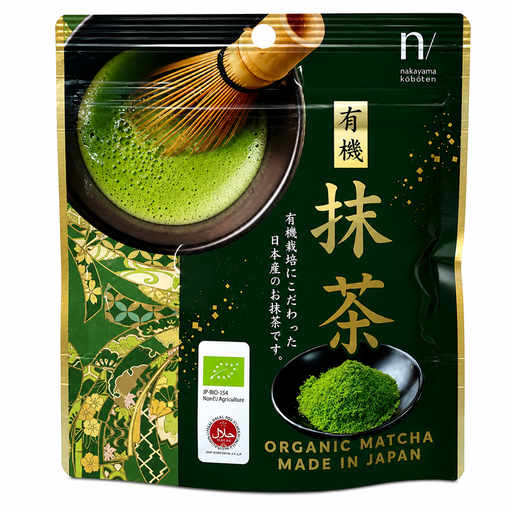 Image unavailable
The 30 g pack may suit you if you want to try adding matcha to a few savoury dishes. Before buying, check the ingredients, organic certification details on the packaging and storage instructions for after opening.
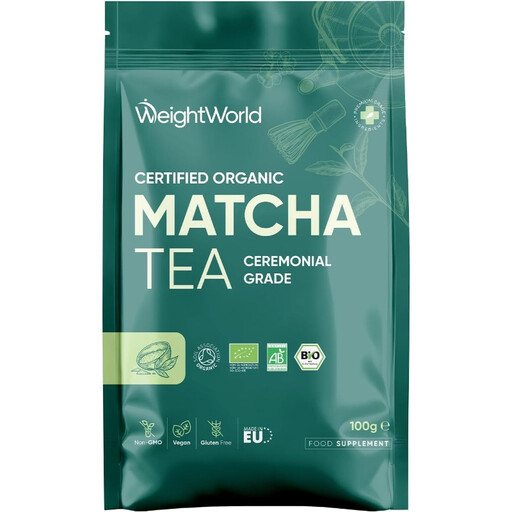 Image unavailable
If you plan to cook with matcha regularly, consider whether the 100 g pack suits how often you’ll use it. Check the ingredients and certification details on the packaging, then follow the instructions for sealing and storing the pouch.
Check both the organic certification details on the packaging and the ingredients list. If you want to measure matcha into a savoury recipe on its own, look for a powder with matcha as its only ingredient rather than a ready-to-drink blend.
Yes. Some powders are promoted for this use: Auchan’s product listing for 110 GRAINES says it can be added to both savoury and sweet dishes. For another product, check the ingredients first and adjust the amount to suit the flavour you’re after.
Not necessarily: matcha may make up only a small proportion of an infusion. Carrefour’s product listing for Pukka Matcha Mint tea states that it contains 2% matcha. With sencha and mint in the blend, it isn’t a pure powder you can measure into a dish.
Follow the instructions on the packaging. For example, Auchan’s product listing for 110 GRAINES matcha recommends protecting it from heat, light and moisture. Check the instructions for the specific format you buy, too.
Yes. Matcha contains caffeine, even when it’s organic. Anses highlights the possible effects of excessive caffeine consumption, so consider how much matcha you use and your other sources of caffeine throughout the day.