What should you look for?
For an indulgent coffee break, start with how you’ll use the matcha most often. Then check the ingredients, organic certification details and how much you’re likely to use.
| Criteria |
What to check |
Who it matters to |
| Certification and ingredients |
Look for the Euro-leaf, the control code and details of the agricultural origin on the packaging. If you want a powder with nothing added, read the full ingredients list. |
When I’m making breakfast, I want to tell the difference between certified organic matcha powder and a sweetened or flavoured preparation. Around 45% of consumers would make this their priority. |
| Cooking and baking |
Check whether the product is recommended for lattes, cold drinks or baking, then choose a pack size to suit how often you plan to use it. |
I switch between lattes and desserts, so I’m looking for a powder I can measure out for different recipes. Around 33% of consumers would prioritise this versatility. |
| Drinking it straight |
Read the flavour profile and preparation advice for the product. Also consider when you drink caffeinated tea. |
I prefer matcha with water rather than milk, so I want to choose based on the flavour notes described, without assuming how it will taste in the cup. Around 22% of consumers would put drinking it straight ahead of other criteria. |
Matcha powder on Joybuy
This smaller pack suits anyone who wants to measure out their own matcha for a latte or recipe for an indulgent coffee break. If certification will determine your choice, check the organic details on the packaging.
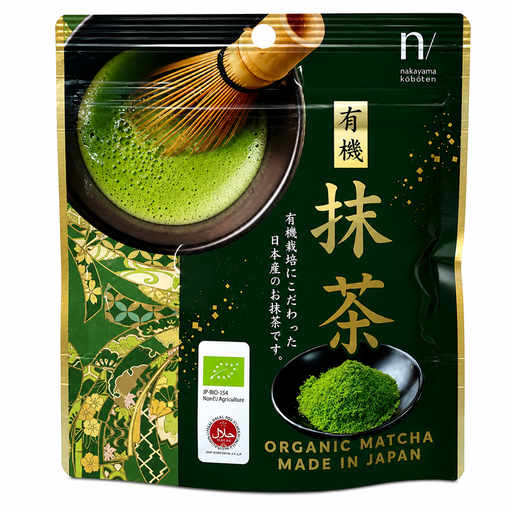 Image unavailable
JP Nakayama Organic Matcha 30 g
Measure out the matcha yourself for a latte or bake. The Joybuy product page lists the ingredients as 100% organic green tea, with nothing else added. The pack contains 30 g. To confirm organic certification, check the details on the packaging.
View on Joybuy
Frequently asked questions
How can I check whether matcha is organic?
For a pre-packed product sold as organic in the European Union, look for the Euro-leaf, along with the control code and details of the agricultural origin on the packaging. The European Commission says the organic logo can only be used for products certified by an authorised control body or authority.
Do you need ceremonial matcha for an indulgent coffee break?
No. The term alone won’t tell you whether a matcha will suit every recipe. Kusmi Tea describes its ceremonial variety as having gentle vegetal and umami notes for drinking straight. If you mainly make lattes or bakes, check the ingredients and suggested uses for the powder instead.
What water temperature should I use to prepare matcha?
Follow the instructions for the product you’ve bought. The Auchan product page for 110 GRAINES and the Kusmi Tea product page recommend 70 °C and 80 °C respectively for those products. These temperatures aren’t a one-size-fits-all rule for every matcha.
How should I store the powder after opening?
Follow the instructions on your packaging and seal the container carefully after use. For its 110 GRAINES matcha, Auchan recommends storing the powder away from heat, light and moisture.
Is organic matcha suitable as an evening drink?
Matcha contains caffeine, so when you drink it matters if you’re sensitive to caffeine. Anses says caffeine can delay falling asleep and affect how long or how well you sleep, with sensitivity varying from person to person.


