What to look for when buying for breakfast in a care home
Start by checking the label on the product you buy, then choose the preparation format. Before serving it, have the recipe and portion reviewed in line with the care home’s protocol.
| Criterion |
What to check |
Who this matters to |
| Organic certification |
Look for the Euro-leaf on the packaging you receive and compare the label with the supplier’s product information. |
If the care home needs to substantiate an organic claim when purchasing, I want to be able to check the product delivered. Around 29% of consumers would put this evidence first. |
| Caffeine and serving protocol |
Have the planned portion and serving time reviewed against the protocol and each resident’s individual circumstances. |
Where a resident’s sleep or dietary care requires particular attention, I need to have the serving arrangements approved before adding matcha to the menu. This suitability would be the main priority for around 36% of consumers. |
| Ingredients and recipe |
Check the ingredients list and, for a blend, the stated proportion of matcha. |
If the kitchen is adding matcha to a dish, I want to distinguish pure powder from a blend so I can define the recipe. Around 21% of consumers would prioritise this control over the ingredients. |
| Packaging and supply |
Confirm the pack size and availability with the supplier before planning your purchases. |
When the menu depends on regular orders, I need to be able to get the chosen pack size and check whether a substitute product might be supplied. Continuity of supply would come first for around 14% of consumers. |
Brands to consider
These products illustrate different formats and labels to compare. Their inclusion here does not guarantee availability to the care home or suitability for every resident.
Carrefour Bio
Carrefour lists a 55 g jar of organic matcha green tea.
- The product information identifies it as certified organic.
- Before adding it to your order, check the label on the product you receive and have the planned serving portion reviewed.
110 GRAINES
Auchan lists 100 g of organic matcha powder bearing the Euro-leaf and AB logos.
- The certification logos give you specific details to look for on the packaging.
- Check these logos on the batch you buy, and decide separately on the recipe and serving arrangements.
Clipper
Carrefour lists a Clipper product described as pure organic matcha green tea powder.
- Powder may be worth considering if the kitchen wants to create its own recipe.
- Check the ingredients and certification on the packaging you actually receive; the stated purity does not determine how much to serve.
Pukka
Auchan lists a box of 20 organic matcha green tea bags; the stated ingredients include 2% matcha.
- Tea bags are designed for brewing, rather than adding pure powder to a recipe.
- Check the ingredients on the batch you buy and take the caffeine in the tea into account before serving.
Asia Green Garden
Aldi France lists 40 g of matcha powder under this brand.
- The 40 g pack size makes it easy to identify the product to check.
- If your purchase requires organic certification, look for evidence on the packaging of this product before choosing it.
Joybuy products: matcha powder and tea
These products let you compare two formats for breakfast: matcha powder for recipes and matcha green tea for brewing. Choosing them for a care home menu is a separate decision from whether to serve them to residents.
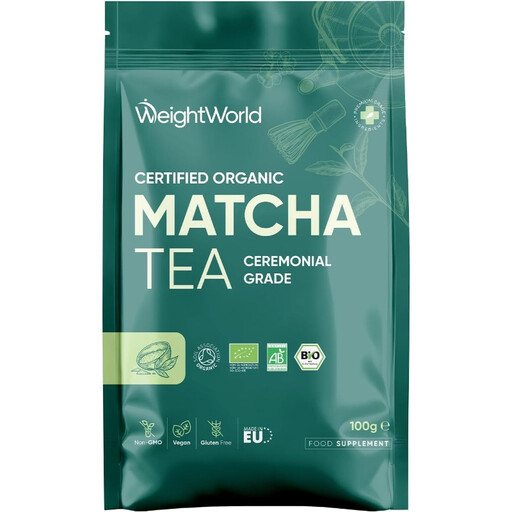 Image unavailable
WeightWorld Certified Organic Ceremonial Matcha Tea powder, 100 g
Worth considering if the kitchen plans to add matcha powder to a recipe created by the care home.
Check the certification on the packaging you receive and have the amount actually served reviewed, along with how caffeine fits into the protocol.
View on Joybuy
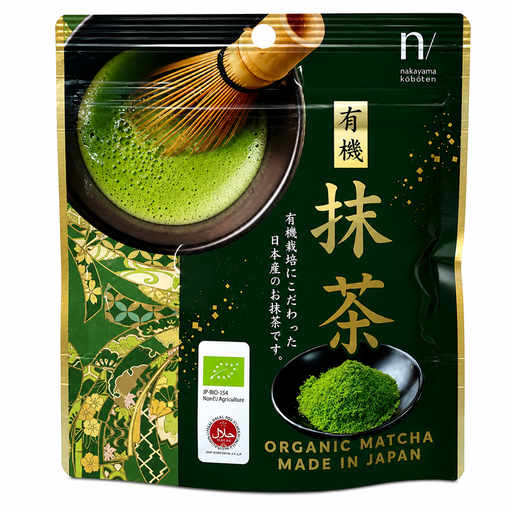 Image unavailable
JP Nakayama Organic Matcha, 30 g
Worth considering for a matcha recipe where the team wants to control the ingredients and how it is prepared.
Check the certification on the packaging you receive and have the planned portion reviewed in line with the care home’s protocol.
View on Joybuy
 Image unavailable
Pukka Matcha Green Tea Organic, 30 g
Worth considering if matcha green tea is a better fit for the menu than a recipe made with pure powder.
Read the ingredients and check the proportion of matcha on the packaging you receive, then have the serving arrangements for this tea-based drink reviewed.
View on Joybuy
Frequently asked questions
How can I check whether matcha is certified organic?
Look for the Euro-leaf on the packaging of the product you receive. According to the European Commission, this logo is reserved for products certified as organic by an approved control body. A claim on a product listing does not remove the need to check the label on the batch you buy.
Pure powder or matcha green tea: which should I choose for breakfast?
Choose powder if the team needs to create a recipe with added matcha, and matcha green tea if it plans to brew a drink. Check the ingredients: the Pukka product listed by Auchan is a green tea blend containing 2% matcha, not pure powder.
Can organic matcha be served to every resident?
Organic certification alone is not enough to make this decision for every resident. Anses says that tea naturally contains caffeine, which can disrupt sleep. The portion and each resident’s individual circumstances should therefore be reviewed in line with the care home’s protocol.
Can matcha replace care for malnutrition?
No, choosing matcha does not replace care for malnutrition. Ameli describes malnutrition as a condition that requires an appropriate response. For a resident affected by it, dietary decisions should be part of the care and dietetics team’s ongoing support.
Will a product listed online be available to the care home?
An online listing does not guarantee that the product is available from the care home’s supplier. Confirm the pack size and availability before planning the menu, then check the label on the product you receive.


