To go with toast and jam, first check that the instant coffee is certified organic, then choose the flavour profile you want in your cup. NESCAFÉ describes its Spécial Filtre BIO as smooth and fruity. If you prefer a more pronounced coffee flavour, compare products labelled ‘espresso’ or with an intensity rating, without assuming they will all taste the same. Fairtrade certification and recommended serving sizes can also help you choose between two products.
Who is this guide for?
Fans of a gentle breakfast coffee
If you want your coffee to complement your toast and jam without overpowering their flavours, look for products described as smooth or fruity. Check the description for the specific product: ‘Arabica’ on its own doesn’t tell you what it will taste like.
Busy people who care about organic products
If you want to make coffee without a coffee machine, instant coffee is a convenient option. To choose an organic product, look for a recognised certification on the packaging; the European Commission says its organic logo is reserved for certified products.
Shoppers with broader priorities
If organic certification is just your starting point, also compare the stated intensity, any information about origin and whether the product has Fairtrade certification. These details vary by product.
What should you look for?
For instant coffee to enjoy at breakfast, check the certification and ingredients first, then compare the flavour profiles. Finally, consider the recommended serving size and pack format that best suit your routine.
| Criteria |
What to check |
Who it matters to |
| Organic certification |
Look for the EU organic logo and information about inspection and origin on the packaging. If you drink your coffee black, check the ingredients list too. |
I want to be able to identify the coffee’s certification before comparing its flavour. Around 43% of consumers put this first among their needs. |
| Flavour and intensity |
Compare the stated flavour profile, any intensity rating and the recommended amount of water. Intensity scales may differ between brands. |
With toast and jam, I’m looking for either a subtle coffee or a more pronounced cup. This flavour preference would be the main priority for around 29% of consumers. |
| Everyday preparation |
Check the jar’s net weight, the amount of coffee recommended per cup and the storage instructions. |
In the morning, I want to measure out my coffee quickly without a coffee machine and store the jar easily once it’s open. For around 28% of consumers, this convenience would come before other criteria. |
Common points of confusion
-
Assuming organic certification means a milder flavour
Organic certification relates to how a product is made and how that is checked, not the flavour profile of every coffee. An organic product may not have the flavour you’re looking for to go with your jam.
Once you’ve checked the certification, read the flavour description and look at the intensity, if stated, and the recommended serving size.
-
Judging by jar size alone
The products mentioned are available in 90 g or 100 g jars, for example, and the recommended amount of coffee per cup varies by product. Pack size alone won’t tell you whether it suits your daily routine.
Compare the net weight with the serving instructions for each product.
-
Confusing pure instant coffee with an instant coffee drink
A product containing other ingredients won’t meet the same need if you’re simply looking for black instant coffee.
Check the ingredients list: Carrefour Bio Espresso states ‘100% organic instant coffee’, while Auchan Bio describes its product as 100% Arabica organic freeze-dried instant coffee.
-
Assuming ‘organic’ means ‘caffeine-free’
Organic production methods don’t determine the caffeine content on their own. ANSES points out that caffeine can affect sleep, among other things.
If caffeine content matters to you, check the specific product you’re buying rather than relying on its organic certification alone.
Brands and ranges to know
NESCAFÉ
NESCAFÉ describes its 90 g jar of Spécial Filtre BIO as 100% pure Arabica instant coffee with a smooth, fruity flavour profile.
- The brand recommends one teaspoon per 100 ml of just-boiled water.
- The flavour description is a guide, not a guarantee that it will suit your breakfast.
Carrefour Bio
The range includes 100% Arabica Organic instant coffee and Organic Espresso instant coffee, both available in 100 g packs.
- Carrefour’s listing for the 100% Arabica Organic coffee describes it as organic freeze-dried coffee with Fairtrade/Max Havelaar certification.
- The ‘espresso’ name on the other product doesn’t, by itself, tell you how it will turn out with your usual serving size.
Auchan Bio
Auchan offers 100% Arabica organic freeze-dried instant coffee in a 100 g jar, with an intensity rating of 6/10.
- The product listing recommends one to two teaspoons per 150 ml of hot water and storing the closed jar in a cool, dry place.
- The 6/10 rating is a guide to this particular product, not a scale shared by every brand.
Alter Eco
Carrefour’s listing for Alter Eco Pur Arabica organic instant coffee, in a 100 g jar, mentions Fairtrade/Max Havelaar certification.
- This product is an option if you’re looking for both organic and Fairtrade certification.
- Check the information on the specific jar if coffee origin is part of your decision.
Carte Noire
Carte Noire presents instant coffee as a convenient way to make a cup without a coffee machine.
- The brand can be a useful point of comparison if quick, easy preparation is your top priority.
- If you’re choosing organic instant coffee, check the certification on the specific product rather than assuming it applies to the whole range.
Organic instant coffee on Joybuy
This selection features instant coffee in a jar, worth considering if you want to make a quick cup to go with breakfast. To choose between a smooth flavour and a more pronounced cup, check the information on the product.
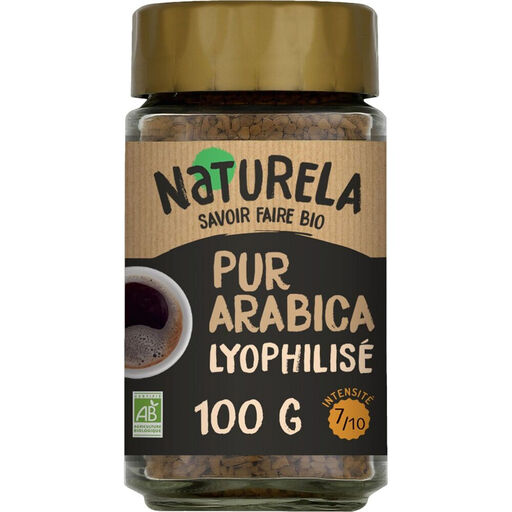 Image unavailable
NATURELA Organic instant coffee, 100 g
A handy option if you make your coffee without a coffee machine before sitting down to toast and jam.
100 g jar. Check the packaging for certification and origin details, along with any serving and flavour guidance that matters to you.
View on Joybuy
Frequently asked questions
How can you tell if instant coffee is organic?
Look for certification on the packaging of the coffee you’ve chosen. The European Commission says the EU organic logo is reserved for certified organic products; also check for the inspection and origin details shown alongside the logo.
Do you need 100% Arabica coffee to have with toast and jam?
No. Choose according to how prominent you want the coffee to be at breakfast. NESCAFÉ describes Spécial Filtre BIO as smooth and fruity, while an ‘espresso’ label or intensity rating may help you find a different profile. These terms can guide you, but they can’t replace your own judgement of the flavour.
How much organic instant coffee should you use?
Start with the instructions for the product you’ve bought, then adjust to taste. NESCAFÉ recommends one teaspoon per 100 ml of just-boiled water for Spécial Filtre BIO; the Auchan Bio listing recommends one to two teaspoons per 150 ml of hot water.
Is organic instant coffee caffeine-free?
No. Organic certification doesn’t mean the coffee is decaffeinated. If that’s what you’re looking for, check that it’s stated on the product you choose; ANSES points out that caffeine can affect sleep.


