What should you check before buying?
Start by identifying the type of product you’re actually buying, then read the ingredients before relying on the word “organic” or a claim on the box.
| Criteria |
What to check |
Who is it for? |
| Ingredients and sugars |
Distinguish dry herbal tea from a ready-to-drink beverage. For the latter, read the ingredients and, if shown on the packaging, the carbohydrate and sugar values per 100 ml. |
I want to know whether my drink contains juice and compare how much I’ll drink. Around 33% of consumers reportedly put ingredients and sugars at the heart of their choice. |
| Organic certification |
For pre-packaged organic herbal tea, look for the EU organic logo and the control and origin details shown next to it. |
I want to be able to identify certified products rather than judging by the look of the box alone. Certification is reportedly the main criterion for around 27% of consumers. |
| Taste and preparation |
Check the plants listed, the number of tea bags and the brewing instructions for the product. |
At breakfast, I want a flavour and preparation method that genuinely suit me. Around 20% of consumers reportedly put ease of use first. |
| Plants in the blend |
Read the full list, including whether it contains liquorice or extracts. If you have questions about a recipe in relation to your medication, ask a healthcare professional or pharmacist for advice. |
If I take medication or prefer simple recipes, I want to identify every plant rather than choose based on a “detox” claim. This caution is reportedly a priority for around 20% of consumers. |
Herbal teas to explore on Joybuy
These four products are dry herbal teas to prepare, with different formats and recipes to compare for a breakfast or daytime routine. The word “Organic” in their names doesn’t remove the need to check the organic certification details on each pack.
 Image unavailable
ELEPHANT Organic Verbena Mint Tea, 20 sachets
Worth considering if you’re looking for verbena and mint herbal tea in bags for your routine. The box contains 20 tea bags. Check the organic certification details and brewing instructions on the pack before preparing.
View on Joybuy
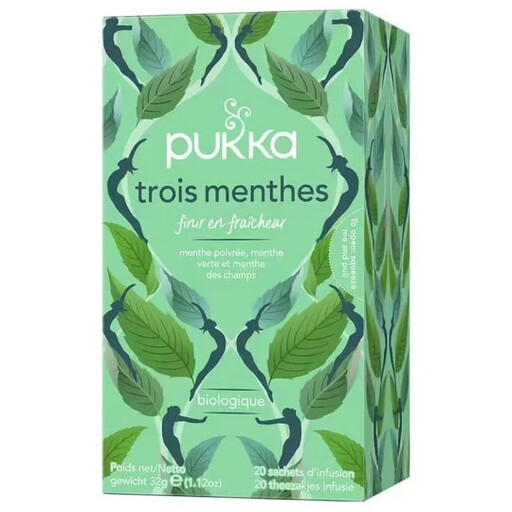 Image unavailable
PUKKA Organic Herbal Tea with 3 Herbs, 36 g
Worth considering if you’d like to compare a herbal tea described as a blend of three plants. The stated pack size is 36 g. Read the ingredients list and organic certification details on the box.
View on Joybuy
 Image unavailable
Pukka Organic Gingers Herbal Tea, 36 g
Worth considering if you’re thinking about a ginger-based blend rather than a verbena and mint infusion. The stated pack size is 36 g. Check all the plants listed on the box, including whether it contains liquorice, as well as the organic certification details.
View on Joybuy
 Image unavailable
Pukka Organic Digestion Herbal Tea, 40 g
Worth considering if you’re looking for another herbal blend to infuse, without taking “Digestion” as proof of effectiveness. The stated pack size is 40 g. Read the full recipe, including to check for liquorice, and look for the organic certification details.
View on Joybuy
Frequently asked questions
Is organic herbal tea automatically suitable when shopping with diabetes in mind?
No. Organic certification relates to production, not sugar content or whether a product suits your dietary management. France’s national health insurance system recommends reading labels carefully. Compare the ingredients and, for a ready-to-drink beverage, the nutritional information and the amount you consume.
Does “no added sugars” mean a drink contains no sugar at all?
No. A drink with this claim may contain sugars naturally present in its ingredients. The ingredients list for the Herbalist green tea and lemon drink featured by Carrefour includes 4.5% white grape juice from concentrate. Also check the sugar content per 100 ml on the packaging.
Why might a box of herbal tea not show a nutrition table?
Herbal or fruit infusions and tea may be exempt from mandatory nutrition labelling, as explained by the DGCCRF. In that case, read the ingredients list for the dry herbal tea and don’t assume it has the same values as a ready-to-drink infused beverage.
Should you avoid all herbal teas if you take medication for diabetes?
Ordinary herbal teas shouldn’t all be treated as plant-based food supplements. Anses has highlighted possible interactions and contraindications for certain plants in these supplements. If you’re considering a concentrated product or have questions about a recipe in relation to your medication, ask a healthcare professional or pharmacist for advice.
How can you identify organic certification on pre-packaged herbal tea?
Look for the EU organic logo and the associated control and origin details on the packaging. According to the European Commission, the organic logo is reserved for certified products. On its own, it doesn’t tell you about the specific ingredients in the herbal tea.


