Anyone hosting a group brunch
You’re looking for a blend with easy-to-identify ingredients, verifiable organic labelling and enough teabags to serve your guests.


For a brunch, first check for organic certification and read the ingredients list, then choose flavours to suit your guests. A herbal or rooibos blend may be suitable if you’re looking for a caffeine-free option, but check the ingredients carefully. Blends containing tea, mate or matcha are a different choice. Pay particular attention to liquorice if the drink will be served regularly.
You’re looking for a blend with easy-to-identify ingredients, verifiable organic labelling and enough teabags to serve your guests.
You want to be able to tell herbal and rooibos blends apart from those containing tea, mate or matcha, rather than relying on a name like “wellness”.
You’d like to choose a flavour from blends sometimes labelled “digestion”, “detox” or “relax”, while checking the ingredients and any precautions instead of assuming they have a particular effect.
Start by checking the certification and ingredients, then compare the flavours and how many teabags you’ll need to serve everyone.
| What to check | Look for | Who it matters to |
|---|---|---|
| Organic certification | Look for the EU organic logo or AB label, then check the control body’s code and the ingredients list. The European Commission states that the EU organic logo is reserved for products certified by an approved body. | If I’m planning a brunch around organic products, I want to be able to check this on the box rather than relying on the blend’s name. Around 31% of consumers would put this check first. |
| Caffeine | Check the ingredients for tea, mate, matcha or guarana. For a caffeine-free option, check the full recipe and its labelling. | When offering an alternative to coffee, I prefer a drink with ingredients suited to people who avoid caffeine. This would be the top priority for around 23% of consumers. |
| Herbs and precautions | Read the list of herbs, looking out in particular for liquorice, and take note of any precautions on the packaging. | A blend labelled “digestion” or “detox” might catch my eye, but I mainly want to know what it contains before serving it. Around 23% of consumers would make ingredients their top criterion. |
| Pack size and availability | Compare the number of teabags and the net weight, then check availability with your chosen retailer. | When several people are having herbal tea, I want to make sure there’s enough to go round and that I can find the flavours I’ve chosen in time. This would come first for around 23% of consumers. |
A name such as “wellness” tells you nothing about certification. According to the DGCCRF, a processed product presented as organic must meet specific requirements, including containing at least 95% ingredients from organic farming.
Check the logos, certification details and ingredients on the packaging.
Anses states that high, repeated consumption of liquorice can lead to hypokalaemia and high blood pressure. This is worth bearing in mind if the drink will be left out for guests to help themselves.
Clearly identify any blends that contain liquorice and offer a liquorice-free option too. If you have a relevant medical condition or are taking medication, seek professional advice.
An assortment of herbal teas may include herbs, rooibos and blends containing tea, mate or matcha. Anses notes that caffeine can disrupt sleep.
Keep the ingredients lists visible when serving so everyone can tell the blends apart.
The Carrefour range includes organic herbal teas in boxes of 20 teabags, with blends featuring ingredients such as ginger, lemongrass and lemon.
This E.Leclerc brand includes organic herbal teas in teabags, with blends such as verbena and mint, and liquorice and mint.
The Auchan range includes organic herbal blends such as verbena and peppermint, and lemon balm, rosemary and spearmint.
This brand is part of Auchan’s range, with herbal blends that include names referring to digestion or a “flat tummy”.
Auchan’s range includes Clipper organic herbal teas with combinations such as lemon and ginger, and mint and fennel.
These herbal teas offer a choice of flavours and pack sizes for sharing at brunch. Before choosing one for an organic selection, check the certification details on the packaging. Also check the ingredients if you want to avoid caffeine or liquorice.
 Image unavailable
If you’re serving this herbal blend at brunch, check the ingredients and the number of teabags on the box.
Net weight: 40 g. Anses advises particular care with this blend, which is reported to contain liquorice, in cases of high, repeated consumption. Also check the organic certification details.
 Image unavailable
If you’d like to serve a ginger-flavoured blend, check all the ingredients before offering it to your guests.
Net weight: 36 g. This blend is reported to contain liquorice. Also check the number of teabags and the organic labelling on the packaging.
 Image unavailable
The pack of 20 teabags makes it easy to plan how many servings you’ll need for brunch.
If you need a caffeine-free option, check the ingredients to confirm. Also check the organic certification details on the box.
 Image unavailable
This chamomile blend comes in teabags, a handy format to bear in mind when serving several people.
The box is listed as containing 21 teabags and weighing 42 g. Check the brewing instructions and organic certification details on the packaging.
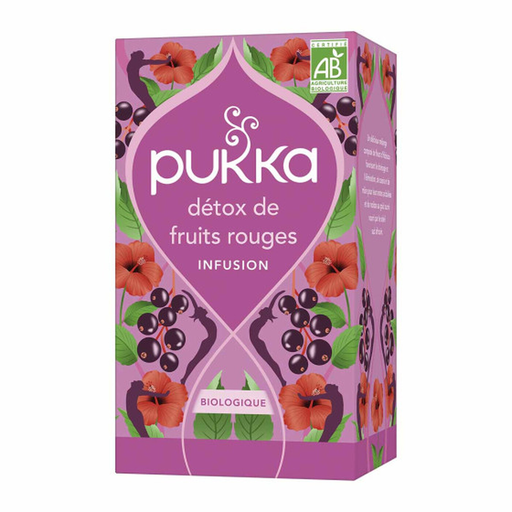 Image unavailable
For more variety at brunch, this blend combines rooibos and fruit. The word “Detox” doesn’t prove that it has any particular effect.
Net weight: 34 g. Check the number of teabags, the full ingredients list and the organic certification details on the box.
Check for the EU organic logo or AB label and the certification details on the packaging. The European Commission states that the EU organic logo may only appear on products certified by an approved body. For the processed products concerned, the DGCCRF says that at least 95% of the ingredients must come from organic farming.
No. Organic certification and the name of the range don’t tell you whether a product is caffeine-free. Herbal tea selections may include tea, mate or matcha, so read the ingredients for each blend if you’re looking for a different option.
Look for liquorice in the ingredients list and read the precautions on the box. Anses highlights the risks of hypokalaemia and high blood pressure with high, repeated consumption, as well as certain situations and treatments that call for particular care. If you’re serving a group, offer a liquorice-free blend too.
Start with the number of people and servings you’re planning for, then check how many teabags are listed on each box. Compare the net weight too, and check that your chosen blends are available from your preferred retailer.