For a simple organic selection
You prefer easy-to-make tea bags with clear ingredients and a choice of flavours to alternate between, rather than a blend chosen for its ‘wellbeing’ claims.


To stock your cupboard, start by choosing blends whose organic certification and ingredients you can check, then vary the flavours to suit when you’ll drink them. For the evening, check that the ingredients don’t include tea or mate. Whatever the time of day, words such as ‘sleep’, ‘digestion’ or ‘detox’ shouldn’t be taken as promises of health benefits.
You prefer easy-to-make tea bags with clear ingredients and a choice of flavours to alternate between, rather than a blend chosen for its ‘wellbeing’ claims.
You’re looking for a blend without tea, matcha or mate. The ingredients list matters more than the name on the box; check separately whether it contains liquorice.
You’d like to keep a few distinct flavour profiles in your cupboard, such as floral, minty or spicy, without filling it with boxes of blends that are almost identical.
If organic certification is essential to you, start there. Then read the ingredients to choose a flavour and decide when you’ll drink it, before working out how many boxes to keep in stock.
| Criteria | What to check | Who is it for? |
|---|---|---|
| Organic certification | Look for the EU organic leaf logo, the code of the inspection body and an indication of origin near the logo. | If organic certification is my deciding factor, a natural-looking design isn’t enough: I want to be able to check the certification on each box. Around 40% of consumers put this first. |
| An evening drink | Read the ingredients to check for tea, matcha or mate; check separately for liquorice if you plan to drink it often. | When I want a herbal tea at the end of the day, I prefer to check the ingredients rather than rely on the word ‘evening’ on the packaging. Around 30% of consumers put this first. |
| Flavour and variety | Compare the herbs and flavourings in a few blends with distinct profiles. | If I alternate between hot drinks, I want flavours I enjoy without building up a collection of very similar blends. Flavour and variety are the top priority for around 20% of consumers. |
| Pack size and restocking | Check the net weight, number of tea bags and whether you can easily restock from your chosen retailer. | When I regularly buy the same herbal teas, I look for pack sizes that suit my consumption and products that are easy to find again. Around 10% of consumers prioritise this. |
A picture of plants or the words ‘wellbeing’ do not amount to organic certification. The European Commission reserves the EU organic logo for certified products.
If organic certification is important to your purchase, look for the EU organic leaf logo and inspection details on the specific product you’re choosing.
A blend’s name is no substitute for its ingredients list. According to the Anses, high and repeated consumption of liquorice may pose health risks; ingredients containing caffeine are also worth checking.
For an evening drink, check for tea, matcha or mate, then look separately for liquorice, especially if you plan to drink it regularly.
These words don’t prove that a herbal tea will meet a health goal. The DGCCRF reminds consumers that health claims made about food are regulated.
Choose a blend for its ingredients and flavour, and don’t use it as a substitute for medical advice or treatment.
Two blends with different names may have similar flavour profiles, while the weight and number of tea bags can vary from one box to another.
Read the ingredients and check the pack sizes before buying several products, then keep a selection you can realistically get through.
These ranges and retailers give you a useful starting point for stocking your cupboard; always check the specific product and its organic labelling.
A range of tea bags with a variety of blends, including verbena, camomile and ginger.
A range worth considering if you’re looking for herbal blends in tea bags.
Tea bag blends with ingredients lists that make it easy to compare their different herbal profiles.
Another option to compare when looking for herbal blends in tea bags.
Auchan France’s range includes liquorice and mint blends, as well as a cold-infused drink.
A retailer to consider when restocking as part of your usual shop.
These tea bag blends offer minty, spicy and floral flavour profiles to add variety to your cupboard. If organic certification is essential to you, check the details on each box before buying. If you plan to drink them regularly, also pay attention to liquorice.
 Image unavailable
A verbena and mint blend to consider if you enjoy fresh, herbal flavours and want to add variety to your cupboard.
If you’re looking for a certified organic product, check the EU organic leaf logo and inspection details on the box.
 Image unavailable
Worth considering if you prefer a herbal blend with notes of aniseed and spice; its name doesn’t guarantee any effect on digestion.
This blend contains liquorice: the Anses warns of risks from high and repeated consumption. Also check the organic certification details on the box.
 Image unavailable
An option to explore if you’re after a spicy flavour that’s different from floral blends.
This blend contains liquorice, so bear that in mind before making it a regular drink. Also check the organic certification on the packaging.
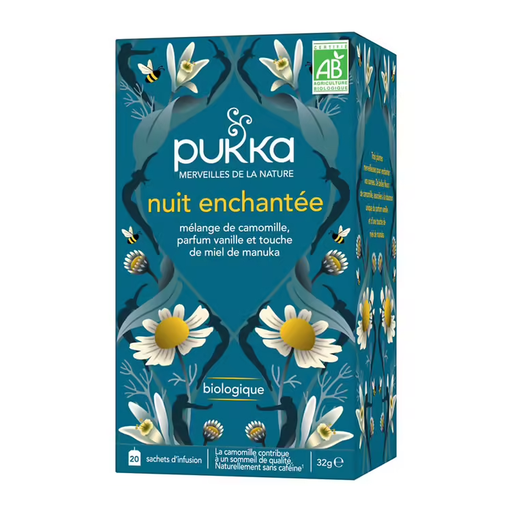 Image unavailable
A floral blend to compare with the others in your cupboard if you enjoy camomile; ‘Night’ doesn’t promise an effect on sleep.
This blend contains liquorice. For an evening drink, also check the full ingredients list and organic certification details on the box.
 Image unavailable
A camomile blend to consider if you prefer a simple floral profile to blends made with several herbs.
If you’re looking for a certified organic herbal tea, check the EU organic leaf logo and related details on this box.
Look for the EU organic logo, known as the organic leaf, then check the code of the inspection body and the indication of origin for the agricultural ingredients on the packaging. The European Commission states that this logo may only be used on certified organic products.
No. Check the ingredients for tea, matcha or mate. This is particularly useful for an evening drink or if you’re sensitive to caffeine. The Anses advises certain groups to take particular care, including pregnant or breastfeeding women and children.
First, look for liquorice in the ingredients, even if it isn’t mentioned in the blend’s name. According to the Anses, high and repeated consumption of products containing liquorice can lead to hypokalaemia and high blood pressure. If you have a medical condition or take medication, ask a healthcare professional for advice.
No. These terms alone don’t prove that the person drinking the herbal tea will experience any effect. The DGCCRF reminds consumers that health claims on food are regulated. When choosing a box, start with the ingredients and the flavours you enjoy.
Follow the instructions on the box you’ve bought and avoid opening more products than you can get through. Auchan Bio’s herbal tea information, for example, recommends storing the product away from heat and moisture.