What to look for
First, distinguish organic certification from the name of the blend. Then check the herbs, tea or maté, and choose a format that suits how you’ll use it.
| Criteria |
What to check |
Who it matters to |
| Organic certification |
Look for the EU organic logo or the AB mark on the pack of the product you’ve chosen. |
I want to tell a certified organic herbal tea apart from a blend simply described as ‘wellbeing’. Certification comes first for around 40% of consumers. |
| Ingredients |
Read the ingredients list to check for tea, maté or liquorice, according to your preferences and any precautions you need to take. |
For an evening drink, I prefer to know which herbs are in the blend and avoid anything that doesn’t suit me. Around 30% of consumers put this check first. |
| Taste and format |
Compare the herbs and flavours listed, the number of tea bags and the brewing instructions. |
At breakfast or during a winter break, I’m mainly looking for a flavour I’ll enjoy coming back to and a convenient format. This is the priority for around 30% of consumers. |
Herbal teas to explore on Joybuy
These products include ginger, camomile and floral blends for a warming winter drink. If organic certification is important to you, look for the EU organic logo or the AB mark on each product’s pack. The word ‘Bio’ or ‘Organic’ in a product name isn’t a substitute for checking.
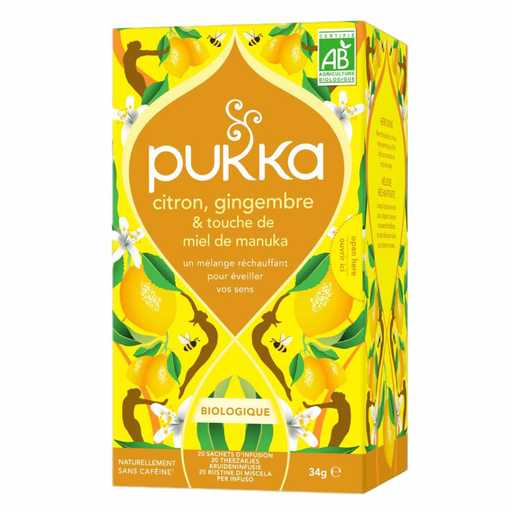 Image unavailable
PUKKA Manuka Honey with Lemon & Ginger — 20 sachets
Worth considering if you’re looking for a ginger and lemon blend to enjoy as a warming winter drink.
The pack contains 20 tea bags. The blend contains liquorice, and ANSES advises caution with high, repeated consumption.
View on Joybuy
 Image unavailable
DAMMANN FRÉRES Chamomile Tea Bags — 21 sachets, 42 g
Worth exploring if you’d prefer a camomile infusion to a spiced blend.
This product is listed as 21 tea bags weighing 42 g. If you need to avoid other ingredients, check the pack’s ingredient list.
View on Joybuy
 Image unavailable
Pukka Organic Gingers Herbal Tea — 36 g
This ginger blend may appeal if you prefer spicy flavours to floral blends.
The stated pack size is 36 g. The ingredients also include liquorice, which is worth bearing in mind if you drink it regularly.
View on Joybuy
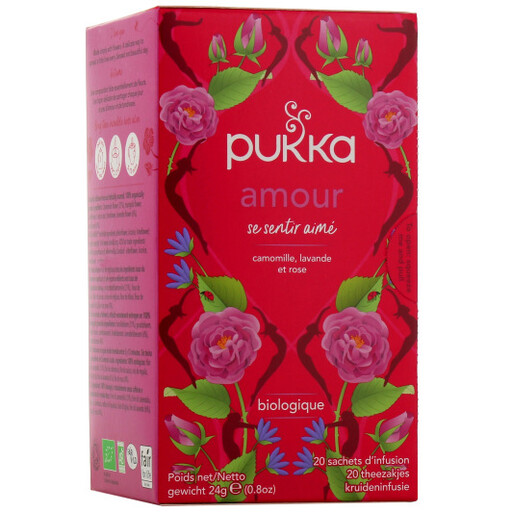 Image unavailable
Pukka Infusion Amour Bio — 24 g
Consider this if you prefer a floral blend for a relaxing hot drink break.
The stated pack size is 24 g. The blend contains liquorice, so check whether this ingredient is suitable for you and how often you plan to drink it.
View on Joybuy
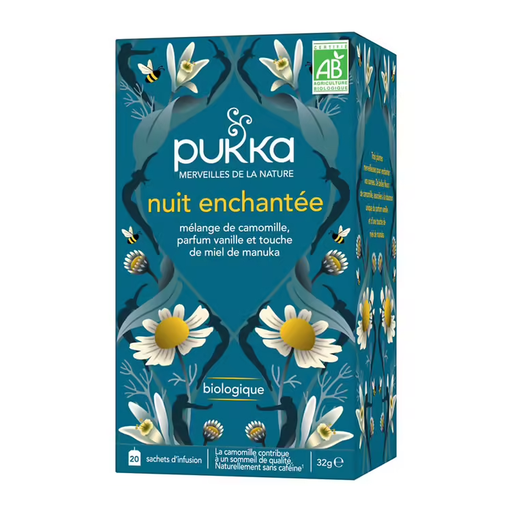 Image unavailable
Pukka Enchanted Night Organic Herbal Tea — 32 g
This blend is presented as a hot drink for the end of the day. If you’re looking for something simpler, compare its ingredients with those of a camomile infusion.
The stated pack size is 32 g. The blend contains liquorice. If the number of tea bags or avoiding caffeine matters to you, check these details on the pack.
View on Joybuy
Frequently asked questions
How can you tell if an herbal tea is organic in France?
Look for the EU organic logo or the AB mark on the packaging, then check the ingredients of the specific product. The French Ministry of the Economy states that a processed food described as organic must, among other requirements, contain at least 95% organic agricultural ingredients.
Does the term ‘wellbeing’ prove that an herbal tea is organic?
No. ‘Wellbeing’ describes how the blend is marketed, not its organic certification or any guaranteed health benefit. Check the organic information on the pack separately.
What should you check before choosing a liquorice herbal tea?
Check whether it contains liquorice and consider how often you plan to drink it. ANSES warns that high, repeated consumption can lead to hypokalaemia and high blood pressure. It advises particular caution during pregnancy and breastfeeding, for children, if you have certain health conditions or if you take medication.
Which blend should you choose for a winter breakfast?
Choose according to the ingredients you want in your drink: a herbal blend if that’s what you prefer, or a blend that clearly contains tea or maté if that’s what you’re looking for. Check the ingredients list rather than relying on the name of the shelf.


