When choosing an organic herbal tea for breakfast or study breaks, start by checking for the Euro-leaf logo on the box. According to the European Commission, this logo is reserved for certified organic products. Then compare the ingredients and number of tea bags to suit your habits. If you want to avoid caffeine, check in particular that the blend contains no tea or mate.
Who are these criteria for?
Students who want to check organic certification
For a herbal tea at breakfast or during a break, you’d rather check the certification than rely on the word “natural”. The European Commission says the Euro-leaf is reserved for certified organic products. Also check the control body code and the agricultural origin on the box.
Students stocking their first cupboard
You’re looking for a format that suits how often you drink herbal tea and the space you have available. The number of tea bags and the net weight make it easier to compare boxes without assuming they all contain the same amount.
People who pay close attention to ingredients
Whether you’re planning a drink in the morning or evening, you’ll want to know which plants are in the blend and whether it contains tea or mate. The ingredients list gives you more detail than the name of the herbal tea alone.
Which criteria should you check first?
When stocking a student cupboard, start with your main need, then check the other criteria for the product you’re thinking of buying.
| Criterion |
What to check |
Who is it for? |
| Organic certification |
Check for the Euro-leaf, the control body code and the agricultural origin statement on the exact product. The logo alone does not mean the plants come from France. |
I want to make sure “natural” isn’t being used in place of certification before choosing a flavour. Around 37% of consumers would prioritise this check. |
| Pack size |
Compare the number of tea bags and the net weight, then choose an amount that suits your available space and how you’ll use it. |
When moving in, I want to stock a practical cupboard without building up boxes I’ll rarely use. Pack size would be the main priority for around 36% of consumers. |
| Ingredients and caffeine |
Read the ingredients list, especially to check for tea, matcha, mate or any plants you want to avoid. |
If I’m making a cup in the evening, I want to know exactly what’s in the blend rather than rely on the word “herbal tea”. Around 18% of consumers would put ingredients first. |
| Everyday flavour |
Check which plants or flavours come through most strongly before choosing a box you plan to drink regularly. |
For my usual break, I’d rather choose a flavour I enjoy than trust a promise on the packaging. Taste would come before other criteria for around 9% of consumers. |
Common misconceptions to avoid
-
Mistaking “natural” for organic certification
A picture of plants or a wellness claim doesn’t prove that a herbal tea is certified organic. According to the European Commission, the Euro-leaf is reserved for certified products.
If organic certification is essential to you, check the logo, the control body code and the agricultural origin statement on the product you choose.
-
Taking “detox” or “digestion” claims as guaranteed effects
The DGCCRF reminds consumers that health claims about food are regulated. A blend’s name does not prove a medical benefit, and herbal tea is no substitute for appropriate care.
Choose based on the ingredients and flavour. If you have questions about an herb because of medication, pregnancy or a medical condition, ask a health professional for advice.
-
Assuming all herbal tea is caffeine-free
Products displayed in the herbal tea aisle may contain tea, matcha or mate. So the aisle label alone isn’t enough if you want a caffeine-free drink.
Check the ingredients list on the box, especially if you’re choosing it for an evening break.
Brands to assess product by product
Carrefour Bio
A supermarket own-label option for organic herbal tea in a box of 20 tea bags.
- Carrefour France describes a 30 g Organic Light Digestion herbal tea containing organic star anise, aniseed, fennel and liquorice.
- This is the ingredient list for one specific product. Check the ingredients on any other Carrefour Bio box.
Bio Village
E.Leclerc’s brand includes organic herbal teas in boxes of 20 tea bags.
- Among its products, E.Leclerc lists a 30 g verbena and mint blend.
- Check the recipe and organic claims on the box you choose rather than assuming them from the brand name.
Auchan Bio
An option for comparing herbal blends, including verbena and peppermint.
- Auchan’s range features several Auchan Bio blends.
- The same range also includes blends containing tea or mate, so read the ingredients for the product you choose.
Lidl
A supermarket whose wider organic range is worth checking in store.
- Lidl France says it offers products certified as organic within its range.
- This statement doesn’t mean that a specific herbal tea is certified. Check its packaging.
Twinings
A brand to consider for its range of herbal and fruit infusions.
- Twinings offers blends with different flavour profiles, so choose according to the ingredients and taste you’re after.
- A “herbal” or “wellness” label doesn’t mean the whole range is organic. Check each box.
Lipton
A brand to compare product by product if organic certification is your main priority.
- The range shown by Auchan includes a Lipton liquorice and mint blend.
- The fact that this blend is listed among herbal teas doesn’t prove it’s certified organic. Check the packaging of the product in question.
Herbal teas available on Joybuy
These products let you compare herbal blends, floral or spiced mixes, and different pack sizes for student breaks. If organic certification is essential, check for the Euro-leaf and the accompanying details on the exact box, even if the product name includes “bio” or “organic”.
 Image unavailable
ELEPHANT Organic Verbena Mint Tea, 20 sachets
A verbena and mint blend to consider if you’d like to make plant-based drinks part of your regular breaks. The box contains 20 tea bags. Check the organic certification details and brewing instructions on the packaging.
View on Joybuy
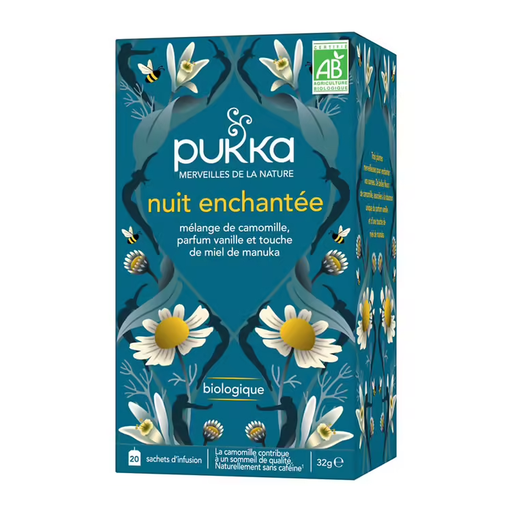 Image unavailable
Pukka Enchanted Night Organic Herbal Tea, 32 g
Worth considering if you’re looking for an herbal tea for an evening break. The stated weight is 32 g. Check the ingredients list, number of tea bags and organic claims on the box before choosing.
View on Joybuy
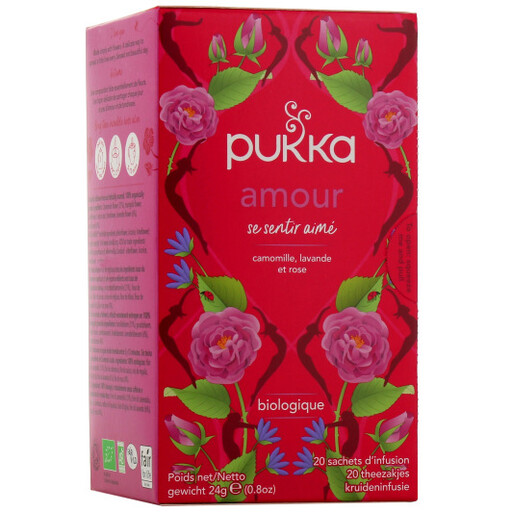 Image unavailable
Pukka Organic Love Infusion, 24 g
A herbal tea to consider if you’d like to vary the flavours you enjoy during your breaks. The stated pack size is 24 g. Check the ingredients and organic certification details on the packaging.
View on Joybuy
 Image unavailable
DAMMANN FRÉRES chamomile herbal tea, 21 tea bags, 42 g
Worth considering if you’re looking for chamomile herbal tea for your cupboard. The title states 21 tea bags and 42 g. If you specifically want an organic product, check the certification on the box.
View on Joybuy
 Image unavailable
Pukka Organic Gingers Herbal Tea, 36 g
An option to consider if you’re looking for a ginger herbal tea to add a different flavour to your routine. The stated weight is 36 g. Check the other ingredients, number of tea bags and organic claims before buying.
View on Joybuy
Frequently asked questions
How can you tell if a herbal tea is certified organic?
Look for the Euro-leaf on the exact product, along with the control body code and the agricultural origin statement. According to the European Commission, the logo is reserved for certified organic products. Packaging that simply suggests a connection with nature isn’t enough.
Does organic herbal tea always contain plants grown in France?
No. Organic certification alone doesn’t mean the plants come from France. Read the agricultural origin statement shown alongside the European logo, and look for a specific claim if French origin matters to you.
Can a “detox” or “digestion” herbal tea replace medical care?
No. Herbal tea shouldn’t be chosen as a substitute for medical care or medication. The DGCCRF reminds consumers that health claims on food are regulated. When choosing a product, focus on the ingredients and seek medical advice if your circumstances call for it.
Does the word “herbal tea” guarantee that it’s caffeine-free?
No. Products sold as herbal teas may contain tea or mate. If you want to avoid caffeine, check the ingredients list for the product you’re considering rather than relying on the name of the aisle.


