For a Christmas market gift, choose a gift set with recipes, sachet quantities and presentation that suit the recipient. For everyday breakfasts, compare the ingredients and pack sizes, then check that the specific product is certified organic: a ‘wellness’ label tells you neither which plants it contains nor what effects they may have.
Who are these options for?
Anyone looking for an organic gift
For a Christmas market, an assortment lets you give several recipes rather than just one flavour. Check what’s inside each gift set: the presentation alone doesn’t confirm that every recipe is suitable for the recipient.
Anyone who enjoys herbal tea at breakfast
For regular use, a box of sachets may be easier to compare than a gift set. The list of plants, number of sachets, and collection or delivery options are all practical factors to consider.
Anyone who pays close attention to ingredients
If you want to avoid a particular plant or distinguish a herbal infusion from a blend containing tea or maté, read the ingredients for the specific recipe. According to Anses, particular care is needed with liquorice if you consume products containing it frequently and in large quantities.
What should you look for before buying?
To choose between a Christmas market gift set and a box for breakfast, first check whether the specific product is organic, then look at its format and recipe. The name of a range or aisle is no substitute for reading the packaging.
| Criteria |
What to check |
Who is it for? |
| Organic certification |
Check the organic statements and logos on the specific product, then read its ingredient list. Agence Bio notes that organic production, inspection and labelling are governed by European regulations. |
If I’m primarily looking for organic herbal tea, I want to be able to identify its certification before choosing a flavour; around 42% of consumers prioritise this. |
| Gift set and variety |
Check the number of sachets, the recipes included and the presentation before choosing a gift or assortment. |
For a Christmas market gift, I’d prefer several flavours to a single recipe; this format is a priority for around 33% of consumers. |
| Plants and precautions |
Read all the ingredients, particularly if you want to avoid liquorice, tea or maté. |
For herbal tea I plan to drink regularly, I want to know which plants it contains and identify any that call for caution; around 25% of consumers prioritise ingredients. |
Common misconceptions to avoid
-
Assuming ‘wellness’ or ‘detox’ means a product is certified organic
These terms don’t prove that a herbal tea is organic, nor do they make a drink a treatment. The DGCCRF distinguishes between the rules for health claims and those for organic certification.
Check the product’s organic statements, ingredients and the meaning of any claims on the packaging separately.
-
Assuming the plants’ origin from where they’re packed
A herbal tea packed or made in France doesn’t necessarily contain plants grown there. Stated origins can also vary depending on supply.
If origin matters to you, check where the relevant ingredients come from on the product page or packaging.
-
Overlooking liquorice in a blend you plan to drink regularly
According to Anses, frequent consumption of large quantities of products containing liquorice can lead to low blood potassium levels and high blood pressure.
Check the ingredients in each blend, and ask a healthcare professional for advice if your circumstances or medication mean you need to take particular precautions.
-
Planning an assortment without checking what’s in stock
If you’re putting together a Christmas market stall, a recipe’s availability may depend on the shop and collection method. A product listed by E.Leclerc may also not be available online.
Check the products and quantities with your chosen retailer before putting your assortment together.
Brands to consider for different needs
Kusmi Tea
The brand offers a gift set of 24 organic herbal tea sachets, including recipes with lime blossom, hibiscus and rooibos.
- An assortment to consider if you’d like to give someone a range of recipes.
- Check the ingredients in each one if the recipient avoids a particular plant.
Carrefour Bio
Carrefour’s range distinguishes organic herbal teas from those described as ‘wellness’ blends, and includes Carrefour Bio products in boxes.
- The available pack sizes make it easy to compare recipes for everyday use.
- Check the ingredients and whether the product is available at your chosen shop or for your preferred collection option.
Bio Village (E.Leclerc)
E.Leclerc offers Bio Village herbal teas, including verbena and mint, and relaxation blends in boxes of 20 sachets.
- Clearly named recipes and a stated sachet count make it easier to compare boxes.
- Check how you can buy your chosen product, as well as where the plants come from if that matters to you.
Auchan Bio
The product listing for Auchan Bio’s relaxation herbal tea describes a blend of orange leaves, camomile, verbena and liquorice, in a box of 20 sachets weighing 30 g.
- Detailed ingredients help you choose based on the plants rather than the recipe name.
- The recipe contains liquorice, and being packed in France doesn’t tell you where all its plants come from.
Herbal teas available on Joybuy
These products are mainly a way to choose a sachet recipe based on its plants and format. For a Christmas market gift, distinguish between a box containing a single recipe and a genuine assortment. If you’re looking for products that are certified organic, check the information on each product’s packaging.
 Image unavailable
ELEPHANT Organic Verbena Mint, 20 sachets
A verbena and mint blend in sachets to consider for everyday breakfasts. Check the packaging for organic details and the recommended steeping time.
View on Joybuy
 Image unavailable
DAMMANN FRÉRES Camomile, 21 sachets, 42 g
A camomile blend to consider if you know the recipient’s tastes, rather than choosing an assortment of flavours. Check the packaging for organic details for this specific product.
View on Joybuy
 Image unavailable
Pukka Organic Digestion, 40 g
Choose this blend based on its ingredients, rather than interpreting ‘Digestion’ as a guarantee of any effect. It contains liquorice: bear in mind the precautions highlighted by Anses if you consume it frequently and in large quantities, and check the packaging for organic details.
View on Joybuy
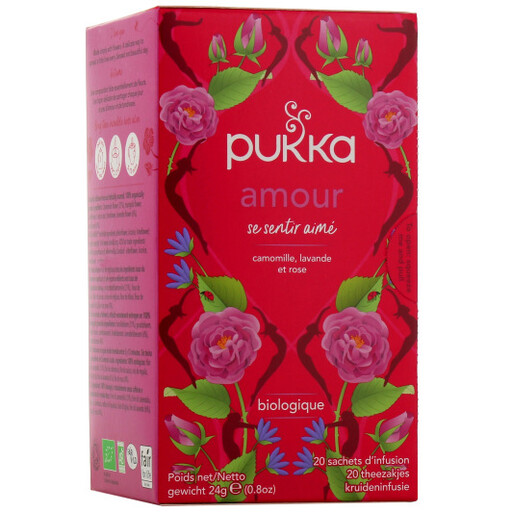 Image unavailable
Pukka Infusion Amour Bio, 24 g
A blend to consider if you’re looking for something floral rather than a single-plant herbal tea. It contains liquorice, so read the ingredients and check the packaging for organic details before giving it as a gift.
View on Joybuy
 Image unavailable
Pukka Organic Gingers, 36 g
This ginger blend is a good choice if you’re after spicy flavours, but it isn’t an assortment of different herbal teas. Check the full ingredients, including whether it contains liquorice, as well as the organic details on the packaging.
View on Joybuy
Frequently asked questions
How can you check whether a herbal tea is organic in France?
Check the organic details and ingredient list for the specific product rather than relying on the name of the aisle or brand alone. Agence Bio notes that European regulations cover aspects including the production, inspection and labelling of organic products.
Can a ‘relaxation’ or ‘digestion’ herbal tea replace a treatment?
No: a herbal tea’s name shouldn’t be interpreted as a treatment claim. The DGCCRF notes that health claims for food products are regulated. Choose your blend based on its ingredients and the information on the packaging.
Do you need to take care with liquorice herbal tea?
Yes, particularly if you regularly consume several products containing it. Anses links frequent consumption of large quantities of liquorice with the risk of low blood potassium levels and high blood pressure. Seek professional advice if you’re pregnant or breastfeeding, have a relevant health condition or take medication.
How should you store herbal tea after opening?
Follow the storage instructions for the specific product. For Pukka Organic Digestion herbal tea, the Joybuy product page advises resealing the packaging securely after opening.


