Student moving into new accommodation
You’re looking for tea bags that are easy to store and prepare, without adding a teapot to your essentials. The number of bags and whether you can collect them with your food shop may influence your choice.


For your first food shop for student accommodation, a box of organic herbal tea bags can be handy if you want to make a cup without a teapot. Check the certification on the product you choose, then read the ingredients: a blend containing tea or maté won’t meet the same needs as an herbal infusion for the evening. ‘Wellbeing’ claims are not proof of a health benefit.
You’re looking for tea bags that are easy to store and prepare, without adding a teapot to your essentials. The number of bags and whether you can collect them with your food shop may influence your choice.
You choose a blend for a particular time of day and read the ingredients rather than relying on the word ‘wellbeing’. Tea, maté or liquorice could affect your decision.
You want to compare different blends, in tea bags or loose. Check the organic certification and ingredients for each product, whatever the brand.
For an herbal infusion to add to your first food shop when moving in, start by checking the box’s organic certification, then its format and ingredients. These three criteria meet different needs, even when they apply to the same blend.
| Criterion | What to check | Who is it for? |
|---|---|---|
| Organic certification | For a pre-packaged product sold as organic in the European Union, look for the Euro-leaf logo, the code of the control body and the origin of the agricultural raw materials shown next to the logo. | If organic certification is your top priority, a range name or a reference to nature is not enough: you’ll want to be able to check the box you choose. Around 42% of shoppers make this their priority. |
| Format | Check the number of tea bags and the net weight; for a loose product, check the packaging before deciding how you’ll prepare it. | In a new home, you may prefer tea bags that are ready to brew, so you don’t have to add a filter or teapot to your belongings. This is the top priority for around 33% of shoppers. |
| Ingredients | Read the ingredients list, looking out in particular for tea, maté, guarana or liquorice, as well as any precautions for use. | If you want a cup in the evening, you may be looking to avoid caffeine. If you drink the same blend regularly, it’s also worth checking whether it contains liquorice. Ingredients are the top priority for around 25% of shoppers. |
According to the European Commission, the EU organic logo is reserved for products certified in accordance with the applicable rules. It does not prove that an herbal infusion treats a health problem; the DGCCRF notes that health claims are regulated.
If you’re looking for an organic product, check its certification, then choose a blend based on its ingredients and the flavour you want. Don’t assume the name on the box means it has a medicinal effect.
The word ‘infusion’ alone doesn’t tell you which plants are in the blend. Anses notes that caffeine occurs naturally in several plants, including tea.
If you want to avoid caffeine, particularly in the evening, check the ingredients list and look for an explicit indication on the product you choose.
A blend whose name highlights other plants may also contain liquorice. Anses links high, repeated consumption with health risks, including high blood pressure and low blood potassium.
Read the full ingredients list and take note of any precautions if you plan to drink the same blend often. If you have a relevant health condition or are taking medication, ask a healthcare professional for advice.
These brands offer a starting point for comparing blends and formats. Their inclusion here doesn’t mean that all their products are organic or suitable for the same time of day.
Carrefour offers organic verbena herbal infusions in boxes of 20 tea bags, among other herbal blends.
E.Leclerc offers several Bio Village herbal infusions in boxes of 20 tea bags, including a verbena and mint blend.
Auchan offers an organic verbena and peppermint infusion in a box of 20 tea bags, among other products.
Kusmi Tea offers teas and herbal infusions, including organic products in tea-bag and loose-leaf formats.
Lipton offers teas and herbal infusions, with details that vary by product.
This selection includes herbal infusions in tea bags, green tea in tea bags and a 40 g infusion whose packaging you’ll need to check. If you’re looking for an organic herbal infusion, check the organic logo and related details on each pack before choosing.
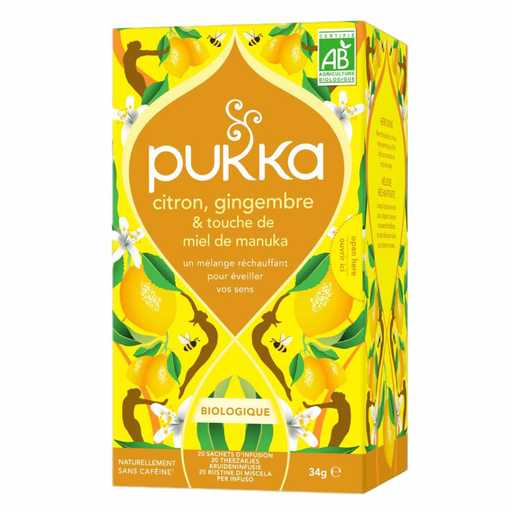 Image unavailable
A tea-bag format to consider if you want to make a cup in your new home.
This blend is sold as Manuka Honey with Lemon & Ginger. If you’re looking for an organic herbal infusion or plan to drink this blend regularly, check the certification details and whether the packaging lists liquorice as an ingredient.
 Image unavailable
A verbena and mint blend in tea bags to consider if you want to make an herbal infusion without needing a filter.
The product title includes the word ‘Organic’. Check the organic certification details on the box and, if you want to avoid caffeine, look for information specific to this product.
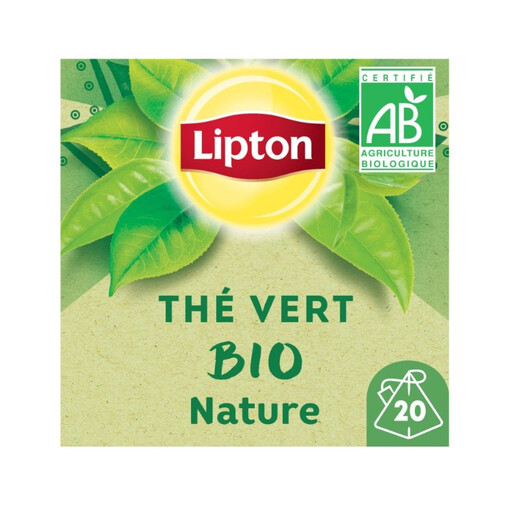 Image unavailable
Worth considering if you’re looking for green tea in tea bags for breakfast, rather than an herbal infusion.
This is a 28 g green tea product: according to Anses, tea naturally contains caffeine. The word ‘Organic’ in its name doesn’t replace checking the organic certification details on the box.
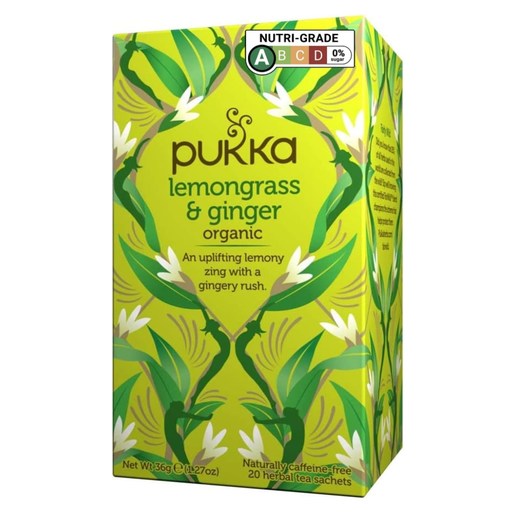 Image unavailable
Another tea-bag blend to consider if you want to make an herbal infusion in your new home.
The product title states that it contains 20 tea bags. If you’re buying it because it’s organic, check the certification details for this product. Also read the ingredients if you want to avoid liquorice.
 Image unavailable
Worth considering if you’re looking for an herbal blend and can check the packaging before deciding how to prepare it.
The stated quantity is 40 g; the name doesn’t specify the number of servings or the packaging format. Check these details, the organic certification information and the ingredients list, particularly for liquorice. Don’t take ‘Digestion’ as proof of effectiveness.
For a pre-packaged herbal infusion sold as organic in the European Union, look for the EU organic logo, followed by the control body’s code and an indication of the origin of the agricultural raw materials, shown near the logo. According to the European Commission, the logo is reserved for products certified under the conditions set out in EU organic rules; a range name alone is no substitute for these details.
No: the name doesn’t guarantee that it’s caffeine-free. Read the ingredients to distinguish an herbal infusion from a blend containing tea or maté, for example. Anses notes that caffeine in some plants can disrupt sleep.
These words alone are not proof of a health benefit. The DGCCRF notes that health claims are regulated. When choosing a drink, focus instead on its ingredients, any precautions shown and when you plan to drink it.
Liquorice may be included in a blend whose name highlights other plants. Anses notes that high, repeated consumption of products containing liquorice can lead to high blood pressure and low blood potassium. Check the ingredients and, if you have questions about regular consumption because of a health condition or medication, ask a healthcare professional for advice.