For your first shop, choose an herbal tea with clear organic labelling and an easy-to-read ingredients list, then pick a blend that suits the time of day you plan to drink it. Organic certification does not prove that a tea will help with sleep or digestion: check the ingredients, including whether it contains tea, maté or liquorice, rather than relying on the blend’s name.
Who are these herbal teas for?
Your first organic herbal tea at breakfast
You want to add an herbal tea to your regular shop without choosing one based on a single ‘wellbeing’ claim. Carrefour, Auchan and E.Leclerc list organic blends in tea bags, so compare their ingredients to find a flavour you like.
A routine that puts ingredients first
If you’re looking for a herbal drink in the morning, read the full recipe rather than relying on the word ‘herbal tea’ alone. Blends can vary, particularly in whether they contain tea or maté.
A cautious choice for after meals
These blends may contain mint, fennel, aniseed or liquorice, but their names are not proof of any medical effect. Anses advises caution around high, repeated consumption of liquorice, particularly for certain groups and when taking medication.
What should you look at first?
For your first box, start with the organic labelling and ingredients list, then choose a blend you’ll genuinely want to make at breakfast or at another time of day.
| What to consider |
What to check |
Who is this for? |
| Organic labelling |
Look for the EU organic logo and check the ingredients labelling. The DGCCRF states that at least 95% of the agricultural ingredients in a processed organic food must be organic. |
If I’m starting to buy organic, I want to tell the difference between regulated labelling and packaging that simply suggests a natural product; around 33% of consumers would put this check first. |
| Ingredients |
Read the full list, especially if you want to avoid tea or maté, or if the blend contains liquorice. |
If I’m drinking it regularly, I want to know which plants are going into my cup and take account of any precautions that apply to me; this would be the priority for around 25% of consumers. |
| Blend and occasion |
Compare the herbs and flavours in a verbena and mint blend, a fruity blend or one intended for another time of day, without assuming it will have a particular effect based on its name. |
If I’m looking for a drink with breakfast, flavour matters more to me than a ‘relaxation’ or ‘digestion’ label; around 25% of consumers would prioritise the blend and when to drink it. |
| Size and availability |
Check the net weight, number of tea bags and the options available from your shop or click and collect service. |
When I’m doing my first shop, I want a conveniently sized box that I can add to my usual basket; around 17% of consumers would make this their first criterion. |
Pitfalls to avoid
-
Assuming organic certification proves it works
Organic standards relate to how ingredients are produced; they do not prove that an herbal tea will relieve a condition or deliver the effect suggested by the name of the blend.
Use the label to check how the ingredients were produced, then choose based on the ingredients and flavour. Don’t use herbal tea as a substitute for medical care.
-
Overlooking liquorice in a blend
Liquorice may be included in a blend described as suitable after meals. According to Anses, high, repeated consumption of products containing liquorice can lower blood potassium levels and cause high blood pressure.
Read the ingredients for each blend and take account of any other products containing liquorice that you consume. If the precautions highlighted by Anses apply to you, ask a healthcare professional for advice.
-
Comparing boxes without checking their size
Two herbal teas in tea bags can have different net weights and numbers of bags. The blend’s name does not tell you how much is in the box.
Check both details on the products you’re considering for your shop.
-
Assuming a product listed online is available everywhere
Ordering and collection options depend on the retailer and store. For example, an E.Leclerc product page says you should contact the relevant store to check whether a Bio Village herbal tea is available.
Check availability at your chosen store or click and collect location before planning your basket around a particular blend.
Brands to know
Carrefour Bio
Carrefour’s herbal tea range includes several organic blends, including ginger, lemongrass and lemon, as well as blends labelled for relaxation or gentle digestion.
- The range includes several blends, so you can choose based on the herbs and when you want to drink them.
- A blend’s name is no substitute for reading the ingredients; check what’s available at your store too.
Auchan Bio
Auchan lists an organic verbena and peppermint herbal tea, along with other blends presented for different times of day.
- The verbena and peppermint blend is a useful starting point for comparing ingredients.
- Ingredients vary between products, so check whether a blend contains maté or liquorice.
Bio Village
E.Leclerc’s organic range includes verbena and mint, and relaxation herbal teas, depending on the product.
- Some product pages specify the weight, number of tea bags and ingredients, which is useful when comparing blends.
- An E.Leclerc product page may ask you to contact the relevant store to check local availability.
Jardin Bio Étic
This brand offers organic herbal blends, including one listed by Carrefour with a detailed ingredients list.
- The Carrefour product page for this blend specifies its ingredients and 20-teabag format.
- This blend contains liquorice; its characteristics should not be assumed to apply to other products from the brand.
Herbal teas to compare on Joybuy
These herbal teas in tea bags offer a range of blends to compare by ingredients, pack size and when you want to drink them. If you’re buying organic, check the labelling on the box you choose; a blend name such as ‘digestion’ or ‘detox’ does not prove a health benefit.
 Image unavailable
Pukka Organic Digestion Herbal Tea, 40 g
Worth considering if you’re looking for an herbal blend to drink after meals, without treating ‘Digestion’ as a promise of a medical effect.
40 g pack. This blend contains liquorice: bear in mind the precautions around high, repeated consumption highlighted by Anses, and check the organic labelling on the box.
View on Joybuy
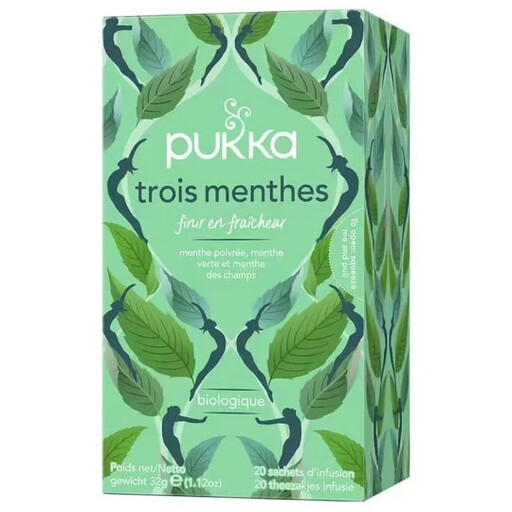 Image unavailable
PUKKA Organic Herbal Tea with 3 Herbs, 36 g
One to compare if you’d prefer a herbal tea that isn’t named after a particular effect.
36 g pack. Read the ingredients and check the organic labelling on the box before adding it to your shop.
View on Joybuy
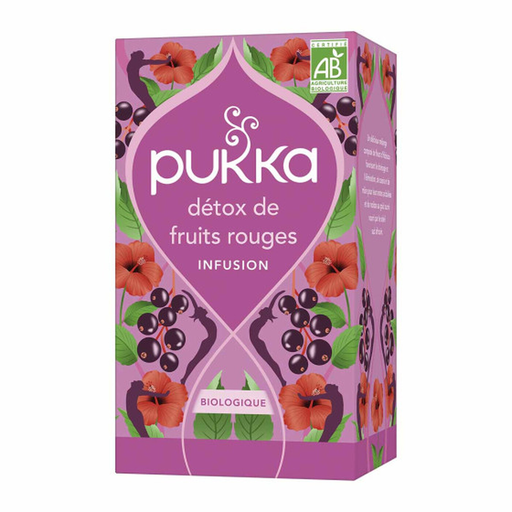 Image unavailable
Pukka Organic Red Fruits Detox Herbal Tea, 34 g
An option to consider if you’re looking for a fruity blend rather than verbena and mint.
34 g pack. ‘Detox’ is part of the product name and does not establish a medical effect; check the ingredients and organic labelling on the box.
View on Joybuy
 Image unavailable
ELEPHANT Organic Verbena Mint Tea, 20 sachets
Worth a look if you’d like to start with a verbena and mint blend for your morning hot drink.
Box of 20 tea bags. Check the organic labelling and ingredients list on the box you choose.
View on Joybuy
 Image unavailable
DAMMANN FRÉRES Chamomile Tea Bags, 21 sachets, 42 g
One to compare if you’d like chamomile at another time of day; this blend is presented as an evening drink rather than a breakfast tea.
Box of 21 tea bags, 42 g. Check the organic labelling on the box before buying.
View on Joybuy
Frequently asked questions
How can you recognise organic herbal tea in France?
Look for the EU organic logo and check the information on the packaging, then read the ingredients list. The DGCCRF states that a processed organic food must contain at least 95% ingredients from organic agriculture, while meeting the other applicable requirements.
Does organic certification guarantee the effect claimed by a ‘relaxation’ or ‘digestion’ herbal tea?
No. Organic certification tells you about how the ingredients are produced, not whether a blend will deliver the medical effect suggested by its name. When shopping, compare the herbs, the flavour you’re looking for and when you plan to drink it instead.
What should you check if an herbal tea contains liquorice?
Think about how often you drink this herbal tea and whether you consume other products containing liquorice. Anses says that high, repeated consumption can lower blood potassium levels and cause high blood pressure. It advises particular caution for pregnant or breastfeeding women, children, people with certain cardiovascular, kidney or liver conditions, and those taking certain medicines. If you’re unsure how this applies to you, ask a healthcare professional for advice.


