What should you check?
For an herbal tea to enjoy during your lunch break, organic certification applies to the specific product you buy. The ingredients, flavour and any precautions relating to them can then help you choose between recipes.
| Criterion |
What to check |
Who is it for? |
| Identifying organic products |
Look for the Euro-leaf and, if it appears on the product, the AB mark. Also check the information for the specific product. The French Ministry of Agriculture describes the Euro-leaf as a symbol for identifying organic products. |
Before choosing a flavour, I want to be able to check that the herbal tea I take with me is organic. Around 36% of shoppers put this check first. |
| Simple recipes |
Compare the list of plants, any stated proportions and whether flavourings are included. |
If I prefer an ingredient list that’s easy to read, a single-herb recipe suits me better than a longer list. Around 29% of shoppers put simplicity first. |
| Flavour for your break |
Choose between a single herb and a blend according to the flavours you enjoy, and check the brewing instructions on the box. |
For my break, I mainly choose according to which plants I like the taste of, without assuming that a claim such as ‘relaxation’ guarantees an effect. Taste is the main criterion for around 21% of shoppers. |
| Liquorice content |
Read the full ingredients list. Anses warns against consuming large amounts of liquorice-containing products repeatedly. |
If I drink this herbal tea often or need to take particular precautions, I check for liquorice first. Around 14% of shoppers prioritise this check. |
Organic herbal teas on Joybuy
These products let you compare herbal infusions for a break around lunchtime, from mint or verbena recipes to an after-meal blend and other combinations of plants. Always check the ingredients and organic information on the box, whatever the recipe is called.
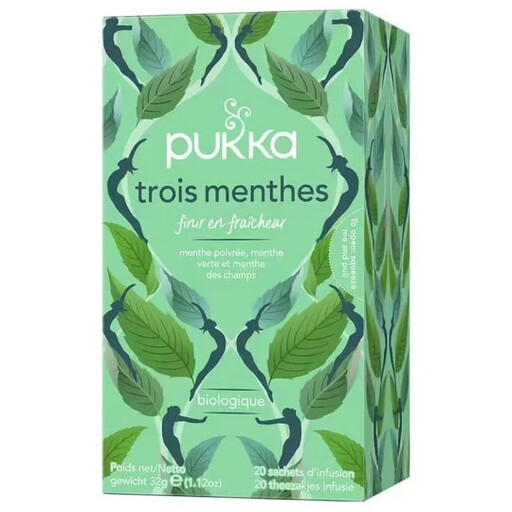 Image unavailable
PUKKA Organic Herbal Tea with 3 Herbs, 36 g
An herbal infusion to consider if you’d like to compare a recipe that combines several herbs. The stated pack size is 36 g; check the full ingredients list on the box.
View on Joybuy
 Image unavailable
ELEPHANT Organic Verbena Mint Tea, 20 sachets
A tea-bag option if you’re looking for a verbena and mint blend for your break. The box contains 20 tea bags; follow the preparation instructions on the packaging.
View on Joybuy
 Image unavailable
Pukka Organic Digestion Herbal Tea, 40 g
A blend marketed for after meals; choose it for its ingredients, not as a promise of an effect. The Joybuy listing states 40 g and names aniseed, fennel and liquorice root among its ingredients. Read the full ingredients list before drinking it regularly.
View on Joybuy
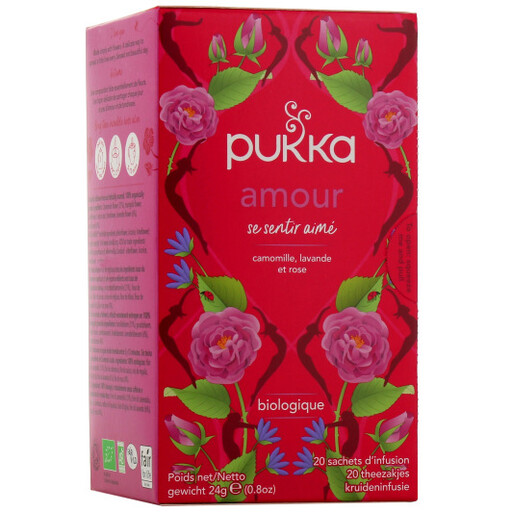 Image unavailable
Pukka Organic Love Herbal Tea, 24 g
A 24 g organic infusion to compare with other blends if you’d like to add some variety to your break. Check the ingredients list, particularly for liquorice, if you plan to drink it regularly.
View on Joybuy
 Image unavailable
Pukka Organic Gingers Herbal Tea, 36 g
A 36 g herbal infusion to consider if you’re looking for a different blend of flavours for your lunch break. Check the full ingredients list and preparation instructions before choosing it.
View on Joybuy
Frequently asked questions
How can you tell if an herbal tea is organic?
Look for organic information on the specific product, particularly the EU’s Euro-leaf logo and, if it appears on the box, the AB mark. The French Ministry of Agriculture says that the Euro-leaf identifies products from organic farming. You should also read the ingredients list.
Is organic herbal tea always caffeine-free?
No. Organic certification relates to how a product is made, not its caffeine content. If this matters to you, check the ingredients and information for the product you choose.
How long should you brew herbal tea?
Follow the brewing time and water quantity stated on your herbal tea’s box. Instructions can vary by recipe, so don’t automatically use the directions for another infusion.
Can you drink liquorice herbal tea regularly?
How often you drink it and your personal circumstances both matter. Anses warns that consuming large amounts of liquorice-containing products repeatedly can lead to hypokalaemia and high blood pressure. If you’re pregnant or breastfeeding, have a relevant health condition or take medicine that could interact, check the ingredients and seek professional advice tailored to you.


