Parents of children under 6
For a snack or breakfast, the form matters just as much as organic certification. Manger Bouger advises against giving whole nuts to children under 6 because of the risk of choking.


For a snack made with minimally processed hazelnuts, choose plain or roasted organic hazelnuts and check for the European organic logo, the ingredients and allergen information. The right format also depends on age: according to Manger Bouger, whole nuts should not be given to children under 6. A cereal bar or hazelnut spread serves a different purpose, as its ingredients differ from those of hazelnuts on their own.
For a snack or breakfast, the form matters just as much as organic certification. Manger Bouger advises against giving whole nuts to children under 6 because of the risk of choking.
Hazelnuts on their own, plain or roasted, meet a different need from chocolate or hazelnut-flavoured spread. Check the ingredients list to tell these products apart before preparing snacks.
Hazelnuts are themselves a tree nut. Carrefour Bio and Auchan Bio product listings also warn that traces of peanuts and other tree nuts may be present, so check the packaging of the product you buy.
First decide whether you want hazelnuts on their own or a prepared hazelnut product, then check that the format is suitable for the people who will be eating it.
Choose these: for a snack made with hazelnuts on their own, if whole hazelnuts are suitable for the children’s age.
Bear in mind: organic status does not remove allergens or the choking risk associated with whole hazelnuts.
Choose these: when serving hazelnuts to a child under 6, use them in a prepared dish rather than serving them whole, in line with Manger Bouger’s advice.
Bear in mind: check the ingredients and allergens in the whole dish.
Choose this: if you’re specifically looking for a cereal bar, chocolate or spread for breakfast or a snack.
Bear in mind: these recipes may contain sugar, cereals or milk, among other ingredients; they are not interchangeable with hazelnuts on their own.
| What matters | What to check | Who is it for? |
|---|---|---|
| Organic certification | Look for the European organic logo; the AB mark may also appear on the product. Then check the product name and ingredients. | If I’m looking for organic hazelnuts, I want to be able to identify the certification on the packaging, rather than relying on the product name alone. Around 29% of consumers prioritise this. |
| Age and allergens | According to Manger Bouger, don’t serve whole hazelnuts to children under 6. Check the allergens and any warnings about possible traces on the packet. | For a snack intended for a young child or a household managing allergies, I need to choose a suitable format first and read the label. This is reportedly a priority for around 29% of consumers. |
| Ingredients | Compare the ingredients in hazelnuts on their own with those in a bar, chocolate or spread; pay particular attention to sugars and other added ingredients. | When I’m planning a hazelnut snack rather than a hazelnut-flavoured recipe, the difference in ingredients guides my choice. Around 24% of consumers put this distinction first. |
| Format and storage | Compare the net weight and packaging, then follow the storage and resealing instructions after opening. | When preparing for several outings, I prefer to decide between a pre-packed bag and loose hazelnuts that I can portion out myself. Format is reportedly a priority for around 18% of consumers. |
Organic chocolate or spread may contain hazelnuts as well as sugar, milk, cereals or other ingredients. Organic certification does not make these recipes the same as plain hazelnuts.
If you want a snack made with hazelnuts, start by checking the product name and ingredients list. Choose a prepared recipe if that’s what you’re looking for.
Manger Bouger warns that whole nuts pose a choking risk for children under this age. Whether organic or roasted, hazelnuts are still whole nuts.
For children in this age group, follow the recommendation to use ground hazelnuts in a suitable dish rather than serving them whole.
Carrefour Bio and Auchan Bio product listings warn that traces of peanuts and other tree nuts may be present. A brand name or organic logo is no substitute for reading the label.
Check the ingredients and allergen information on the packet you actually buy, especially if someone with an allergy will be eating the product.
Buying loose lets you choose how much to purchase, but you’ll need to prepare portions to take with you. The Auchan Bio roasted hazelnut listing advises keeping the product away from heat and moisture and resealing the bag after opening.
Choose packaging to suit the snacks you have planned, and follow the storage instructions on the product.
Carrefour’s listing features shelled, roasted organic hazelnuts in a 90 g bag: a pre-packed format for organising snacks.
E.Leclerc offers shelled organic hazelnuts loose, sold by weight, so you can prepare the quantities you need.
Auchan’s listing features 125 g of roasted organic hazelnuts and displays the European organic logo as well as the AB mark.
The Monoprix Bio product mentioned is milk chocolate with caramelised hazelnut pieces, not a bag of hazelnuts on their own.
At Lidl, the range to consider for your holiday shopping depends on the store and the time of year.
Aldi lists chopped hazelnuts or nuts; the product name alone isn’t enough to confirm that they’re organic.
These products are cereal bars and spreads for hazelnut-flavoured breakfasts or snacks. Compare their ingredients for the use you have in mind: they are not a substitute for a bag of hazelnuts on their own.
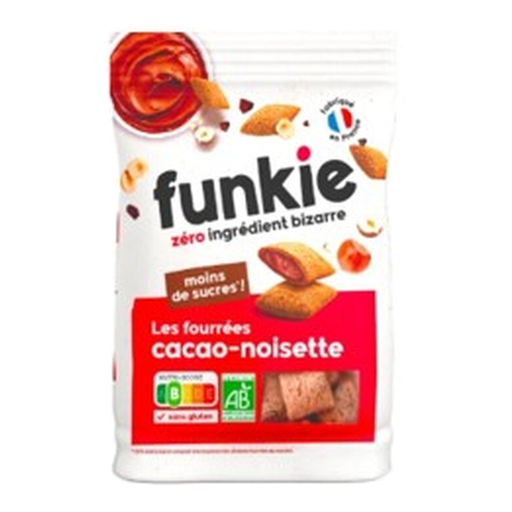 Image unavailable
A cereal bar option for preparing a snack to take with you, rather than a portion of hazelnuts on their own.
The recipe combines hazelnuts, cereals and cocoa, and also contains sugar. If you have an allergy, check the ingredients and allergens carefully on the packet; also check the age guidance and organic logo on the packaging.
 Image unavailable
A spread to consider for breakfast or a snack served on bread, rather than as a snack of hazelnuts on their own.
The recipe includes cocoa, sugar and red bean purée, among other ingredients. Check the allergens and organic logo on the packaging before choosing this product.
 Image unavailable
This spread is intended for eating on bread or using in a dessert, not as a snack made with hazelnuts on their own.
The recipe includes sugar, oil, milk and cocoa, among other ingredients. Check the label for allergens and the organic certification displayed on the product.
 Image unavailable
This jar is suited to spreading on toast at breakfast or snack time, rather than serving individual portions of hazelnuts.
The recipe contains sugar, oil, milk and cocoa, among other ingredients. Check the allergens, any warnings about possible traces and the organic logo on the packaging.
Look for the European organic logo on the packaging; the AB mark may also appear. The French Ministry of Agriculture explains that organic certification is governed by a European framework. Also read the product name and ingredients to find out whether you’re buying hazelnuts on their own or a hazelnut-based product.
No. Manger Bouger advises against giving whole nuts to children under 6 because of the risk of choking, and suggests grinding them into a powder and mixing them into prepared dishes.
No: it relates to the production method, not the absence of allergens. Carrefour Bio and Auchan Bio product listings warn that traces of peanuts and other tree nuts may be present. If someone has an allergy, check the ingredients and trace warnings on the packet you buy.
Follow the storage instructions and best-before date shown on the packaging you choose. For its roasted organic hazelnuts, Auchan advises keeping the bag away from heat and moisture, then resealing it after opening.