Those who prefer plain tea
You want to check the ingredients in your morning tea at a glance and make a cup using a tea bag, without choosing an added flavour to go with your toast or cereal.


To enjoy with a sweet breakfast, start by choosing a product with clear organic certification and ingredients on the packaging. Plain green tea bags are a simple option if you want a straightforward brew with no added flavourings listed. A flavoured blend offers a change of taste, while matcha is for anyone looking for a powdered tea to prepare differently. These options are not interchangeable, and organic tea is not necessarily caffeine-free.
You want to check the ingredients in your morning tea at a glance and make a cup using a tea bag, without choosing an added flavour to go with your toast or cereal.
You’re looking for a minty, floral or fruity note to enjoy with a sweet breakfast. Check the ingredients and organic certification for the specific blend you’re interested in.
You’re happy to prepare your tea differently from a tea bag, whether you choose a powder or loose leaves. In this case, the format, ingredients and preparation instructions matter just as much as the variety name.
Start by checking the product’s organic labelling, then choose the flavour and preparation method that suit what you want from your breakfast tea.
Choose this if: you want a short ingredients list containing only green tea, in convenient tea bags.
Bear in mind: it has the taste of plain tea; follow the brewing time shown for your chosen product.
Choose this if: you’re after a particular flavour to enjoy with your sweet breakfast.
Bear in mind: ingredients vary by blend, so check the organic labelling on the specific product rather than relying on the range’s credentials.
Choose this if: you want to prepare powdered green tea or add it to a recipe.
Bear in mind: it’s prepared differently from a tea bag; a blend containing matcha is not necessarily pure matcha.
| What to consider | What to check | Who is it for? |
|---|---|---|
| Organic labelling | Look for the Euroleaf logo and the related inspection and origin details, then read the ingredients list. Agence Bio and the European Commission explain what the EU logo represents. | If organic certification is a deciding factor for me, I want to check it on the box before choosing between flavours. Around 37% of consumers would make this their top priority. |
| Plain tea | If you don’t want any other ingredients, look for a product labelled 100% organic green tea, then check the brewing instructions. | With an already-sweet breakfast, I prefer the taste of plain tea alongside my food, without adding another flavour. This would be the top priority for around 27% of consumers. |
| Added flavours | Compare the ingredients and flavour notes of the specific blend, as well as its organic labelling. | For a change from one cup to the next, I’m mainly looking for a minty, floral or fruity flavour. Nearly 27% of consumers would put variety first. |
| Format and availability | Check the number of tea bags or the form of the tea, how it needs to be prepared, and whether it’s available when you place your order. | In the morning, I prefer a format that fits the time I have and is available for my next order. This would come ahead of other considerations for around 9% of consumers. |
According to Anses, tea naturally contains caffeine. The organic logo tells you about how it’s produced, not whether it’s caffeine-free.
If you’re keeping an eye on your intake, factor in your other sources of caffeine and read the ingredients in blends, especially those that also contain yerba mate.
An organic blend can contain herbs or flavouring ingredients as well as green tea. Its organic status doesn’t mean it contains only one ingredient.
For a plain tea, look for “100% organic green tea” in the ingredients list. For a flavoured blend, read the full list of ingredients.
How a product is sold and whether it’s available may vary depending on the shop or collection service.
Check availability and delivery or collection options when you place your order.
The plain organic green tea featured by Joybuy France comes in a pack of 20 tea bags and is labelled as 100% green tea from China, produced using organic farming methods.
Twinings France offers several flavoured green teas, including mint and fruit varieties.
Kusmi Tea France offers plain and flavoured organic green teas, as well as loose-leaf varieties.
Carrefour offers, among other products, plain organic green tea and organic matcha.
Auchan offers plain organic green tea in a box of 20 tea bags, weighing 36 g.
E.Leclerc offers Bio Village plain organic green tea in a pack of 20 tea bags, weighing 36 g.
This selection includes plain green tea bags, powdered matcha and a green tea infusion containing some matcha. To find one to enjoy with a sweet breakfast, choose the format that suits your taste and preferred preparation method, then check the organic labelling on the packaging of your chosen product.
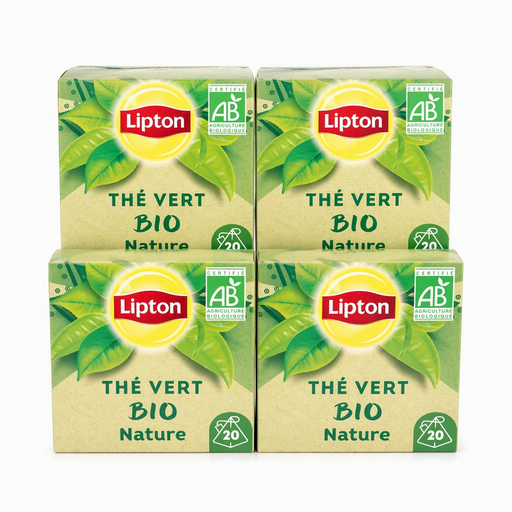 Image unavailable
For making a cup of plain tea in a tea bag at breakfast. The description states that it’s 100% green tea from organic farming; the pack contains four boxes of 20 tea bags. It recommends brewing for 3 minutes in 200 ml of freshly boiled water. Check the organic labelling on the packaging.
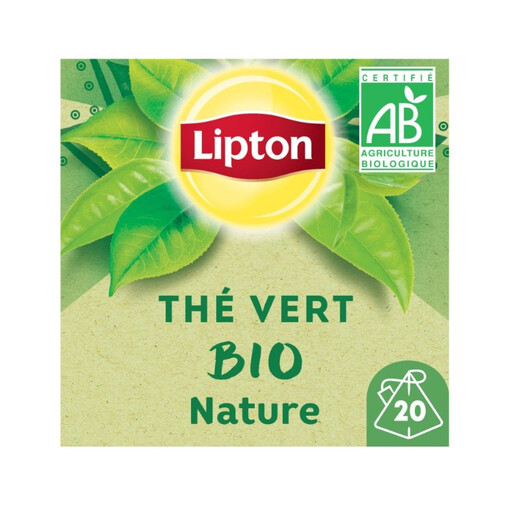 Image unavailable
For a plain cup with no added flavourings listed. The ingredients are stated as 100% organic green tea; the listing recommends brewing for 2 minutes in 200 ml of water at 90 °C. Check the organic labelling on the packaging.
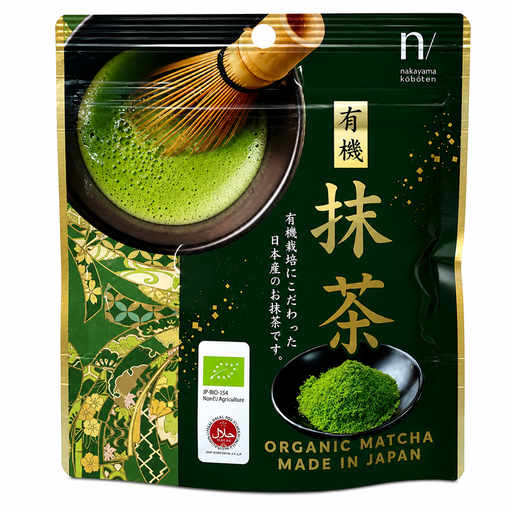 Image unavailable
For choosing powdered green tea rather than tea bags for brewing. The ingredients are stated as 100% organic matcha green tea; the listing also mentions using it in drinks and recipes. Check the organic labelling and preparation instructions on the packaging.
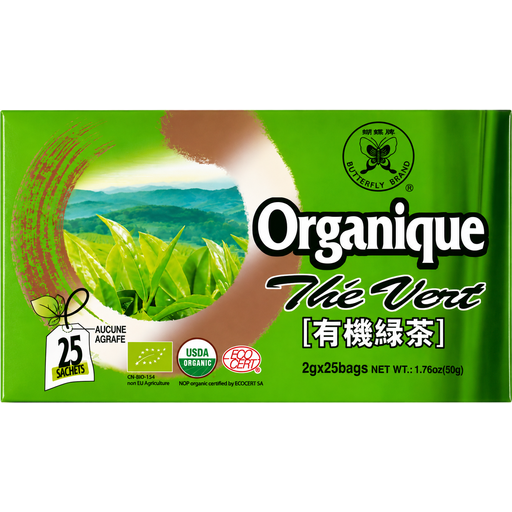 Image unavailable
For making tea in a bag with just one listed ingredient: organic green tea. The box contains 25 tea bags, weighing 50 g. Check the packaging for organic labelling and the recommended brewing time and temperature.
 Image unavailable
For a green tea infusion that contains some matcha, rather than as a substitute for pure matcha powder. The ingredients are stated as 98% organic green tea and 2% organic matcha; the listing gives a brewing time of 5 to 15 minutes. Check the packaging for organic labelling, the format and the recommended brewing temperature.
Look for the EU Euroleaf logo, then check the inspection and origin details, as well as the ingredients list for the specific product. Agence Bio says that the logo confirms compliance with European organic farming rules; the European Commission explains that it is reserved for products certified by an approved body.
No: “organic” alone doesn’t tell you how many ingredients the tea contains or what it tastes like. If you want a plain blend, read the ingredients list. The Lipton product featured by Joybuy France and the Auchan Bio product mentioned here are each labelled as 100% organic green tea.
First, follow the instructions on your box, as preparation guidance varies between products. The listing for Lipton Plain Organic Green Tea, 20 tea bags, recommends brewing for 2 minutes in 200 ml of water at 90 °C. If you find the taste too strong, adjust the brewing time to suit your preference.
Yes, tea naturally contains caffeine, whether it’s organic or not. Anses notes that people’s sensitivity to caffeine varies. If you’re mindful of your intake, also consider any other caffeinated drinks and ingredients you consume.
No. Check the ingredients before using them in the same way. The Carrefour Bio matcha offered by Carrefour is listed as 100% organic matcha green tea, while the Pukka Matcha Green Tea featured here is listed as 98% organic green tea and 2% organic matcha.