Parents of 1–3-year-olds learning to chew pieces
You’re looking for a texture your child can manage. Don’t choose crunchy granola based solely on a ‘family-friendly’ label: check the pieces before serving it.


Organic granola isn’t automatically suitable for a toddler’s breakfast: texture, pieces of nuts and other allergens matter just as much as organic certification. For a 1–3-year-old who chews well, check the exact recipe before serving it. If the pieces are a concern, prepared flakes with a suitable texture or softened muesli are alternatives to consider. In all cases, compare the sugar content and make sure the cereal is just one part of the meal, not a replacement for milk.
You’re looking for a texture your child can manage. Don’t choose crunchy granola based solely on a ‘family-friendly’ label: check the pieces before serving it.
You want to distinguish added sugars from those naturally present in dried fruit. The ingredients list, the ‘of which sugars’ figure per 100 g and the portion size will tell you more than the word ‘organic’ alone.
You want to identify the certification on the packaging, then check the ingredients, allergens and texture of the product separately to make sure it’s right for your child.
For a 1–3-year-old’s breakfast, start with the texture and ingredients of the specific product. Then check its sugar content, organic certification and place in the meal.
| Consideration | What to check | Who prioritises it? |
|---|---|---|
| Texture and pieces | Check the size of the clusters and whether the product contains pieces of nuts; take your child’s chewing ability into account. | If my child is still learning to chew, I want to avoid pieces they can’t manage. Around 33% of consumers would prioritise texture. |
| Sugars and ingredients | Compare the ‘of which sugars’ figure per 100 g with the ingredients list, paying particular attention to added sugars and dried fruit. | I want to understand what the cereal contains before serving it for breakfast. Around 27% of consumers would prioritise checking the sugars and ingredients. |
| Organic certification | Look for the EU organic logo or the AB mark on the packaging, and check the product’s ingredients too. | If I buy organic, I want to be able to identify the certification on the pack I choose. Around 20% of consumers would make this their first priority. |
| Its place in the meal | Adjust the portion to suit your child’s appetite and age, and include milk or a suitable dairy product with the meal. | On a busy morning, I need to include cereal in breakfast without making it the whole meal. Around 20% of consumers would prioritise this. |
The French Ministry of Agriculture explains that organic certification is governed by a European framework: it tells you about the production method, not the size of the pieces or the sugar content. When it comes to meals, Manger Bouger reminds parents that milk remains part of a child’s diet from the age of one.
Certified organic granola can still be very crunchy or contain sugars and allergens. Certification doesn’t answer these questions.
Once you’ve spotted the organic mark, read the ingredients, allergen information and nutrition details, then check the texture itself.
Some family-style granolas contain pieces of nuts. The French health insurance service advises that, up to the age of six, nuts should be offered ground and mixed into a preparation.
Avoid recipes containing pieces of nuts for a toddler, and check for ‘may contain’ warnings if your child has been advised to avoid specific allergens.
Muesli with no added sugars can still contain dried fruit and naturally occurring sugars. The two claims don’t mean the same thing.
Read the ingredients list and the ‘of which sugars’ figure per 100 g together. A Nutri-Score on the pack doesn’t replace checking the allergens or texture.
Cereal alone doesn’t replace the other parts of a meal. Manger Bouger says that from the age of one, children still need milk during the day, particularly at breakfast and teatime.
Serve an age- and appetite-appropriate portion of cereal alongside milk or a suitable dairy product.
These brands offer examples of different recipes. Always choose by checking the label of the specific product, rather than relying on the brand name alone.
Bjorg offers 350 g packs of organic Red Berry and Chocolate granola, as well as 375 g organic muesli.
The brand describes its Krounchy range as crunchy organic muesli.
Favrichon offers a range of organic granolas, as well as cereal recipes aimed at children.
These two Bjorg products show some alternatives to crunchy granola for breakfast: organic muesli to check piece by piece, and organic oat flakes to prepare. Make sure the final texture is suitable for your child before serving.
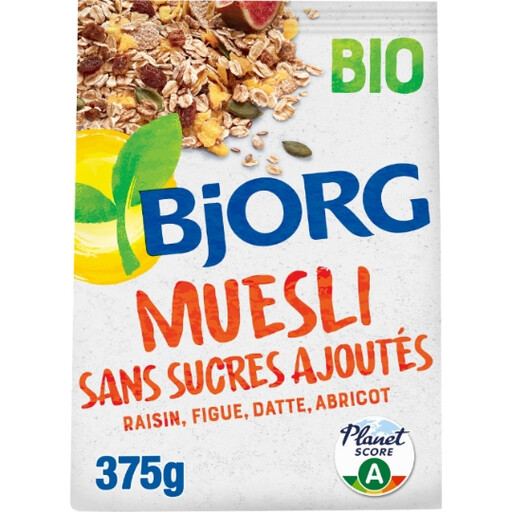 Image unavailable
Worth considering if you’re looking for muesli that can be softened to suit your child’s needs. You’ll still need to check for pieces before serving.
Joybuy’s product information states ‘no added sugars’, 23% fruit and a Nutri-Score of A. Check the ingredients and allergens on the packaging of the product you choose; this muesli doesn’t replace milk at breakfast.
 Image unavailable
An option to prepare rather than a ready-to-serve crunchy granola. You could try serving them softened, as long as you check the consistency is right for your child.
The pack contains 500 g of organic oat flakes. Check the preparation instructions and allergen information on the packaging; the flakes don’t replace milk with a meal.
No. As the French Ministry of Agriculture explains, organic certification relates to the production method; it doesn’t determine whether the texture or ingredients are suitable for your child. Check the pieces, sugars and allergens in the specific product.
Avoid pieces of nuts for a toddler. The French health insurance service advises that, up to the age of six, nuts should be offered ground and mixed into a preparation. If you’re unsure about your child’s ability to chew, choose a different texture that’s suitable for them.
No. Manger Bouger reminds parents that from the age of one, children still need milk during the day, particularly at breakfast and teatime. Granola or muesli should be treated as one part of the meal, served in an appropriate portion.
Read the ingredients and ‘may contain’ warnings on the exact pack. Bjorg’s product information for its Red Berry and Chocolate granolas notes that they may contain traces of nuts. Greenweez’s product information for Grillon d’Or Krounchy Granola lists almonds and pecans in the recipe. If your child has been advised to avoid specific allergens, follow the guidance of their healthcare professional.