People keeping an eye on sugar
You want to compare carbohydrates, including sugars, with the amount you’ll serve at breakfast, rather than relying on the word ‘natural’ alone.


When choosing organic granola as part of diabetes-conscious shopping, check the certification for the specific recipe, then compare its carbohydrates, sugars, ingredients and the amount you plan to serve. An organic label, or a claim such as ‘no added sugar’, is not enough on its own to tell you whether the recipe fits your eating plan.
You want to compare carbohydrates, including sugars, with the amount you’ll serve at breakfast, rather than relying on the word ‘natural’ alone.
You’re looking for a certified organic recipe, while also checking its ingredients and nutritional information before choosing your portion.
You need to check the cereals, nuts and any precautionary ‘may contain’ statements for the product you’re buying.
For organic granola at breakfast, start with the exact recipe and the amount you’ll serve, then compare products based on your main priority.
| Criteria | What to check | Who it’s for |
|---|---|---|
| Carbohydrates and sugars | Compare carbohydrates, including sugars, per 100 g, then work out what those figures mean for your serving. | If I’m making a bowl of granola, I want to know what’s in my portion, not just read a claim on the front of the pack. Around 46% of consumers put managing carbohydrates and sugars first. |
| Organic certification and ingredients | Check the organic claim for the specific product and read its ingredients list, particularly the sweetening ingredients. | For breakfast, I first look for an organic recipe with ingredients I understand, without assuming that every recipe from the same brand is alike. This is a priority for around 27% of consumers. |
| Allergens and serving size | Read the allergen information and ‘may contain’ statements, then check how much you’ll actually pour. | If allergies are a concern or I’m measuring my bowl, I can’t choose based on the recipe name alone. Around 27% of consumers prioritise these practical checks. |
Assurance Maladie advises relating nutritional information to the amount actually consumed. So a figure given per 100 g may not reflect the bowl you serve.
Organic recipes can contain sweetening ingredients. Auchan’s product listing for La Baronnie des Lys apple and cinnamon granola, which is described as having no refined sugar, states that it contains 14,7 g of sugars per 100 g.
Compare the ‘carbohydrates, of which sugars’ line with the ingredients, then work out the figures for your portion.
Auchan’s product listing for Jordans almond, hazelnut and seed granola highlights its sugar content, while its organic status needs to be checked separately. Another recipe from the brand may carry a different claim.
If organic certification matters to you, check the packaging of the specific product you’ve chosen.
The granolas reviewed contain ingredients such as cereals and nuts, depending on the recipe; some product listings also warn that other allergens may be present in traces.
Check the ingredients list and any precautionary allergen statements on the pack when you buy it.
Comparing packs won’t tell you how much will end up in your bowl. Assurance Maladie recommends relating nutritional information to the amount consumed.
Measure the portion you plan to have and use it to interpret the figures for the recipe you’ve chosen.
The details below apply to specific recipes, not to every product from each brand.
The 300 g organic coconut and almond granola is one recipe to consider. Auchan’s product listing carries a ‘no added sugar’ claim.
According to Auchan’s product listing, the 350 g organic Red Fruit recipe includes wholegrain oat flakes and cane sugar.
Two different recipes show why it’s important to check each product: an organic chocolate granola and an almond, hazelnut and seed granola with a claim about its sugar content.
The 300 g organic apple and cinnamon granola is described as having no refined sugar on Auchan’s product listing.
This selection features a peanut granola with ‘Organic’ in its name. If organic certification is essential to your purchase, check it on the packaging of this specific product.
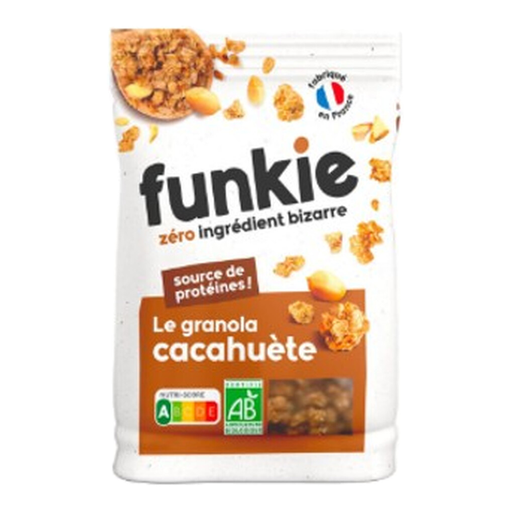 Image unavailable
This peanut granola is worth considering if you’re looking for something to have for breakfast. It comes in a 300 g pack. Before choosing it, check the packaging for organic certification, allergen information and nutritional details relevant to the amount you plan to serve.
No. Organic certification alone doesn’t tell you about the carbohydrates, sugars or amount you’ll eat. Compare the ingredients and nutritional information for the specific product with your eating plan.
Start with carbohydrates, including sugars, then check fibre and fat per 100 g. As Assurance Maladie reminds us, you should then relate these figures to the amount you actually eat.
No. Auchan’s product listing for JOODY organic coconut and almond granola carries a ‘no added sugar’ claim, but also lists dates among the ingredients and states that it contains 6,69 g of sugars and 51,24 g of carbohydrates per 100 g. Read the nutrition declaration alongside the claim on the pack.
Follow the instructions on the pack you’ve bought. The product listings for the recipes reviewed recommend keeping the product in a dry place and sealing the bag tightly after opening.