Bean-to-cup machine owners who care about organic coffee
You’re looking for beans to make espresso and want to check that the pack you buy is labelled organic, rather than relying on the brand name alone.


To choose an organic espresso to drink in the afternoon, check that the specific product is labelled organic, then choose a format that suits your machine. The ingredients and stated intensity can help you choose a flavour, but they don’t tell you how much caffeine it contains. If you’re having a late coffee and are sensitive to caffeine, check separately for a “decaffeinated” label.
You’re looking for beans to make espresso and want to check that the pack you buy is labelled organic, rather than relying on the brand name alone.
You compare the ingredients and stated intensity of espresso coffees, including the Arabica/Robusta blends from Lavazza and Carte Noire.
You drink coffee in the afternoon and take your sensitivity to caffeine into account. Choosing organic coffee and choosing decaffeinated coffee are two separate considerations.
When choosing organic espresso for the afternoon, start with the specific product you’re planning to buy and the equipment you use. Then compare the stated flavour profile and, if you’re having a late coffee, check whether it’s labelled “decaffeinated”.
| What to consider | What to check before you buy | Who it’s for |
|---|---|---|
| Organic label | Check the coffee’s product name and organic certifications, such as the Euro-leaf or AB label, on the specific product. | I want to know that the coffee I’m buying is organic, without assuming this applies to an entire range. Around 33% of consumers would make this their top priority. |
| Machine and format | Check whether the coffee is whole bean, ground, in capsules or in pods, then make sure it’s compatible with your machine. | For my grinder machine, I’m looking for beans; for a different machine, I need the right format. Around 27% of consumers would put compatibility first. |
| Flavour profile | Compare the blend—Arabica or Arabica/Robusta—and the flavour notes given for each product. | I prefer to choose the blend and stated flavour before settling on a pack. Around 20% of consumers would make this their priority. |
| Late coffee break | If caffeine affects you later in the day, look for a “decaffeinated” label separate from the organic label. | When I have coffee late, my sensitivity to caffeine matters more than the stated intensity. Around 20% of consumers would put this first. |
Check that the specific product you’re buying is organic. According to the French Ministry of Agriculture, organic farming in France is governed by a European regulatory framework. A brand name alone doesn’t tell you whether each of its products is organic.
Check the product name and organic certifications on the pack or the product listing.
Whole beans require a built-in grinder or grinding before use. They aren’t a direct replacement for capsules or pods.
Choose a format that’s compatible with your machine and, if you’re buying beans, check how you’ll grind them.
If your machine doesn’t have a built-in grinder, you’ll need a separate one.
A brand’s stated intensity describes its product, but doesn’t measure its caffeine content. The French Agency for Food, Environmental and Occupational Health & Safety (Anses) says caffeine can delay falling asleep, although its effects vary from person to person.
If you’re having a late coffee and are sensitive to caffeine, check explicitly whether the product is decaffeinated.
The products mentioned here are available in formats including 500 g, 900 g and 1 kg. A large pack may not be the best choice if you’re trying a new flavour profile or don’t often drink bean coffee.
Consider how often you drink coffee and the pack size before choosing a product.
Lavazza France describes Espresso Maestro Organic as 1 kg of organic roasted coffee beans, made with Arabica and Robusta and intended for espresso.
Carte Noire describes Espresso Bio as 900 g of Arabica/Robusta whole beans, suitable for espresso among other uses.
Carrefour’s Carrefour Bio range includes a 500 g pack of organic 100% Arabica coffee beans. Its product listing also says the coffee is Fairtrade.
E.Leclerc’s Bio Village range includes a 500 g pack of organic pure Arabica coffee beans from Latin America.
Auchan lists a 1 kg pack of Auchan Bio 100% Arabica coffee beans, with a stated intensity of 8/10.
These products are for anyone choosing organic coffee to make from whole beans. For each one, check that the format works with your machine, that it has the organic certifications you’re looking for and, if you’re having a late coffee, whether it’s labelled decaffeinated.
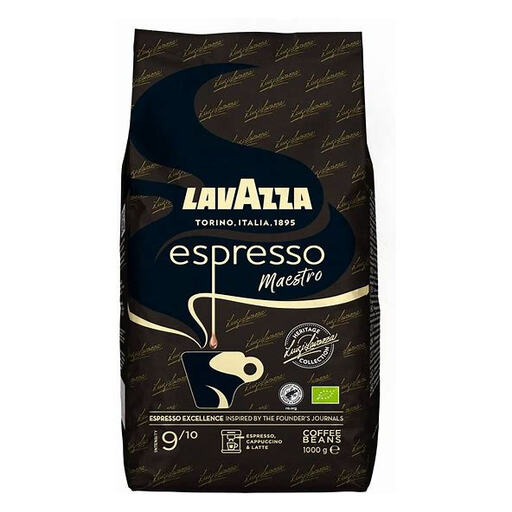 Image unavailable
Worth considering if you make espresso with a grinder machine and drink bean coffee regularly enough to buy a 1 kg pack.
Check the organic certifications on the packaging and look for a “decaffeinated” label if that matters for your coffee break.
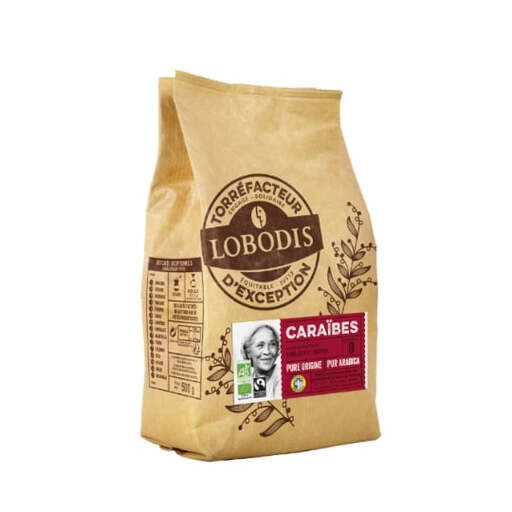 Image unavailable
This 500 g pack could suit you if you’d like to try whole-bean coffee for espresso without choosing a larger size.
Make sure you have a grinder or a mill that’s suitable for your machine, then check the organic certifications and any decaffeination information on the product.
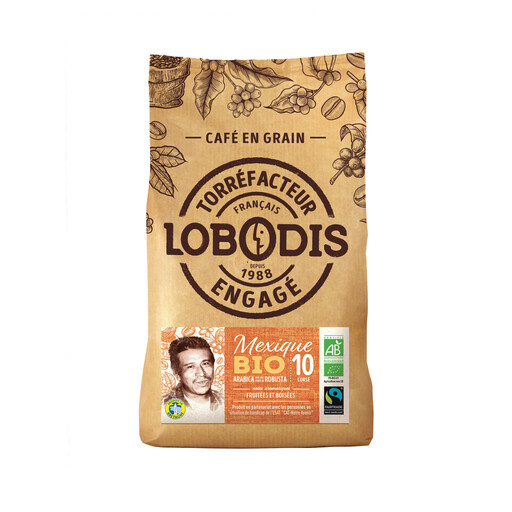 Image unavailable
If you’d like to try organic coffee in a 500 g pack for espresso, check its format and brewing instructions against your equipment.
Also check the organic certifications on the pack and look for a “decaffeinated” label if you need one for an afternoon coffee.
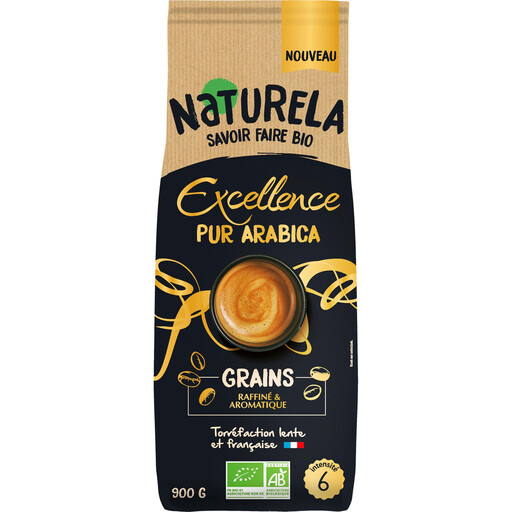 Image unavailable
Worth considering if you’re looking for Arabica coffee beans for a grinder machine.
Before you choose, check the espresso brewing instructions, pack size and organic certifications for this product.
Check the organic information for the specific product, including the Euro-leaf or AB label, as well as its product name and format. The French Ministry of Agriculture explains that organic farming is governed by European regulations applied in France. A range name alone doesn’t tell you what’s in every pack.
No. The organic label doesn’t mean that the coffee is decaffeinated. Look for an explicit “decaffeinated” label on the product you’re interested in. If you’re having a late coffee, bear in mind that Anses notes caffeine may affect how easily you fall asleep, although its effects vary from person to person.
Yes, if your automatic machine has a grinder and takes whole beans. The Auchan Bio product listing says its beans are suitable for this type of machine. However, check your machine’s instructions and adjust the grind for your chosen brew.