
Livraison le jour même ou le lendemain

Qualité garantie

Débloquez vos offres de bienvenue: Livraison GRATUITE | Jusqu'à -80 % | 30 jours d'essai gratuits à JoyPlus
Téléchargez l'application
Navigating the feminine hygiene aisle can quickly become a headache. Between promises of comfort, eco-friendly labels, and opaque ingredient lists, making an informed choice is difficult. For those turning to organic cotton sanitary pads, the goal is twofold?: to care for their body and to limit their environmental impact. However, certain marketing traps can make you bitterly regret your purchase.
As a Product Expert at Joybuy, my role is to decode labels to help you find products that truly deliver on their promises. Here are the two most common pitfalls and our advice for avoiding them.
Choosing the right protection shouldn't force you to compromise between comfort, security, and your values. You just need to know which criteria to check.
To ensure you're making the right decision, focus on these three key points before you check out.
The devil is in the details. A careful analysis of the complete list of components is essential.
Organic sanitary pads can now hold their own against conventional products. Manufacturers use a system of pictograms (usually droplets) to indicate their absorbency capacity?:
Don't sacrifice your peace of mind. An organic pad is perfectly capable of handling a heavy flow, provided you choose the right absorbency level.
For many of us, the act of buying goes beyond the product itself. Researching the brand has become second nature.
To put theory into practice, here are a few products that tick all the boxes, suited for different profiles.
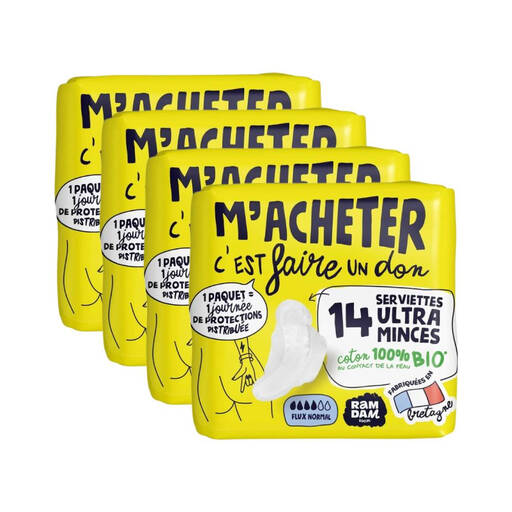
Why we recommend it : For those who refuse to compromise on well-being, ecology, and solidarity. This product ticks all the boxes : a clean composition, local manufacturing, and a concrete social commitment.
Transparency is total. The brand details all its components, going beyond just the organic cotton topsheet. Its social commitment (partnership with Dons Solidaires) and its manufacturing in Brittany are genuine safeguards against greenwashing.
Made in France and a commitment to solidarity. Each purchase funds a day's worth of protection for a woman experiencing period poverty.
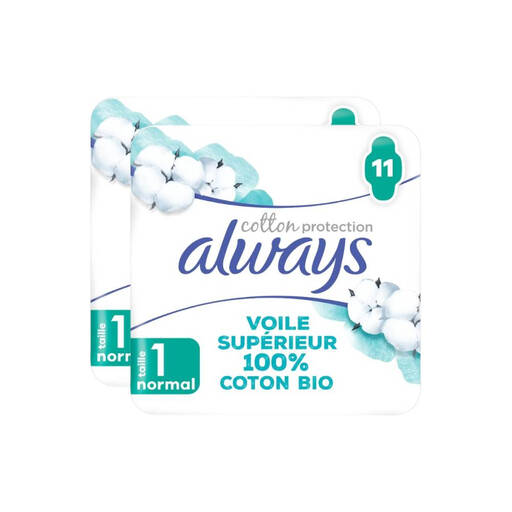
Why we recommend it : Ideal for those who want the softness of organic cotton without sacrificing the high-performance absorbency they're used to.
It dispels the myth that organic protection is less effective. It combines an organic cotton topsheet with an ultra-absorbent core that turns liquid into gel, offering the leak-proof security that has made the brand famous.
The combination of organic cotton softness on the surface and proven absorbency technology.
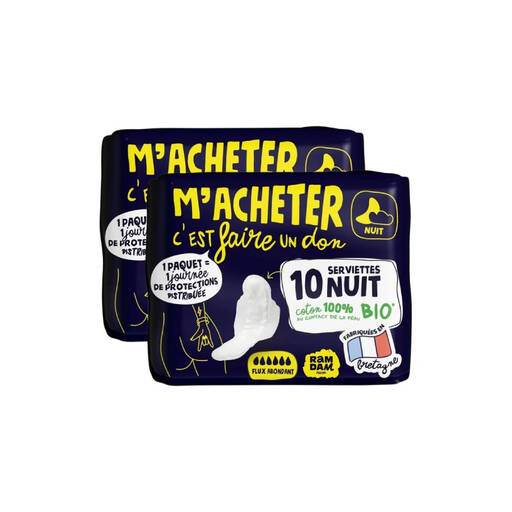
Why we recommend it : Specially designed for nights and heavy flows, it offers maximum protection without sacrificing a clean composition or its French origin.
It's proof that organic protection can go hand-in-hand with ultra-absorbency. Its design and shape, adapted for nighttime, are engineered to guarantee absolute peace of mind, even with a heavy flow.
Very high absorbency for nighttime, combined with a hypoallergenic composition and French manufacturing.
Explore our complete selection of products that meet our quality charter and the most demanding standards.
The distinction is significant. A pad with an "organic cotton topsheet" means that only the top layer, which is in contact with the skin, is made of organic cotton. The rest (absorbent core, leak-proof barriers) can be made of other materials, whether synthetic or not. A "100% organic cotton" pad would be made entirely of this material. This is extremely rare for disposable products, as it would compromise their effectiveness (absorbency and impermeability).
For many users, the answer is a resounding yes. The absence of potentially irritating components (fragrance, dyes, chlorine residues) drastically reduces the risk of skin reactions and allergies. Naturally soft and breathable, organic cotton helps limit moisture build-up, a well-known cause of irritation.
Hygiene rules are universal, whether the pad is organic or not. It is recommended to change your protection every 4 to 8 hours, depending on your flow. This is a golden rule for maintaining your intimate flora balance and avoiding discomfort.