What should you check before buying?
For a TV night, start with the criteria that could rule out a product—your preferred certification and any allergens. Then compare recipes on an equal-quantity basis and choose a jar size that works for sharing.
| Consideration |
What to check |
Who it matters to |
| Organic certification |
Look for the EU organic logo on the jar, the code of the control body and the nearby indication of agricultural origin. |
I want to be sure the jar I choose for the evening has a clearly identifiable certification, not just packaging that suggests it’s organic. Around 36% of consumers would make this their top priority. |
| Sugar and energy |
Compare the sugar and energy values per 100 g, then consider how much you plan to serve; check saturated fat, too. |
If I’m serving several slices of toast, I want to compare recipes on the same basis before deciding on portion sizes. For around 29% of consumers, this would be their top priority. |
| Allergens and plant-based options |
Read the ingredients list and any warnings about possible presence; distinguish a vegan claim from suitability for someone with an allergy. |
When I’m sharing a jar, the presence of hazelnuts, milk or soya could affect my choice, even if the recipe is plant-based. This would be the top priority for around 21% of consumers. |
| Recipe and jar size |
Check the type of chocolate or cocoa, the stated proportions and the size of the jar. |
To go with the snacks for the evening, I’m looking for a recipe I like in a jar that’s the right size for the number of people. Around 14% of consumers would prioritise this aspect. |
Brands to know for comparison
These products illustrate different recipes and labelling criteria; a brand name is no substitute for checking the jar you’re buying.
Jardin Bio Étic
The range includes organic chocolate and hazelnut spreads, including one product described as having a reduced sugar content.
- According to Carrefour’s product listing, the claim ‘37% less sugar’ is based on the average chocolate spread on the market. Keep this comparison in mind when reading the label.
- The product listed by Carrefour also contains 549 kcal per 100 g, as well as hazelnuts and milk. So a reduction in sugar doesn’t tell you everything about its nutritional information or allergens.
L’Amandaie
Its organic dark chocolate and hazelnut product may appeal to people who compare the stated proportions of ingredients.
- Carrefour’s product listing states that this recipe contains 20% hazelnut purée and 18% cocoa.
- The same listing gives an energy value of 573 kcal per 100 g: the proportion of hazelnuts or cocoa isn’t enough to work out the energy value of a portion.
Nutella
Its classic and Plant-Based products help illustrate the difference between ingredients, plant-based options and organic certification—three separate considerations.
- Nutella describes Plant-Based as a vegan-certified recipe; consider this separately from the organic certification you’re looking for.
- According to Nutella, Plant-Based contains hazelnuts and soya, may contain milk and isn’t suitable for people with a milk protein allergy.
Spreads available on Joybuy
These jars are cocoa and hazelnut or cocoa and peanut spreads to consider for toast during a TV night. Their product names mention organic ingredients; if this certification is important to you, check the relevant details on the jar before buying.
 Image unavailable
RIGONI DI ASIAGO Nocciolata Organic cocoa and hazelnut spread, 250 g
A 250 g jar if you’re looking for a cocoa and hazelnut spread to enjoy during the evening.
If your choice depends on allergens or organic certification, check the milk and soya information as well as the certification details on the jar.
View on Joybuy
 Image unavailable
LUCIEN GEORGELIN organic hazelnut and cocoa spread, 400 g
A 400 g jar to consider if you’re planning to share a hazelnut and cocoa spread.
Check the organic certification, milk and nut information, and storage instructions after opening on the label.
View on Joybuy
 Image unavailable
FUNKIE Smooth organic hazelnut and cocoa spread, 200 g
A 200 g jar of hazelnut and cocoa spread to serve with the snacks for your evening in.
Before comparing its nutritional values with another jar, check that they’re given for the same quantity. Also check the certification and allergens on the label.
View on Joybuy
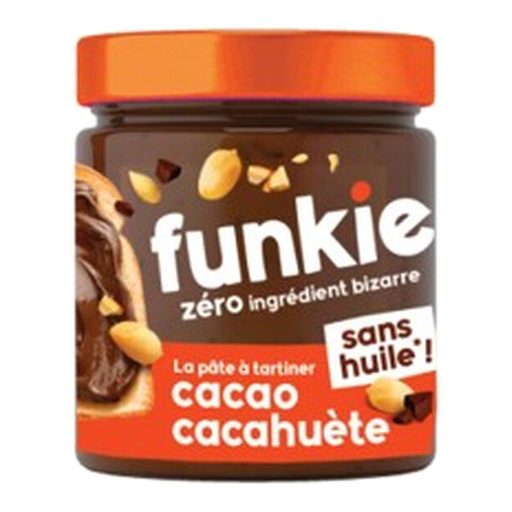 Image unavailable
FUNKIE Smooth organic cocoa and peanut spread, 200 g
This 200 g jar offers a cocoa and peanut recipe rather than a cocoa and hazelnut one. Check that it’s suitable for the people you plan to share it with.
Peanuts are a declared allergen for this product. Also check the certification on the jar and the reference quantity before making any nutritional comparisons.
View on Joybuy
Frequently asked questions
How can you tell if a chocolate spread is certified organic?
For a pre-packed organic product sold in the EU, check for the European organic logo, the code of the control body and an indication of the origin of the agricultural ingredients. According to the European Commission, the logo is reserved for products that meet the certification rules. For a processed product, at least 95% of its agricultural ingredients must be organic, subject to the applicable conditions.
Is the Nutri-Score compulsory on chocolate spread?
No, displaying it is voluntary in France, according to Santé publique France. If it appears on several similar spreads, it can help you compare them, but it doesn’t replace checking the nutritional values per 100 g, ingredients and allergens.
Does the ‘soda tax’ apply to chocolate spreads?
No. The French Ministry of the Economy describes this levy as applying to sugary drinks, not chocolate spreads. To compare spreads, check the sugar content in the nutritional information instead.
Is a vegan spread suitable for someone with a milk allergy?
Not necessarily: a vegan option doesn’t guarantee that there’s no milk present due to possible cross-contamination. Nutella states that its Plant-Based product, although described as vegan-certified, isn’t suitable for people with a milk protein allergy. Always check the information on the jar in question.


