What should you check before buying?
Start with any deal-breakers — the certification you’re looking for or an ingredient you need to avoid. Then compare the nutritional information and choose a size you can store in line with the manufacturer’s instructions.
| Criterion |
What to check |
Who is this for? |
| Organic certification |
Look for the Euro-leaf on the jar and check that the label applies to the recipe you’ve chosen. |
After moving into my new place, I want to tell the difference between organic certification and a simple claim on the packaging. Around 36% of consumers put this check first. |
| Sugars and nutritional values |
Compare ‘of which sugars’ per 100 g; check the other nutritional values according to your needs. |
For my breakfasts, I want to compare recipes on a like-for-like basis rather than relying on the word ‘organic’. Around 29% of consumers prioritise checking sugar levels. |
| Ingredients and allergens |
Read the ingredients list and warnings, particularly those relating to milk, nuts or peanuts. |
If I need to avoid an ingredient, I rule out any unsuitable recipe before comparing nutritional values. Around 21% of consumers prioritise suitability for their dietary needs. |
| Size and storage |
Check the jar’s weight and storage instructions, especially after opening. |
In my first home, I’d rather choose a jar that suits how quickly I’ll use it, so I can follow the instructions once it’s open. Around 14% of consumers prioritise choosing the right size. |
Brands to know when comparing recipes
These examples relate to specific products, not every spread made by each brand. Always check the label on the jar you choose.
Jardin BiO étic
Léa Nature offers an organic chocolate and hazelnut spread with reduced sugar, in a 350 g jar.
- For this product, the manufacturer states that it contains 33 g of sugars per 100 g and is made without palm oil.
- The recipe contains milk and hazelnuts. The manufacturer’s reduced-sugar claim doesn’t mean it’s sugar-free, and doesn’t apply to the whole range.
Nocciolata (Rigoni di Asiago)
The range includes L’Originale, a cocoa and hazelnut recipe, and L’Intense, which Rigoni di Asiago describes as milk-free.
- The difference between these two recipes makes it easier to look specifically for a milk-free option, rather than assuming all organic spreads are milk-free.
- According to the brand, L’Originale contains milk and has 51 g of sugars per 100 g; L’Intense contains hazelnuts and has 53 g of sugars per 100 g.
Lucien Georgelin
The manufacturer offers an organic hazelnut and cocoa spread in a 400 g jar.
- For this product, Lucien Georgelin states that it contains 16% hazelnuts and 7% low-fat cocoa.
- The recipe contains milk and hazelnuts; the manufacturer also states that it contains 55 g of sugars per 100 g. Check the label on the jar you buy for its nutritional values and storage instructions.
Spreads available on Joybuy
This selection includes cocoa and hazelnut recipes, a praline option and a cocoa and peanut recipe. To choose an organic spread for your first home, check the certification you’re looking for, the ingredients and the instructions for storing the jar after opening.
 Image unavailable
FUNKIE Organic Praline Smooth Spread 200 g
Worth considering if you’re looking for a praline recipe in a smaller jar. Check the organic certification, allergens and storage instructions on the jar’s label.
View on Joybuy
 Image unavailable
Rigoni di Asiago Nocciolata Organic cocoa and hazelnut spread 250 g
An option to consider if you’re looking for a cocoa and hazelnut recipe in a 250 g jar. If you avoid milk or certain allergens, check the ingredients for this particular variety before buying.
View on Joybuy
 Image unavailable
FUNKIE Organic Hazelnut Cocoa Smooth Spread 200 g
This 200 g jar could suit you if you’d rather start with a smaller cocoa and hazelnut spread. To compare its sugar content with another recipe, use the value per 100 g shown on the label.
View on Joybuy
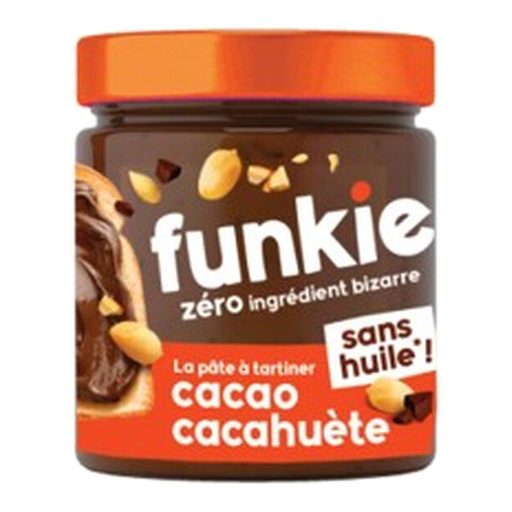 Image unavailable
FUNKIE Smooth Organic Cocoa & Peanut Spread 200 g
Worth a look if you’re after a cocoa and peanut recipe rather than cocoa and hazelnut. Check the allergens and organic labelling on the jar, as well as the sugars per 100 g if you’re comparing different recipes.
View on Joybuy
 Image unavailable
Lucien Georgelin Organic hazelnut and cocoa spread 400 g
Consider this 400 g jar if the size suits how quickly you’ll use it. The recipe contains milk and hazelnuts; check the jar you buy to compare its sugar content and follow the instructions for storing it after opening.
View on Joybuy
Frequently asked questions
How can you tell if a spread is organic?
On prepacked food in the European Union, look for the Euro-leaf on the label. Agence Bio explains that it indicates compliance with European organic farming rules. Check the specific product you’re buying rather than relying on the recipe name alone.
Does an organic spread always contain less sugar?
No. Organic certification doesn’t determine sugar content by itself. To compare different recipes and sizes, check the ‘of which sugars’ value per 100 g in the nutritional information on each jar.
Is Nutri-Score compulsory on these jars in France?
No, Nutri-Score is voluntary in France, according to the Ministry of the Economy. A nutritional declaration is still required for most prepacked foods, so you can compare the values per 100 g even if there’s no logo.
Does the ‘soda tax’ apply to chocolate spread?
No. The levy known as the ‘soda tax’ applies to sweetened drinks, as the Ministry of the Economy explains; a spread isn’t a drink. However, you can still check its sugar content on the label.
How do you choose a size for your first home?
Choose a jar that suits how quickly you’ll use it and the instructions for storing the spread after opening. Storage advice varies between products, so check the label on the jar you buy before deciding where to keep it.


