What should you look for?
For a jar intended for the office, first confirm that it has the organic status you want and check the dietary requirements of the people who may use it. Then compare the nutritional information and choose a size you can use in line with the storage instructions.
| Criterion |
What to check |
Who is it for? |
| Organic status |
Check the organic labelling and ingredients on the specific jar; don’t assume a product is organic based on the brand name. |
If I’m choosing an organic recipe specifically for office breaks, I want to be able to identify that feature on the product I buy. Around 27% of consumers would put this check first. |
| Sugars |
Compare sugars per 100 g between products in the same category and check what any sugar-reduction claim is based on. |
If I want a chocolate spread but sugar is my main consideration, I need to compare the nutritional information for the jars I’m considering. Around 33% of consumers would make this their priority. |
| Allergens |
Read the ingredients and ‘may contain’ warnings on the jar you buy; check any lactose-free or gluten-free claims separately. |
If I’m sharing a jar with colleagues who have dietary requirements, I need to know who the recipe is suitable for before making it available. Around 20% of consumers would make this their main concern. |
| Size and storage |
Choose a jar size that suits how often it will be used and follow the storage instructions after opening. |
When chocolate breaks are occasional, I prefer a size the team can use in line with the instructions on the packaging. Around 20% of consumers would put how to manage the jar ahead of other criteria. |
Spreads available on Joybuy
These jars include cocoa and hazelnut, cocoa and peanut, and a crunchy cereal option for office breaks. Compare their ingredients and storage requirements before choosing a product to share.
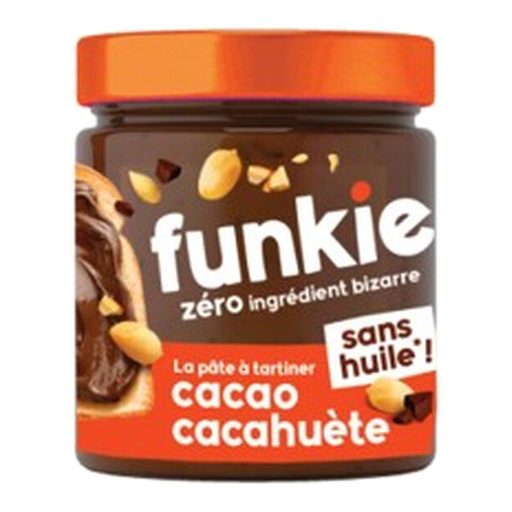 Image unavailable
FUNKIE Smooth organic cocoa and peanut spread 200 g
Worth considering if you’re after a cocoa and peanut recipe rather than cocoa and hazelnut for a small office jar.
200 g jar. As it contains peanuts, check for allergies before sharing. Also check the organic labelling and storage instructions on the jar you buy.
View on Joybuy
 Image unavailable
Rigoni di Asiago Nocciolata organic cocoa and hazelnut spread 250 g
A cocoa and hazelnut recipe in a 250 g jar to consider for occasional office breaks.
Don’t confuse it with Nocciolata L’Intense: the features of one variation do not apply to the others. Before sharing, check sugars per 100 g, allergens and the labelling on the specific jar.
View on Joybuy
 Image unavailable
Lucien Georgelin organic hazelnut and cocoa spread 400 g
The 400 g jar is worth considering if several colleagues regularly enjoy hazelnut and cocoa spread.
Before sharing it, check the allergens, sugars per 100 g, organic labelling and the product’s instructions for after opening.
View on Joybuy
 Image unavailable
FUNKIE Organic Smooth hazelnut and cocoa spread 200 g
This small jar of hazelnut and cocoa spread is worth considering if you can organise how it will be used after opening at the office.
200 g jar. Check that you have a suitable place to store it, as well as the allergens and sugar content per 100 g on the packaging.
View on Joybuy
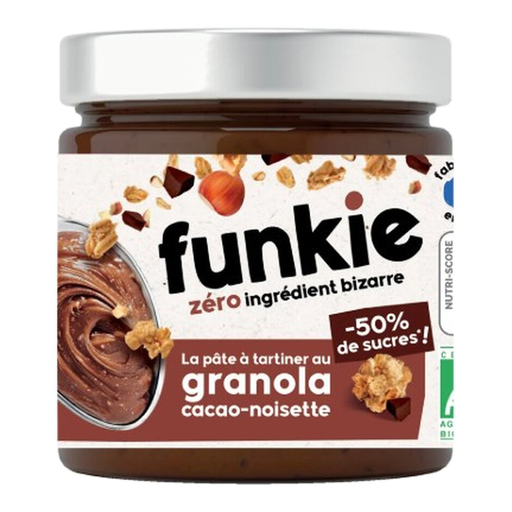 Image unavailable
FUNKIE Organic Hazelnut Granola Crunchy Spread 200 g
Worth considering if you’re looking for a crunchy cereal spread rather than a classic cocoa and hazelnut spread.
200 g jar. Before sharing it, check the allergens, particularly gluten and tree nuts, along with the storage instructions and sugars per 100 g.
View on Joybuy
Frequently asked questions
How can you check whether a spread is organic?
Check the organic labelling on the specific product and size you’re buying. European Regulation 2018/848 governs organic production and labelling; a retailer or range name alone does not establish the status of every jar.
Is Nutri-Score compulsory on spreads in France?
No. Santé publique France states that producers can choose whether to display Nutri-Score. Whether or not it appears on the jar, check the ingredients and nutritional information to compare the products you’re considering.
Does the soda tax apply to chocolate spreads?
No. The contribution known as the ‘soda tax’, as described by the Ministry of the Economy, applies to sugary drinks, not spreads. To choose between two jars, compare their sugars per 100 g directly.
Can an organic, lactose-free spread be shared with the whole team?
Not without checking for other dietary requirements. The Auchan product page for a lactose-free and gluten-free Jardin Bio étic product lists hazelnuts and may contain traces of milk proteins, soya and other tree nuts. Read the label on the jar you buy before sharing it.
What size jar should you choose for the office?
Choose a size that suits the number of people who will use it and how often they take a break. Follow the storage and use instructions for the specific jar after opening, and use a clean utensil when serving.


