For match night, first choose a spread whose organic certification you can verify, then compare the ingredients and nutritional values per 100 g: organic certification alone doesn’t tell you how much sugar a product contains. If several people will be sharing the same jar, the size matters too, but check the allergens in the exact recipe before opting for a larger one.
Who is this guide for?
Shoppers who look for organic certification
You want to distinguish certified organic products from those simply presented as natural. According to the European Commission, the EU organic logo is reserved for products certified by an authorised control body or authority. It doesn’t replace checking the ingredients and nutritional values.
Hosts who want to compare sugar content
You’re looking for an organic recipe for match night while keeping an eye on its sugar content. A reduced-sugar claim may catch your attention, but compare the ‘of which sugars’ figures per 100 g and check what the reduction is measured against.
Groups with guests who have allergies
Before sharing a jar, you need to know whether its recipe is suitable for your guests. The chocolate and hazelnut spreads described by Carrefour France and La Vie Claire show why it’s important to check each label for hazelnuts, milk and any warnings about traces.
Which criteria should you compare?
For match night, check the certification and allergens for your chosen product before comparing jars by their sugar content per 100 g and size.
| Criterion |
What to check |
Who it matters to |
| Organic certification |
Check the certification for the exact product, including the EU organic logo if it appears on the jar, and read the ingredients list. |
I want to be sure the jar I choose is certified organic, without assuming that it contains less sugar. Around 33% of consumers would make this certification their top priority. |
| Sugar |
Check the ‘of which sugars’ figure per 100 g and what any ‘less sugar’ claim is based on. |
When choosing between several spreads to serve, I want to compare their sugar content rather than rely on the word ‘organic’ alone. Around 42% of consumers would put sugar comparison first. |
| Allergens and size |
Check the allergens and any trace warnings on the jar, then consider its net weight in relation to the number of guests. |
If I’m sharing the jar, I first need to make sure the recipe is suitable for everyone there and that there’s enough for the occasion. Around 25% of consumers would put this need first. |
Mistakes to avoid
-
Assuming ‘organic’ means ‘less sugar’
Organic certification and nutritional composition answer different questions. A jar of certified organic spread doesn’t necessarily contain less sugar or fat than another one.
Once you’ve checked the certification, compare the values per 100 g for similar recipes and read their ingredients lists.
-
Thinking every jar must display the Nutri-Score
In France, the DGCCRF says that displaying the Nutri-Score is optional. A nutrition declaration is still compulsory for the prepacked foods it applies to, so the logo’s absence doesn’t prevent you from checking the nutritional values.
If there’s no Nutri-Score, compare the nutritional information per 100 g directly. Don’t assume that a recipe meets your priorities based on a logo alone.
-
Choosing the size before checking the allergens
A large jar may be suitable for sharing without being suitable for every guest. Depending on the variety, a chocolate and hazelnut recipe may contain milk or carry a warning about traces of other allergens.
Keep the label handy when serving and have another option ready if the ingredients or trace warnings aren’t suitable for someone in your group.
Brands to know when comparing recipes
Jardin BiO étic
The range includes an organic chocolate and hazelnut spread in a 750 g jar, as well as a 350 g version described as having less sugar.
- The 750 g jar is worth considering if you’re sharing.
- Jardin BiO étic says its 350 g version has 37% less sugar than the average spread on the market. This comparison doesn’t replace checking the sugar content per 100 g. Also check the allergens in the variety you buy.
La Vie Claire
The brand offers an organic hazelnut and cocoa spread, as well as an organic dark chocolate variety described as having less sugar.
- La Vie Claire says the hazelnut and cocoa recipe described contains 35% hazelnut paste.
- This same recipe contains skimmed milk powder. For the reduced-sugar variety, compare the values per 100 g and check what the advertised reduction is measured against.
Rigoni di Asiago / Nocciolata
The brand’s range includes a 250 g jar of organic Nocciolata cocoa and hazelnut spread.
- The 250 g size gives you an alternative to larger jars when choosing for a group.
- Check availability before relying on this product for an occasion on a set date.
Lucien Georgelin
The Joybuy France listing features a 400 g jar of organic hazelnut and cocoa spread.
- The product description states that this spread contains 16% hazelnuts and 7% low-fat cocoa.
- These proportions apply to the product described, not every recipe from the brand. Check the label on the jar you choose, especially for allergens.
Spreads to explore on Joybuy
These jars include cocoa and hazelnut, cocoa and peanut, and praline recipes in a range of sizes. To choose one for your match night, check the certification for the exact product, its ingredients, allergens and availability when you place your order.
 Image unavailable
Rigoni di Asiago Nocciolata Organic cocoa and hazelnut spread 250 g
Worth considering if you’re looking for a cocoa and hazelnut spread in a 250 g jar. ‘Organic’ appears in the product name; check the certification and allergens on the exact jar before sharing it.
View on Joybuy
 Image unavailable
Lucien Georgelin organic hazelnut and cocoa spread 400 g
The 400 g jar is worth considering if several guests would like a hazelnut and cocoa spread. The Joybuy France listing describes this product as containing 16% hazelnuts and 7% low-fat cocoa; check the allergens and certification on the packaging you choose.
View on Joybuy
 Image unavailable
Funkie Organic smooth hazelnut and cocoa spread 200 g
This 200 g variety is for anyone looking for a hazelnut and cocoa spread in a smaller jar. Before serving, check the ingredients, allergens and certification for the exact product on its packaging.
View on Joybuy
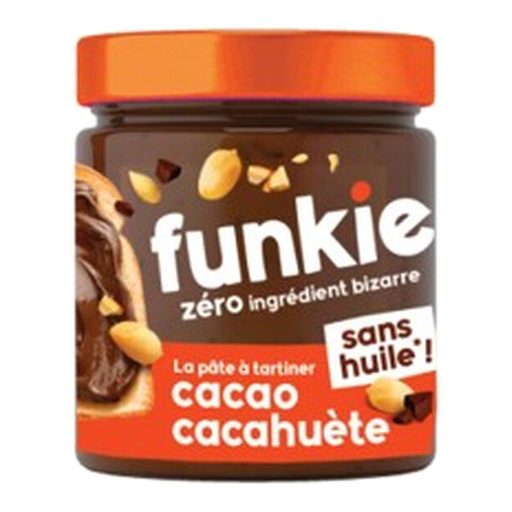 Image unavailable
Funkie Smooth Organic cocoa and peanut spread 200 g
This 200 g cocoa and peanut recipe is a different option from hazelnut and cocoa spreads. Check that your guests can eat peanuts, then check all the allergens and the certification on the jar.
View on Joybuy
 Image unavailable
Funkie Organic smooth praline spread 200 g
This 200 g jar is a good choice if you’re looking for a praline recipe rather than a spread simply described as cocoa and hazelnut. If you’re sharing it, check the ingredients, allergens and certification details for the exact variety.
View on Joybuy
Frequently asked questions
How can you tell if a spread is certified organic?
Check the certification for the exact product on its packaging. According to the European Commission, the EU organic logo can only be used for products certified by an authorised control body or authority. On its own, it doesn’t tell you anything about sugar or fat content.
Does a spread have to display the Nutri-Score in France?
No. The DGCCRF says that displaying the Nutri-Score is optional. A nutrition declaration is compulsory for the prepacked foods it applies to; to compare two jars, check their values per 100 g, whether or not they display the logo.
What should you check before serving a spread to a group?
Read the ingredients and allergen information on the exact jar you plan to serve. Some chocolate and hazelnut recipes described by Carrefour France and La Vie Claire contain hazelnuts or milk; also check for any relevant trace warnings for your guests before opening the jar.


