Hosts keeping an eye on sugar
You’re preparing Halloween toast or desserts and want to compare the ‘of which sugars’ figure per 100 g, without assuming that an organic spread is low in sugar.


For a Halloween party, choose a chocolate and hazelnut spread with clearly identifiable organic credentials, then compare the sugars per 100 g and the allergens in the exact recipe. Organic certification guarantees neither low sugar nor the absence of hazelnuts or milk. Choose a jar size that suits your planned dishes, and keep the label handy at the buffet. If shown, the Nutri-Score can help you compare similar products, but its use is voluntary, according to Santé publique France.
You’re preparing Halloween toast or desserts and want to compare the ‘of which sugars’ figure per 100 g, without assuming that an organic spread is low in sugar.
You’re looking for a recipe described as organic, then comparing jars by their ingredients, stated hazelnut content and size.
You’re serving several guests and need to check the ingredients and any ‘may contain’ warnings for hazelnuts, milk, soya or other nuts before deciding what to serve.
For an organic spread for Halloween, first check that the recipe is suitable for guests with allergies, then compare the ingredients, sugars and quantity you’ll need. The table groups shoppers by their main priority; you should still check the other criteria for every jar.
| Criteria | What to check | Who is it for? |
|---|---|---|
| Sugars | Compare the ‘of which sugars’ figure per 100 g across similar spreads. If a reduction is advertised, also check what it is being compared with. | I want to know where a recipe sits in terms of sugar before I buy it. Around 36% of shoppers make this their top priority. |
| Organic status and recipe | Check the organic labelling for the exact product, then read the ingredients and stated proportions, particularly the hazelnut content. | When choosing a chocolate and hazelnut recipe, I first want to confirm its organic status and understand what it contains. This is the main concern for around 29% of shoppers. |
| Allergens | Read the highlighted allergens and any ‘may contain’ warnings on the jar you plan to serve. | If a guest needs to avoid an ingredient, I need to be able to choose a suitable recipe before putting it out on the buffet. Around 21% of shoppers put this precaution first. |
| Size | Choose a jar size to suit your planned dishes, and check the storage instructions for after opening. | Whether I’m making a few slices of toast or several desserts, I want a quantity I can use without leaving a large jar half-finished. For around 14% of shoppers, size takes priority over the other factors. |
Organic production methods don’t determine a product’s sugar content. The product information for Auchan Bio and Bio Village each lists 55 g of sugars per 100 g for the products concerned, according to Auchan and E.Leclerc.
Compare the ‘of which sugars’ figure per 100 g on the jars you’re considering. If a reduction is advertised, also check what it is being compared with.
According to Santé publique France, displaying the Nutri-Score is voluntary. The DGCCRF states that nutrition declarations apply to most prepacked foods, with some exceptions.
If a jar doesn’t display the logo, check its nutritional information per 100 g and compare it with similar spreads.
The chocolate and hazelnut recipes mentioned here may contain milk and may warn of possible soya or other nuts. The DGCCRF states that allergenic ingredients must be highlighted in the ingredients list.
Keep the jar or a clear photo of its label within guests’ reach, and use a dedicated utensil. If a declared ingredient isn’t suitable for one of your guests, have an alternative ready.
A large jar may be right for several dishes, but it also means more spread to store if you’re only putting on a small buffet.
Estimate how much you’ll need for the planned toast and desserts, then follow the storage instructions for your chosen product after opening.
An opened jar containing more than you can use as planned may lead to food waste.
These products illustrate differences in recipe and size to check on the exact product. A brand appearing here doesn’t mean its entire range is available.
Organic chocolate and hazelnut spreads, including a 300 g recipe and a variant advertised as having reduced sugar.
An organic cocoa and hazelnut spread in a 400 g jar.
An organic hazelnut spread in a 700 g jar for occasions when you need a larger quantity.
A 350 g organic hazelnut spread listed by E.Leclerc.
An organic cocoa and hazelnut spread whose product information also highlights the fair-trade origins of some of its ingredients.
These jars offer smooth cocoa and hazelnut options for Halloween toast or desserts, as well as a crunchy granola variant if that texture suits your recipes. For each product, check the organic labelling, nutritional information and allergens on the jar against your needs.
 Image unavailable
This 200 g jar could be a good choice if you only need a small amount of spread for your party dishes.
Before serving, check whether hazelnuts are listed as an allergen and compare the sugars per 100 g on the label. Also check the organic labelling for the exact product.
 Image unavailable
This smooth cocoa and hazelnut spread comes in a 200 g jar, making it suitable for toast or desserts when that size is enough.
Check the allergens for nuts and read the sugars per 100 g on the packaging. If you’re also comparing fat or protein, make sure the figures use the same basis: per 100 g or per serving.
 Image unavailable
This 250 g jar is a cocoa and hazelnut option for toast or crêpes served at your party.
Check the sugars per 100 g and the allergens on the jar before serving it to guests. Its organic status, as stated in the name, doesn’t answer either of these questions.
 Image unavailable
The 400 g jar could suit several dishes, provided you have a plan for using any spread left after the party.
Joybuy’s product information for this item lists hazelnuts and milk. Keep the label handy for guests, compare the sugars per 100 g and follow the storage instructions after opening.
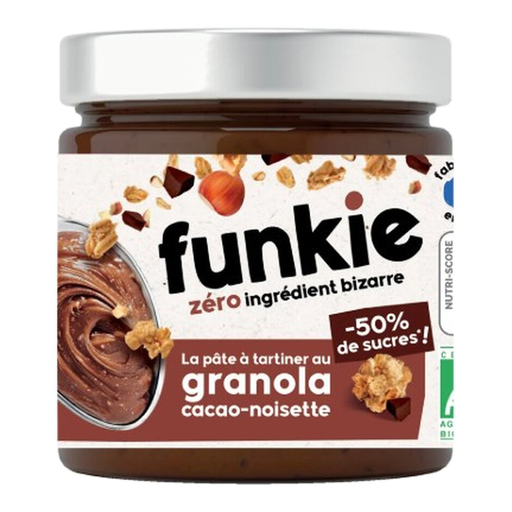 Image unavailable
This 200 g granola variant is for anyone looking for a crunchy texture rather than a classic smooth chocolate and hazelnut spread.
Check that its ingredients suit your recipe, read the allergens on the jar and check the storage instructions for after opening.
Check the organic labelling on the exact product, including the European Euro-leaf logo and certification details, rather than judging by the appearance of the jar alone. The French Ministry of Agriculture notes that organic farming is governed by harmonised European regulations.
No. According to Santé publique France, displaying the Nutri-Score is voluntary. Nutrition declarations apply to most prepacked foods, with exceptions set out by the DGCCRF. To compare similar spreads, check the sugars and fat per 100 g, whether or not the logo is shown.
No. The French contribution known as the ‘soda tax’ applies to sugary drinks, as the Ministry of the Economy explains; it doesn’t apply to solid spreads. When choosing between jars, check the ‘of which sugars’ figure per 100 g instead.
Check the allergens in the exact recipe before serving it, and don’t offer the guest a spread containing an ingredient they need to avoid. The DGCCRF states that allergenic ingredients must be highlighted on the label. Keep the jar within reach at the buffet too, so everyone can check what it contains.
A large jar is useful if the quantity suits the toast and desserts you’re planning, but not if a lot is likely to go unused. Choose a size to suit your dishes and follow the storage instructions for the product after opening.