To choose an organic chocolate spread for a garden party, first look for the EU organic logo on the jar, then compare the ingredients and sugars per 100 g. The organic label alone does not tell you about the nutritional content. Next, choose a size to suit the number of guests and check the allergens in each recipe before setting out the buffet. Nutri-Score can help you compare products when displayed, but Santé publique France confirms that its use is voluntary.
Who is this guide for?
Anyone looking to check organic certification
If organic certification is a must for your buffet, look for the EU organic logo on the specific jar you plan to serve, then read its ingredients list. Agence Bio says that the logo confirms compliance with EU organic farming regulations.
Anyone comparing sugar content
If sugar content is a key factor in your choice, compare the ‘of which sugars’ figures per 100 g across different recipes. Don’t assume a product contains less sugar just because it’s organic or palm-oil-free.
Anyone organising a shared buffet
If any guests need to avoid certain ingredients, check the allergens and any ‘may contain’ warnings on every jar. Depending on the product, the recipes featured here may contain hazelnuts, milk, soya or peanuts.
What should you look for?
For a garden party, start with the factors that determine which recipes you can serve — organic certification and allergens — then compare nutritional values and the quantity you’ll need.
| Factor |
What to check |
Who is it for? |
| Organic certification |
Look for the EU organic logo on the jar you’ve chosen and read the ingredients list for that recipe. |
I want to be able to identify organic certification on the spread being served, rather than rely on vague wording. Around 33% of consumers are said to prioritise this check. |
| Sugars |
Compare the ‘of which sugars’ figures per 100 g, then check saturated fat and the ingredients. |
When choosing between several recipes, I compare their sugar content for the same quantity rather than assume that organic means less sugar. Around 27% of consumers are said to prioritise this. |
| Allergens |
Read the highlighted allergen ingredients and any ‘may contain’ warnings on each jar. |
Before setting out the buffet, I need to know which recipes are suitable for guests with allergies. Around 20% of consumers are said to make this check their priority. |
| Size and serving |
Estimate how much you’ll need, check storage instructions and consider using a separate utensil for each jar. |
I want to allow for enough spread without unnecessarily opening a large jar, while keeping the recipes separate. Around 20% of consumers are said to prioritise how the spread is served. |
Mistakes to avoid
-
Assuming organic means low in sugar
Organic certification doesn’t tell you how much sugar a recipe contains. Rigoni di Asiago lists 51 g of sugars per 100 g for Nocciolata L’Originale, compared with 33 g per 100 g declared by Jardin BiO étic for its reduced-sugar chocolate and hazelnut spread.
Compare the nutritional information per 100 g for the jars you’re considering, as well as their ingredients.
-
Relying on Nutri-Score alone
Santé publique France confirms that displaying Nutri-Score is voluntary. Whether or not it appears on the jar, it doesn’t replace checking the nutritional information, ingredients and allergens.
Use it as an additional guide when it’s shown, then check the label on the specific product you’ve chosen.
-
Losing track of allergens during the buffet
An organic or palm-oil-free recipe may still contain hazelnuts, milk or soya. The DGCCRF reminds producers that allergen ingredients must be highlighted on the labels of prepacked foods.
Keep the label to hand, make it clear which recipe is in each jar and provide separate utensils. If someone has an allergy, check with them which products they can eat.
-
Choosing a large jar without planning how to serve it
A larger size won’t necessarily make a buffet easier if you need to keep several recipes separate or some of the jar may be left open after the event.
Estimate how much you’ll need, open jars as required and follow their storage instructions.
A jar that’s larger than you need may leave more leftover product to store after the buffet.
Brands to know when comparing recipes
Rigoni di Asiago
The brand describes Nocciolata L’Originale as an organic cocoa and hazelnut spread, available in several sizes.
- Rigoni di Asiago says its recipe contains no palm oil.
- The recipe contains milk and soya lecithin; the brand lists 51 g of sugars per 100 g.
Jardin BiO étic
The brand offers a reduced-sugar organic chocolate and hazelnut spread in a 350 g jar.
- The manufacturer declares 33 g of sugars per 100 g for this specific recipe.
- The recipe contains hazelnuts and milk and may contain other tree nuts; check the label before serving.
Ethiquable
Ethiquable describes its hazelnut spread as organic and fair trade, with cocoa sourced from the Dominican Republic.
- The brand says its recipe contains no palm oil.
- The recipe contains hazelnuts and milk, among other ingredients; the brand also warns that it may contain traces of soya and other tree nuts.
Nutella
The classic chocolate and hazelnut recipe can be used as a point of comparison if organic certification isn’t essential for your purchase.
- A 3 kg jar is among the sizes available on Joybuy.
- Nutella lists sugar, palm oil, hazelnuts, cocoa and milk among the ingredients in its recipe. For the 3 kg jar, the Joybuy product information also lists soya as an allergen and 56,3 g of sugars per 100 g.
Spreads available on Joybuy
These 200 to 400 g jars give you several recipes to consider for your buffet: cocoa and hazelnut, hazelnut praline and cocoa and peanut. If ‘Organic’ appears in a product name, you should still check for the EU organic logo on the jar you buy.
 Image unavailable
Rigoni di Asiago Nocciolata Organic Cocoa & Hazelnut, 250 g
A small jar of cocoa and hazelnut spread to consider if you’d like to serve this recipe in a smaller size. Check for the EU organic logo on the jar and bear in mind that it contains hazelnuts, milk and soya before serving it to guests.
View on Joybuy
 Image unavailable
FUNKIE Organic Hazelnut Cocoa Smooth, 200 g spread
This 200 g jar of cocoa and hazelnut spread is a good option to compare with other smaller sizes. Check the organic labelling and any tree nut warnings; once opened, follow the instruction to store it in the fridge.
View on Joybuy
 Image unavailable
FUNKIE Organic Praline Smooth, 200 g spread
This jar of hazelnut praline offers another recipe to consider for your buffet. It contains hazelnuts, so check the certification on the label and plan to store it in the fridge once opened.
View on Joybuy
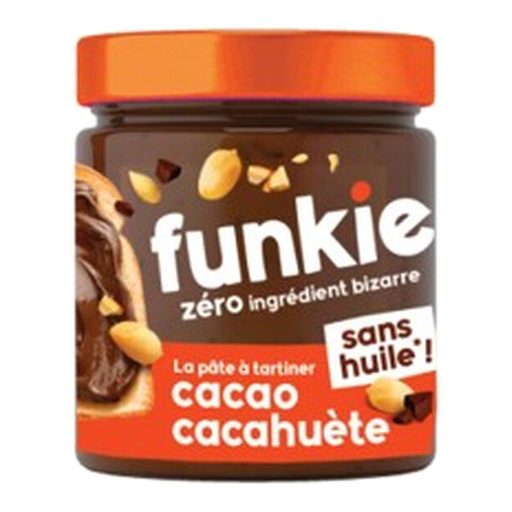 Image unavailable
FUNKIE Smooth Organic Cocoa & Peanut, 200 g spread
This cocoa and peanut option gives you an alternative to hazelnut spreads. It contains peanuts, so check guests’ needs, the organic labelling and the instruction to refrigerate after opening.
View on Joybuy
 Image unavailable
Lucien Georgelin Organic Hazelnut & Cocoa, 400 g spread
This 400 g jar of cocoa and hazelnut spread may suit the quantity you’re planning for your group. The recipe contains hazelnuts and milk and may contain other tree nuts; check for the EU organic logo on the jar.
View on Joybuy
Frequently asked questions
How can you tell if a spread is organic?
Look for the EU organic logo on the label of the jar you’re going to buy. According to Agence Bio, the logo confirms compliance with EU organic farming regulations. Then check the ingredients for the specific recipe.
Does the jar have to display Nutri-Score?
No. As Santé publique France explains, displaying Nutri-Score is voluntary. Whether or not it’s shown, read the nutritional information to compare sugars and saturated fat per 100 g.
Which allergens should you check for a buffet?
Check the highlighted allergen ingredients and any trace warnings on every jar. The recipes mentioned in this article may contain hazelnuts, milk, soya or peanuts, among other ingredients. Never assume a product is suitable for someone with an allergy just because it’s labelled organic.
How can you serve several recipes without mixing them?
Label each jar and give it a separate utensil, then close it between servings in line with its storage instructions. For other buffet foods that need to be kept at specific temperatures, Anses also stresses the importance of preventing cross-contamination and keeping food at the right temperature.


