To choose an organic chocolate spread for a weekend breakfast, start by checking its certification, then compare the ingredients and sugars per 100 g across similar recipes. Organic certification alone tells you nothing about nutritional values or allergens. Check the exact variant if avoiding milk, choosing a fair-trade option or finding a particular texture matters to your household.
Who is this guide for?
Families looking for a clearly identifiable organic product
For weekend toast, pancakes or brioche, you want a recognised certification rather than a vague suggestion that a product is natural. Look for organic labelling on the jar and read the ingredients list.
Shoppers comparing sugar content
You’d like to keep chocolate spread on the breakfast table while comparing different recipes. The ‘of which sugars’ figure per 100 g gives you a common basis for comparison. If the jars display a Nutri-Score, it offers an additional guide within the same category.
Households mindful of milk and nuts
If you need to avoid an ingredient, check the allergens list and any ‘may contain’ warnings for the specific variant. A recipe described as milk-free may still contain hazelnuts.
What should you check before buying?
For a spread to enjoy at weekend breakfast, first check the things that determine whether it’s right for you — such as certification and ingredient suitability — then compare nutritional values and recipe preferences.
| Criterion | What to check | Who it matters to |
|---|
| Organic certification |
Look for certification on the jar, then check the ingredients list. According to Agence BIO, a processed organic food must contain at least 95% organically farmed ingredients. |
For weekend toast, I want to be able to identify an organic product before comparing recipes. Around 36% of consumers would make this their priority. |
| Sugars |
Compare the ‘of which sugars’ figure per 100 g across similar spreads. If a product claims to contain less sugar, check what it’s being compared with. |
If I like several jars, their sugar content becomes my first point of comparison. Around 29% of consumers would prioritise this. |
| Allergens and dietary requirements |
Read the highlighted allergens, any ‘may contain’ warnings and any ‘milk-free’ labelling on the specific variant. |
Before choosing a recipe for my household, I need to know whether it contains ingredients we need to avoid. Around 21% of consumers would put this compatibility first. |
| Sourcing and texture |
Check for fair-trade information and review the ingredients, or choose between a smooth texture and a recipe with hazelnut pieces. |
For pancakes or brioche, I care most about transparent sourcing or a particular texture. Around 14% of consumers would make this their priority. |
Common misconceptions to avoid
-
Assuming ‘organic’ means ‘low in sugar’
Organic certification relates to how ingredients are produced, not to their sugar content. Santé publique France explains that Nutri-Score complements the nutrition declaration and that displaying it is voluntary.
Compare the ‘of which sugars’ figure per 100 g across recipes in the same category. If a Nutri-Score is shown, use it as additional information, but don’t let it replace reading the label.
-
Guessing the allergens from the product range name alone
Recipes from the same brand can differ. A milk-free variant may contain hazelnuts, and ‘may contain’ warnings are also worth checking.
If you need to avoid an ingredient, check the ingredients list and the information on the specific jar every time you buy it.
-
Confusing sourcing choices with nutritional profile
A fair-trade claim or the absence of palm oil describes one aspect of a recipe, but tells you nothing about its sugar, fat or allergen content.
Check any sourcing information that matters to you separately, then compare the ingredients and nutritional values per 100 g.
Brands to know
Jardin Bio étic
Carrefour lists an organic chocolate and hazelnut spread with a comparative sugar claim.
- Carrefour’s product listing claims 37% less sugar than the average spread on the market. This is the comparison shown for this product, not its sugar content.
- The recipe listed contains hazelnuts and milk and may contain other nuts. Check the nutritional information and allergens on the jar you choose.
Ethiquable
The brand’s organic cocoa and hazelnut spread comes with details about its fair-trade sourcing.
- According to Ethiquable, 65% of the total weight of this recipe comes from fair-trade ingredients.
- The product listing names hazelnuts and dairy ingredients, and says it may also contain other nuts and soya.
Rigoni di Asiago / Nocciolata
The range includes several organic cocoa and hazelnut recipes, with different ingredients and textures.
- Rigoni di Asiago describes its Nocciolata L'Intense variant as milk-free, vegan and lactose-free. The range also includes a version with hazelnut pieces.
- These claims don’t apply to every variant. Check the exact product, particularly if you need to avoid milk or hazelnuts.
Spreads available on Joybuy
These jars offer a range of options for spreading on bread, pancakes and other weekend treats. The cocoa and hazelnut recipes and the cocoa and peanut recipe suit different ingredient preferences. Check each jar for the organic certification, nutritional information and allergens that matter to you.
 Image unavailable
Rigoni di Asiago Nocciolata Organic Cocoa & Hazelnut, 250 g
A cocoa and hazelnut recipe to consider for weekend toast. The jar is listed as 250 g; check the label if you need to avoid hazelnuts, milk or soya.
View on Joybuy
 Image unavailable
Lucien Georgelin Organic Hazelnut & Cocoa, 400 g
Another cocoa and hazelnut recipe to enjoy with bread or pancakes. The jar is listed as 400 g; check the label if you need to avoid milk, hazelnuts or other nuts.
View on Joybuy
 Image unavailable
Funkie Organic Hazelnut Cocoa Smooth, 200 g
Its smooth texture may appeal if you’re looking for a cocoa and hazelnut spread. The jar is listed as 200 g; check the allergens and compare sugars per 100 g on the label.
View on Joybuy
 Image unavailable
Funkie Organic Praline Smooth, 200 g
This smooth praline spread is an option for toast or pancakes. The jar is listed as 200 g; the description says the recipe is dairy-free, but check the label for this variant, which contains hazelnuts.
View on Joybuy
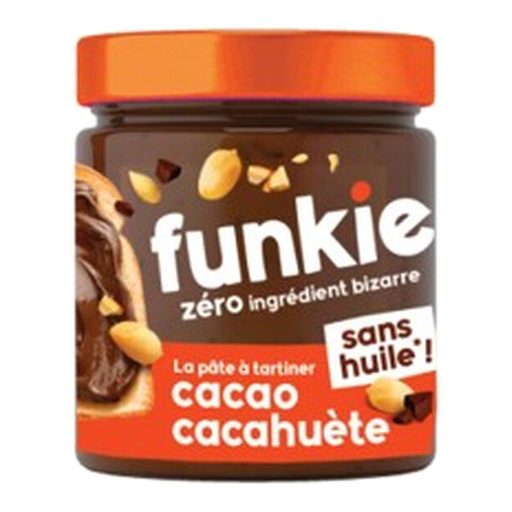 Image unavailable
Funkie Smooth Organic Cocoa & Peanut, 200 g
Worth considering if you’d prefer a cocoa and peanut recipe to cocoa and hazelnut. The jar is listed as 200 g and contains peanuts; check the label before buying if you need to avoid particular allergens.
View on Joybuy
Frequently asked questions
How can you tell if a spread is organic?
Look for a recognised organic certification on the product. According to Agence BIO, at least 95% of the ingredients in a processed organic food must come from organic farming. Check the ingredients list too, as the certification tells you nothing about sugars or allergens.
Does a jar of chocolate spread have to display a Nutri-Score?
No. According to Santé publique France, displaying a Nutri-Score is voluntary. The European Commission says that a nutrition declaration is required for the vast majority of prepacked foods. In particular, use the ‘of which sugars’ figure to compare recipes per 100 g.
What should you check if someone in your household needs to avoid an allergen?
Read the highlighted allergens in the ingredients list and check any ‘may contain’ warnings on the exact jar. A ‘milk-free’ claim for one variant doesn’t mean it’s free from hazelnuts, or that other products in the range have the same ingredients.
Does the ‘soda tax’ apply to chocolate spreads?
No. The French Ministry of the Economy describes this levy as applying to sweetened drinks. To choose between spreads, check their nutrition declarations instead and compare the sugars per 100 g.


