What should you check before buying?
Start with the requirements your recipe needs to meet, especially organic certification and allergens. Then check how the product is intended to be used in baking, as well as the nutritional values on the jar you’re considering.
| Criterion |
What to check |
Who is this for? |
| Organic certification |
Look for the EU organic logo, the control body’s code and an indication of the origin of the agricultural raw materials on the jar. |
I want to confirm the organic status before choosing a filling for my desserts; this would be the top priority for around 31% of consumers. |
| Use in baking |
Check the stated use for the exact product, its ingredients and the hazelnut content if listed. |
If I’m mixing the spread into a recipe rather than serving it on toast, the recipe itself matters most to me. Nearly 25% of consumers would make this their priority. |
| Milk and allergens |
Check the ingredients list and any “may contain” warnings on the specific jar, even if its name says “dairy-free”. |
I need to avoid milk or check for nuts before baking for other people; this would come first for around 19% of consumers. |
| Sugars and nutrition |
Check the “of which sugars” figure and other nutritional values per 100 g; look for Nutri-Score only if it is displayed. |
When comparing two organic recipes, I’d rather read their nutritional values than guess their composition from the label. This would be the top criterion for around 25% of consumers. |
Spreads for your recipes
This selection from Joybuy includes cocoa and hazelnut spreads, plus a cocoa and peanut spread for a different kind of recipe. Choose according to the ingredients your bake needs, then check the organic and allergen information on the jar.
 Image unavailable
RIGONI DI ASIAGO Nocciolata organic cocoa and hazelnut spread, 250 g
Worth considering for a cocoa and hazelnut filling. If milk, soya or hazelnuts matter to your choice, check whether they are present. Also check the organic certification information on the exact packaging.
View on Joybuy
 Image unavailable
LUCIEN GEORGELIN organic hazelnut and cocoa spread, 400 g
A hazelnut and cocoa option to consider for baking. Check the label carefully for milk and hazelnuts, as well as possible traces of other nuts, and check the organic information on the jar you choose.
View on Joybuy
 Image unavailable
FUNKIE organic Smooth hazelnut and cocoa spread, 200 g
Consider this if a cocoa and hazelnut recipe made with red kidney bean purée suits your bake better than a classic chocolate and hazelnut spread. Check for nuts, the nutritional values per 100 g and the organic information on the jar.
View on Joybuy
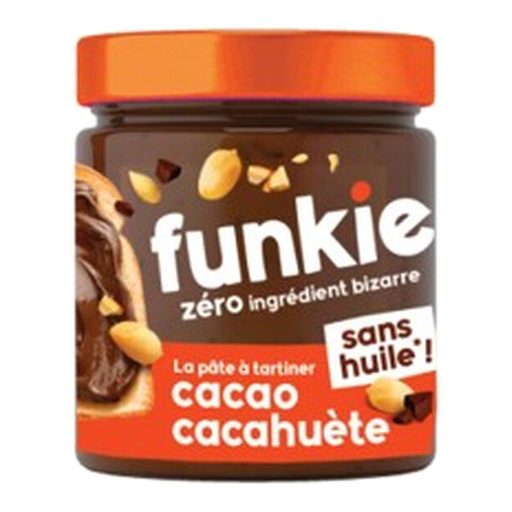 Image unavailable
FUNKIE organic Smooth cocoa and peanut spread, 200 g
This cocoa and peanut recipe is for a bake where you’re not looking for a hazelnut flavour. It contains peanuts, so check the allergens, nutritional values per 100 g and organic information on the exact packaging.
View on Joybuy
Frequently asked questions
How can you identify organic chocolate spread?
Look for the EU organic logo, the control body’s code and an indication of where the agricultural raw materials come from. The European Commission says that the logo requires, among other things, at least 95% organic agricultural ingredients. Check this information on the jar you plan to use.
Does a jar of spread in France have to display Nutri-Score?
No. As the French Ministry of the Economy explains, displaying it is voluntary in France. However, a nutrition declaration is compulsory for most prepacked foods. It lets you check the sugars and fat content per 100 g, among other values.
Is dairy-free spread suitable for someone with a nut allergy?
Not necessarily: “dairy-free” doesn’t mean “nut-free”. Jean Hervé’s Chocolade Sans Lait contains hazelnuts and almonds. For any recipe you’re considering, check the ingredients and warnings on the packaging.
Does the so-called “soda tax” apply to chocolate spreads?
No. The levy set out in the BOFiP-Impôts rates published on 24 December 2025 applies to non-alcoholic drinks containing added sugars, not to spreads. To compare the sugar content of two jars, check their nutrition declarations per 100 g instead.


