What should you check?
For this buffet, first check that the recipe meets your guests’ needs. Organic certification, sugar and allergens each answer a different question.
| What to check | How to check | Who it matters to |
|---|
| Organic certification |
Look for the EU organic logo or the AB mark, and read the organic information for the specific variety you’re buying. |
If I choose organic for the buffet, I want to recognise what the product is certified for, rather than rely on its name alone. Around 40% of consumers would make this their top priority. |
| Sugar content |
Compare the ‘of which sugars’ figure per 100 g across similar recipes; check the reference point for any ‘reduced sugar’ claim. |
If I want to limit sugar in the spreads on offer, I need to compare recipes on the same basis. Around 30% of consumers would make this their priority. |
| Allergens |
Read the ingredients and ‘may contain’ warnings on the exact jar; keep products separate when serving if a guest has an allergy. |
When guests need to avoid certain ingredients, I need to know exactly what’s in each jar before putting it on the table. Around 30% of consumers would put this need first. |
Brands to consider
These products offer useful points of comparison for ingredients, sugar and allergens. Their characteristics don’t automatically apply to other recipes from the same brand.
Jardin Bio Étic
Two organic chocolate and hazelnut recipes to compare: a classic 300 g version listed by Carrefour and a reduced-sugar 350 g version listed by Auchan.
- Carrefour states that the 300 g version contains 20% hazelnuts and no palm oil. For the 350 g version, Auchan claims 37% less sugar than the market average for chocolate spreads; this is a comparison with that specific benchmark.
- The 300 g version contains hazelnuts and milk, and may contain soya and other nuts. The reduced-sugar version contains milk and may contain other nuts and soya.
Auchan Bio
An organic cocoa and hazelnut spread in a 400 g jar. Compare the ingredients of the specific recipe.
- The product information describes this recipe as organic and palm-oil-free.
- Check the nutritional values and allergens on the jar. The organic claim doesn’t tell you how much sugar it contains or whether it’s suitable for someone with an allergy.
Bio Village
E.Leclerc’s listing for its 350 g organic hazelnut spread lets you consider the ingredients and nutritional information together.
- E.Leclerc states that it contains 13% hazelnuts and 55 g of sugars per 100 g. The listing shows a Nutri-Score E and notes that this is based on the previous calculation method, before April 2025.
- The listing warns of possible traces of peanuts, cereals containing gluten and other nuts. Check the label on the jar you’re serving.
Ethiquable
An organic cocoa and hazelnut recipe to consider if fair trade is also important to you.
- For the 350 g product, Carrefour states that 100% of the agricultural ingredients are organic and 65% of the ingredients are fair trade; the recipe is described as palm-oil-free.
- This product contains hazelnuts and milk, and may contain other nuts and soya. These details don’t apply to every Ethiquable recipe.
Nocciolata
The 400 g organic recipe described by Auchan is presented as gluten-free and palm-oil-free.
- Auchan’s product information states that this recipe contains 18.5% hazelnut paste.
- It also lists 51 g of sugars per 100 g, along with hazelnuts, milk and soya lecithin. The ‘gluten-free’ claim doesn’t address allergies to these ingredients.
Chocolate spreads available on Joybuy
These jars include cocoa and hazelnut recipes, as well as a cocoa and peanut variety. For your buffet, check the ingredients carefully before comparing pack sizes: the peanut variety isn’t a substitute for a hazelnut recipe.
 Image unavailable
RIGONI DI ASIAGO Nocciolata Organic cocoa and hazelnut spread, 250 g
A cocoa and hazelnut recipe to consider for your buffet if you’re looking for this size. The product is described as organic: check for the logo on the jar, and look for hazelnut, milk and soya warnings before serving.
View on Joybuy
 Image unavailable
LUCIEN GEORGELIN Organic hazelnut and cocoa spread, 400 g
Worth considering if you want a 400 g jar for your buffet. Joybuy’s product information lists 16% hazelnuts and 7% low-fat cocoa powder. It mentions hazelnuts and milk, and warns that it may contain other nuts. Check the organic logo and allergen information on the jar.
View on Joybuy
 Image unavailable
FUNKIE Organic Smooth hazelnut and cocoa spread, 200 g
A 200 g size for anyone looking for a hazelnut and cocoa recipe. Hazelnuts are listed as an allergen; check the other information on the jar, its organic logo and the ‘of which sugars’ figure per 100 g before comparing it with other recipes.
View on Joybuy
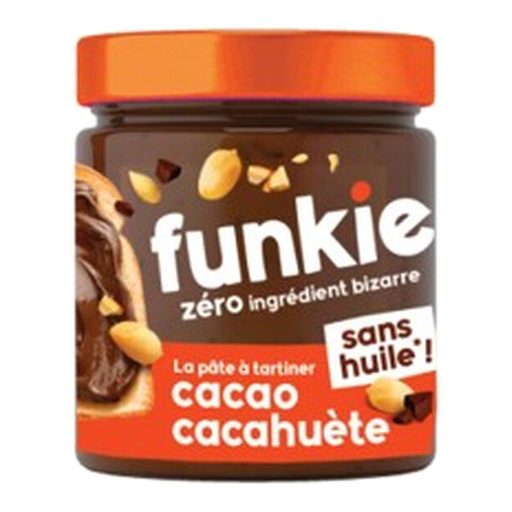 Image unavailable
FUNKIE Smooth Organic cocoa and peanut spread, 200 g
This 200 g variety is for hosts considering a peanut recipe rather than a hazelnut one. Peanuts are listed as an allergen, so make sure this jar is clearly identified on the buffet and check its label, including the organic logo and sugars per 100 g.
View on Joybuy
Frequently asked questions
How can you identify an organic chocolate spread for your buffet?
Look for the EU organic logo or the AB mark on the product, and read the information for the variety you’re buying. The French Ministry of Agriculture describes organic farming as a regulated and monitored method of production. This certification doesn’t mean the recipe contains less sugar or no allergens.
Is organic chocolate and hazelnut spread suitable for all your guests?
Not without checking the ingredients in the jar you’re serving and taking your guests’ needs into account. Products listed by Carrefour, Auchan and E.Leclerc include hazelnuts or milk, and some also list soya or possible traces. If a guest has told you about an allergy, provide a suitable alternative and serve it separately.
Is Nutri-Score compulsory on chocolate spread sold in France?
No. According to Santé publique France, displaying it is voluntary. It complements the mandatory nutritional information required under the European regulation on consumer information. If it isn’t shown, you should still compare the nutrition declaration and ingredients.
Does the ‘soda tax’ apply to chocolate spread?
No. The scale published in the Bulletin officiel des finances publiques-Impôts on 24 December 2025 covers the contribution on non-alcoholic drinks containing added sugars, not chocolate spreads. When choosing a recipe, compare the ‘of which sugars’ figure per 100 g instead.
How should you store and serve a jar once it’s open?
Follow the instructions on the jar you’ve bought, as they can vary by recipe. For the reduced-sugar Jardin Bio Étic version listed by Auchan, the instructions say not to refrigerate it and to use it within a month of opening for best results. At your buffet, use a clean utensil and don’t put it back in the jar after serving.


