For a coffee break during a meeting, choose organic cereal bars if you want to hand out individual portions; an organic chocolate bar is a better option if you can share it. Either way, check that the specific product is organic, then compare the sugars and allergens on its label. A protein bar may suit a particular request for extra protein, but it isn’t automatically a suitable alternative to a bar intended for the whole group.
Who is this choice for?
The person organising the meeting
You’re looking for an organic product that’s easy to hand out in individual portions. Check the organic label on the product you’ve chosen, then check how many bars are included and how they’re packaged before working out how many to buy.
Anyone keeping an eye on sugars and ingredients
You want to compare recipes without assuming that the word ‘organic’ means they’re low in sugars. The nutrition information per 100 g gives you a like-for-like comparison; also check the size of the portion you plan to offer.
A group with specific dietary requirements
If any attendees need to avoid certain ingredients or have specifically asked for a protein bar, check the recipe for each product. Depending on the product, cereals, milk, soya, peanuts or nuts may be ingredients or appear in ‘may contain’ warnings.
What should you check before buying?
First, confirm that the specific product is organic. You can then compare the format, ingredients and any dietary requirements to decide between bars to hand out and chocolate to share.
| What matters |
What to check |
Consumers concerned |
| Organic status |
The organic label or mark on the exact product; the number of portions if you need to hand out the bars. |
For a meeting, I want to be able to confirm that the product is organic before offering it. Around 45 % of consumers would make this their top priority. |
| Sugars and ingredients |
The ‘sugars’ figure per 100 g and the ingredients list; the amount per portion, if shown. |
When comparing snacks for a coffee break, I want to know how much sugar they contain without assuming that organic means less sugar. Ingredients would come first for around 33 % of consumers. |
| Specific dietary requirements |
Allergens and ‘may contain’ warnings for the exact product; protein per bar only if it meets a specific request. |
If I need to take allergies or a request for extra protein into account, the recipe must be suitable for those concerned. Around 22 % of consumers would prioritise these requirements. |
Common misconceptions to avoid
-
Assuming ‘organic’ means ‘low in sugar’
The organic cereal bar examples featured by Carrefour and E.Leclerc show that recipes can also contain sugar or glucose syrup. Organic certification alone doesn’t tell you how much sugar a product contains.
Compare the ‘sugars’ figure per 100 g and read the ingredients list. The Nutri-Score can also help if it appears on the packaging.
-
Assuming the tax on sugary drinks applies to bars
The levy described by Légifrance under Article 1613 ter of the General Tax Code applies to drinks and liquid preparations for drinks, not solid bars.
When choosing a bar, check its nutrition information and the portion size you have in mind.
-
Handing out a multipack without checking allergens
The organic bar recipes described by Carrefour don’t all contain the same ingredients or carry the same ‘may contain’ warnings. A single product may therefore not suit the known dietary requirements of everyone in the group.
Ask about dietary requirements where necessary, and check the packaging of the product you plan to hand out.
You may need to buy and hand out a different product separately.
-
Confusing cocoa commitments with organic certification
A fair trade commitment or cocoa sourcing programme doesn’t, on its own, confirm that a specific bar is organic.
Check each claim that matters to your purchase on the exact product.
Brands to consider by format
These examples relate to specific products or ranges: a product’s features don’t necessarily apply to every recipe from the same brand.
Carrefour Bio
Carrefour offers a box of six organic chocolate cereal bars, designed to be served as individual portions.
- The stated pack size makes it easy to count how many bars you can hand out.
- The listed recipe includes oats, wheat, barley, sugar and glucose syrup; check for ‘may contain’ warnings too.
Bio Village
E.Leclerc offers a box of six organic dark chocolate cereal bars under this brand.
- The product listing confirms that this product is made from organic ingredients.
- Its format and organic label don’t mean you can skip checking the ingredients and sugar content.
GOOD MOOV
The organic dark chocolate protein bar described by Carrefour is aimed at those looking for extra protein, rather than simply wanting to hand out cereal bars.
- Carrefour’s listing states that this product contains 10 g of protein per 46 g bar.
- The listed recipe includes soya, milk, almonds and oats; check the allergens before offering it to the group.
Alter Eco
Alter Eco offers chocolate bars for sharing and enjoying together, rather than handing out individual bars.
- The brand states that its products are made from organic ingredients.
- Check the ingredients and allergens for the chocolate bar you choose, and think about how you’ll share it.
Ethiquable
Ethiquable offers organic and fair trade chocolate bars to share over coffee.
- The brand presents organic and fair trade as two features of its chocolate bar range.
- Check the ingredients and allergens on the specific bar you plan to serve.
Two formats for a coffee break
These Joybuy products offer two ways to serve chocolate during a meeting: organic cocoa cereal bars to hand out, or an organic chocolate bar to share. Check the packaging and label of your chosen product before working out the portions.
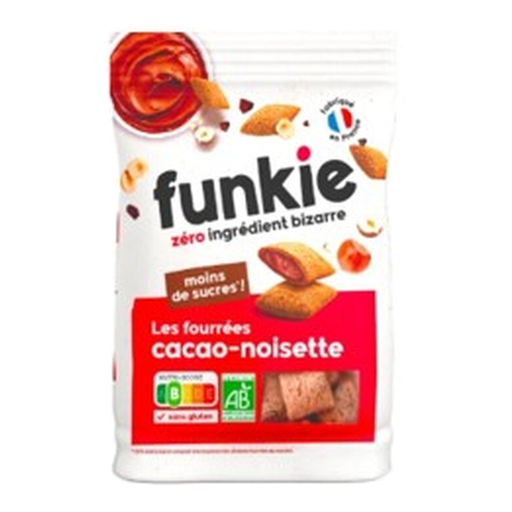 Image unavailable
FUNKIE, organic hazelnut and cocoa-filled cereal bars, 250 g
Worth considering if you’d like to offer cocoa cereal bars rather than a chocolate bar to share. The pack is listed as 250 g; check how many bars it contains and whether they’re individually wrapped to plan how you’ll hand them out.
Hazelnut is mentioned in the product name. Check all the ingredients and allergen information on the pack you buy, and compare the sugars using the nutrition information per 100 g.
View on Joybuy
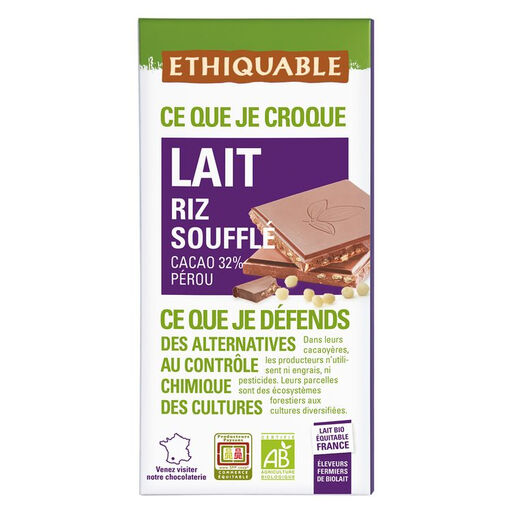 Image unavailable
ETHIQUABLE, organic milk chocolate bar with puffed rice, 100 g
Consider this if attendees can share a chocolate bar with their coffee instead of receiving an individual cereal bar. This product is listed as a 100 g bar; plan separately how you’ll serve the portions.
Check the ingredients, allergen information and ‘sugars’ figure per 100 g on the packaging of the chocolate bar you choose.
View on Joybuy
Frequently asked questions
How can you check whether a bar is organic?
Look for the organic label or mark on the packaging of the specific product, rather than relying on the name of its range. The Ministry of Agriculture explains that organic production is governed by European regulations, which are applied in France.
Is Nutri-Score compulsory on a chocolate bar?
No. In France, the DGCCRF describes Nutri-Score as voluntary. However, nutrition information is compulsory for most pre-packed foods and includes the amount of sugars per 100 g.
Can one product suit everyone at the meeting?
Only choose one after taking attendees’ known dietary requirements into account and checking the ingredients and ‘may contain’ warnings on the packaging. The organic bar recipes described by Carrefour show that allergens vary from one product to another.
Does the tax on sugary drinks apply to chocolate bars?
No. Article 1613 ter of the General Tax Code, published on Légifrance, applies to drinks and liquid preparations for drinks, not solid bars. To compare bars, check their sugar content and portion size instead.


