For a snack to take with you around Pancake Day, choose an individually wrapped bar and check its organic certification, ingredients and sugar content. If you want chocolate to serve with pancakes or use in a recipe, chocolate sticks or a bar are better suited to that purpose. Compare the nutritional information for similar formats and decide how much you plan to serve. Organic certification tells you about how a product is made, not how much sugar it contains.
Who is this guide for?
People who want to check organic certification
A product labelled ‘organic’ isn’t enough for you: you want to find the EU organic logo, the certifying body’s code and the origin of the agricultural ingredients on the packaging. The Agence BIO explains the role of the EU organic logo on certified products.
Families comparing chocolate snacks
For a break with pancakes, you want to make an informed choice. Organic certification is no substitute for checking the sugar content, serving size and ingredients. Manger Bouger recommends checking the nutritional information on processed products.
People looking for chocolate to serve with pancakes
You’re deciding between an individually wrapped snack, chocolate sticks to serve alongside pancakes, or a bar to use in cooking. These formats aren’t portioned in the same way, and the exact recipe matters too, particularly when it comes to allergens.
What should you look for?
First decide whether you’re buying a ready-to-eat snack or chocolate to serve with pancakes. Then check the organic certification and compare labels on products intended for the same purpose.
| Criterion |
What to check |
Who is it for? |
| Organic certification |
Look for the EU organic logo or AB logo, as well as certification details on the packaging. According to the Agence BIO, the EU logo meets the organic certification rules that apply to the product. |
If my priority is to buy a certified product rather than rely on a claim on its product page, I need to be able to check the label; around 45% of consumers put this check first. |
| Sugars and nutritional information |
Compare the sugar and fat content per 100 g, then check the amount in the serving you plan to have. If the packaging displays a Nutri-Score, it can offer an additional point of reference. |
When choosing between chocolate snacks, I mainly need to understand what the portion I’ll eat represents; around 33% of consumers prioritise this nutritional comparison. |
| Format and ingredients |
Choose between an individually wrapped bar, chocolate sticks and a bar of chocolate, depending on how you plan to use it. Read the ingredients list and check the allergens for the specific product. |
If I’m making pancakes or need to avoid an allergen, the right format and exact recipe come first; this is a priority for around 22% of consumers. |
Common misconceptions to avoid
-
Assuming ‘organic’ means ‘low in sugar’
Organic certification covers production and inspection standards. On its own, it doesn’t tell you about the nutritional content of a bar or chocolate.
Once you’ve checked the certification, compare the sugar content per 100 g and per serving, along with the ingredients, across products intended for the same purpose.
-
Assuming that no Nutri-Score means a poor rating
The European Commission explains that front-of-pack nutrition labelling remains voluntary under current EU rules. So if it isn’t shown, you can’t infer a product’s score.
Use the Nutri-Score when it’s displayed, but don’t let it replace a check of the nutritional information.
-
Choosing a format without checking the recipe
A filled cereal bar, biscuit sticks and a bar of chocolate don’t serve the same purpose. Bonneterre’s dark chocolate sticks, for example, contain wheat, butter and eggs.
Decide whether you’re looking for a snack, something to serve alongside pancakes or an ingredient to use in them, then check the allergens on the packaging of the product you choose.
Brands to know
These brands illustrate different organic formats relevant to the subject; their inclusion here doesn’t mean that every product they make is certified.
Bjorg
Bjorg presents its 25 g organic Almond and Coconut bar as a snack to take with you.
- An example of an individually wrapped, pre-portioned format.
- This is an Almond and Coconut bar, not a chocolate bar. For a different recipe, check the product’s certification, sugar content and allergens.
Bonneterre
Bonneterre offers organic dark or milk chocolate sticks, as well as a range of organic chocolate.
- Chocolate sticks are a different format from an individually wrapped bar and can be served with pancakes.
- Bonneterre’s dark chocolate sticks contain wheat, butter and eggs; check the ingredients for the product you choose.
Alter Eco
Alter Eco offers a range of organic, fair trade chocolate.
- Worth considering if you’re looking for chocolate to serve or use in a recipe.
- The range doesn’t refer to one specific individually wrapped bar, so check the format, recipe and label of the product you choose.
Products available on Joybuy
This selection is mainly made up of chocolate bars or smaller chocolate products to enjoy with pancakes, as well as a pack of cocoa-filled cereal bars for a snack on the go. The pack size alone doesn’t tell you how much you’ll eat in one serving.
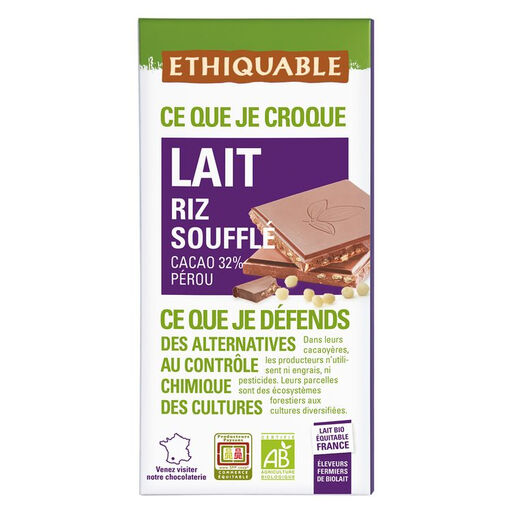 Image unavailable
ETHIQUABLE milk chocolate and puffed rice, 100 g
A bar to consider serving with pancakes, rather than taking with you as an individually wrapped snack. The product page describes it as organic; check the EU organic logo and certification details on the packaging, as well as the ingredients if you have any concerns about allergens.
View on Joybuy
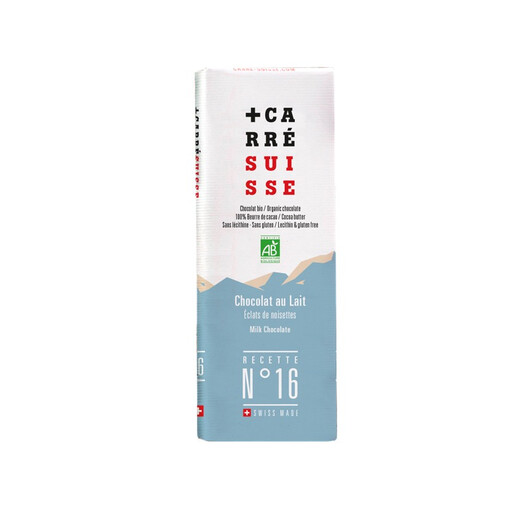 Image unavailable
CARRE milk chocolate with hazelnuts, 40 g
This 40 g chocolate is a small format to enjoy around Pancake Day, though it isn’t presented as a cereal bar. If organic certification or allergens are important to you, check the certification details and ingredients list on the packaging.
View on Joybuy
 Image unavailable
CARRE SUISSE dark chocolate with lemon and green pepper, 100 g
Lemon and green pepper make this bar different from plain dark chocolate, so bear these ingredients in mind if you’re choosing something to serve with pancakes. Check the packaging for organic certification, allergens and nutritional information before comparing it with another bar.
View on Joybuy
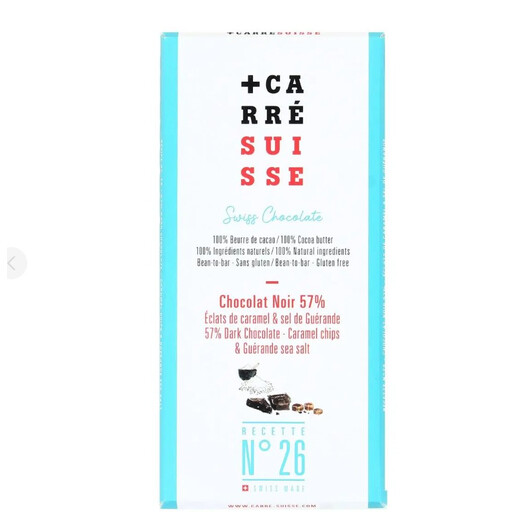 Image unavailable
CARRE dark chocolate with caramel and Guérande sea salt, 100 g
This bar combines dark chocolate, caramel and Guérande sea salt. Choose it to suit the recipe or pairing you have in mind, but don’t assume that ‘dark chocolate’ means it’s low in sugar. Compare the nutritional information and check the packaging for organic certification and allergens.
View on Joybuy
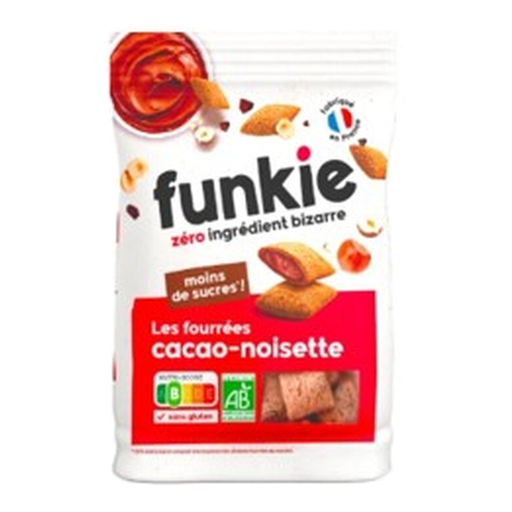 Image unavailable
FUNKIE cocoa and hazelnut-filled cereal bars, 250 g
The cereal bar format is suited to a snack on the go, but 250 g is the weight of the pack, not of each bar. Before comparing the sugar content per serving, check how the serving size is calculated on the packaging. Also check the organic certification and allergens: the information about peanuts and cashew nuts differs between the product page and its description, which is particularly important if you have an allergy.
View on Joybuy
Frequently asked questions
How can you check whether a chocolate product is organic?
Check the logos and certification details on the packaging of the specific product, rather than relying solely on its sales description. The Agence BIO says the EU organic logo indicates that the product meets the relevant EU rules. For a processed product to display the logo, at least 95% of its agricultural ingredients must be organic, subject to the applicable conditions.
Is a Nutri-Score compulsory on a chocolate bar?
No. The European Commission explains that front-of-pack nutrition labelling is voluntary under current EU rules. If the product displays a Nutri-Score, you can use it alongside the nutritional information and the serving size you have in mind; if it’s absent, that doesn’t mean the product has a particular score.
Is an organic chocolate bar enough to judge a breakfast?
No. Organic certification alone doesn’t tell you how much sugar a bar contains or what its nutritional profile is. When choosing this kind of snack, check the ingredients, the nutritional information per 100 g and the amount in the serving you’ll eat. Don’t confuse a chocolate bar with a filled cereal bar.


