What should you look for first?
To choose between mini portions and a standard bar, first identify what kind of product it is, then compare the information that matters most to you.
| Criteria | What to check | Who is it for? |
|---|
| Organic certification |
For a pre-packed product of European origin, look for the EU organic logo, the certifying body’s code and the indication of agricultural origin. |
If organic chocolate is the starting point for my shopping, I want to be able to check this information on the packaging rather than rely on the product name alone. This is the top priority for around 40% of consumers. |
| Format and portion |
Check that the product is described as ‘chocolate’ or a ‘bar’, then look at the unit weight and, if provided, the portion weight. |
If I want to eat an amount that’s easy to keep track of, I’m looking for a small format that’s genuinely chocolate or a bar I can break into pieces. Around 30% of consumers put this need first. |
| Recipe and taste |
Compare the ingredients list, the stated cocoa percentage and the sugar content per 100 g. |
I choose based on the recipe and the type of chocolate I want to enjoy. The cocoa percentage doesn’t mean I can skip the ‘sugars’ line. This is the top priority for around 20% of consumers. |
| Allergens and product availability |
Read the allergen and ‘may contain’ information for the specific product. If you’re collecting your shopping, check the details for your chosen store. |
If I need to avoid an allergen or collect my shopping from a specific store, I check these details before choosing a bar. They are the main concern for around 10% of consumers. |
Standard chocolate bars on Joybuy
These are 100 g chocolate bars to consider if you’d rather decide on your own portion sizes. Before choosing them for an organic shop, check the certification information on the packaging.
 Image unavailable
CARRE SUISSE organic dark chocolate with lemon zest and green pepper, 100 g
Worth considering if you want to portion out an aromatic dark chocolate bar yourself. Compare its sugar content per 100 g with other products. If you need to avoid certain ingredients completely, check for traces of milk, nuts, soya and gluten. Also check the organic information on the packaging.
View on Joybuy
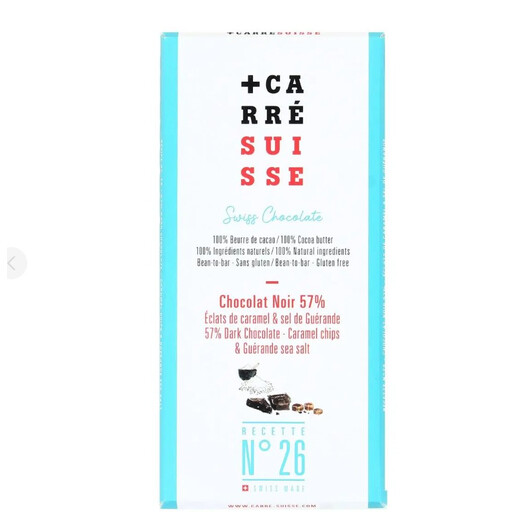 Image unavailable
CARRE organic dark chocolate with caramel and Guérande sea salt, 100 g
An option to consider if you’re looking for a caramel recipe and plan to break up the bar yourself. Read the ‘sugars’ line per 100 g and the ingredients list: the recipe contains milk, and the product details mention possible traces of nuts. Check the organic information on the packaging.
View on Joybuy
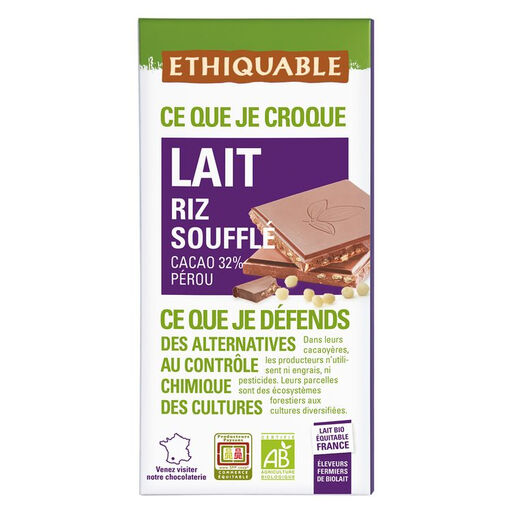 Image unavailable
ETHIQUABLE organic milk chocolate with puffed rice, 100 g
Worth a look if you prefer milk chocolate with puffed rice to dark chocolate. It contains milk; also check for possible traces of nuts and gluten, as well as the sugar content per 100 g. To confirm its organic status, check the information on the packaging.
View on Joybuy
Frequently asked questions
How can you tell if a chocolate bar is organic?
For a pre-packed product of European origin that meets the conditions for using the logo, look for the EU organic logo. Agence Bio says the logo is compulsory in this case. Also check the certifying body’s code and the stated origin of the agricultural ingredients. The AB logo may also appear, but it’s optional.
Is a mini chocolate product always a mini chocolate bar?
No. A mini chocolate cake is still a cake, even if it’s organic and sold in small portions. If you’re looking for a bar you can eat in small amounts, check the product description, then its weight or the weight of each piece if provided.
Does a chocolate bar have to display Nutri-Score?
No. According to the European Commission, nutrition declarations are compulsory for most pre-packed foods, but simplified front-of-pack nutrition labels such as Nutri-Score are voluntary. To compare similar chocolate bars, check the nutritional values per 100 g, whether or not the logo is shown.
Does the French sugary drinks tax apply to chocolate bars?
No. The rates published in the French Public Finance Bulletin apply to the non-alcoholic drinks covered by the levy, not solid chocolate bars. Sugar content is still worth checking in the nutrition table when comparing products.
What should you check before ordering a chocolate bar for collection?
Choose your store, then check the details for the specific product and its packaging information. This lets you confirm which product is available through your chosen collection service, without assuming that the same product is stocked in every store.


