Anyone serving organic treats with coffee
If you’re putting together a plate for several guests, choose between pieces to share and individual portions. Check the organic certification mark on each product and keep allergen information to hand.


For bite-sized pieces to share with coffee, choose a slab of organic chocolate that you can break up. If you’d rather serve a ready-to-go portion, consider a biscuit bar. A protein bar is designed for a different need: it may be worth considering if the protein content matters to you. In every case, check the product’s organic certification, ingredients and allergen information. Organic certification alone doesn’t tell you how much sugar it contains.
If you’re putting together a plate for several guests, choose between pieces to share and individual portions. Check the organic certification mark on each product and keep allergen information to hand.
A slab you can break up is ideal if you’d rather serve a few pieces than a whole bar. For its Ethiquable Noir Pérou, the brand states a minimum of 70% cocoa and a recipe made with cocoa mass, cane sugar and cocoa butter.
If the chocolate is part of a snack rather than simply something to savour, compare the size of the bars, their ingredients and their allergens. The stated protein content applies to that specific product, not to every organic chocolate bar.
First decide how you’d like to serve the chocolate with coffee, then check the label on the product you choose. Organic certification, nutritional information and allergen details each answer different questions.
| What matters | What to check | Who is this for? |
|---|---|---|
| Organic certification | Look for the Euro-leaf or the AB mark on the product you’re buying. The French Ministry of Agriculture describes the Euro-leaf as a mark that identifies products meeting organic regulations. | I want the treat served with coffee to be certified organic, not simply described as “natural”. Around 36% of consumers put this assurance first. |
| Sugars and ingredients | Compare the sugars per 100 g, and per portion if that information is given. Check the ingredients and fat content too. | If I’m serving several treats, I want to compare their sugar content without assuming that an organic recipe contains little sugar. For around 29% of consumers, this is their main consideration. |
| Serving format | Check whether it’s a slab to break up or an individually wrapped bar, as well as the net weight and number of pieces. | When arranging the plate, I’d rather choose how many squares to serve or place a ready-made portion next to the cup. Format comes first for around 21% of consumers. |
| Allergens | Read the ingredients list and any ‘may contain’ statements on each product’s packaging, especially if you’re serving several guests. | If a guest needs to avoid an ingredient, I need to know the exact recipe before serving them chocolate. Around 14% of consumers prioritise this suitability. |
Organic certification relates to regulated production methods, not sugar content. Carrefour France’s product information for its organic milk chocolate biscuit bar states that this specific product contains 34.5844 g of added sugars per 100 g.
Check the organic mark and nutritional information separately. Use the per-100 g values to compare products, then consider the portion you’ll serve.
A whole bar isn’t necessarily the right choice if you’re serving a few squares with coffee. Carrefour France lists 10 g of protein for its 46 g Good Moov organic dark chocolate bar. That figure applies to this product; it’s not an advantage every coffee-and-treat spread needs.
Choose a format that suits the space on your plate, and check the ingredients and allergens in the bar you’re considering.
The recipes featured here contain different allergenic ingredients or may-contain statements. You can’t tell whether a dark, milk or peanut chocolate is suitable for a guest from its name alone.
Keep the packaging to hand and check the allergen information for the product you’re serving.
The brand offers organic, Fairtrade chocolate slabs that you can portion up to serve with coffee.
The products featured here are chocolate bars to consider when a whole bar, rather than a few squares, is the format you want to serve.
The organic milk chocolate biscuit bar featured by Carrefour France comes in an individual format, ready to serve with coffee.
Alter Eco offers a range of dark, milk and flavoured chocolate slabs that you can portion up to serve with coffee.
Bio Village is the organic range featured by E.Leclerc DRIVE. It can be a good starting point when looking for chocolate to serve with coffee.
These chocolate slabs and portions are worth considering with coffee, depending on whether you’d like to share pieces or serve an individual portion. For each product, check the organic certification mark on the packaging before making it a deciding factor.
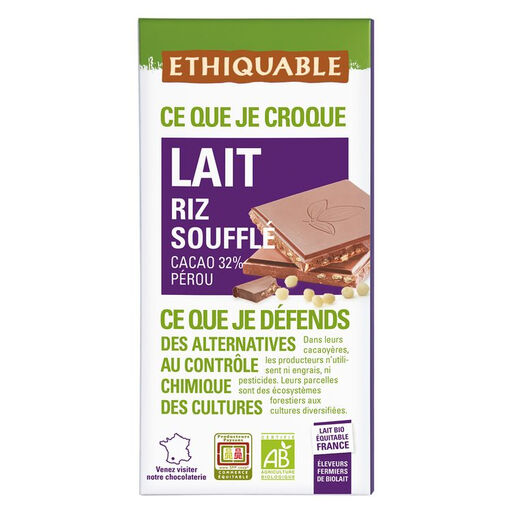 Image unavailable
A slab you can break up if you’d like to choose how many pieces to serve with coffee.
The recipe contains milk. Check the may-contain statements, nutritional information and organic mark on the packaging.
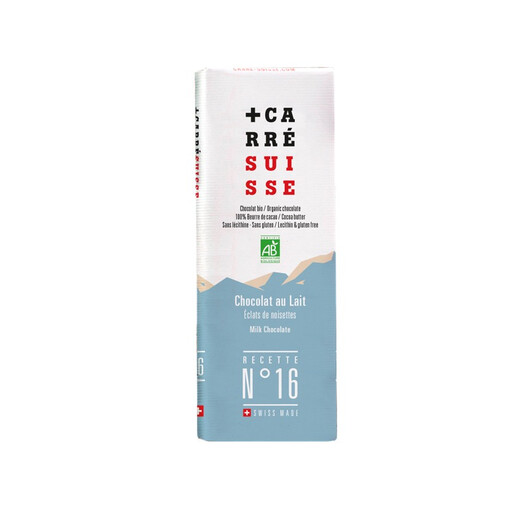 Image unavailable
The 40 g size is a good choice if you’d prefer to serve an individual portion with coffee.
The recipe contains milk and hazelnuts. Check all the allergen information and the organic mark on the packaging.
 Image unavailable
This slab is easy to portion up and suits guests who’d prefer flavoured chocolate to plain dark chocolate.
It combines lemon and green pepper. Check the may-contain statements and organic mark on the packaging.
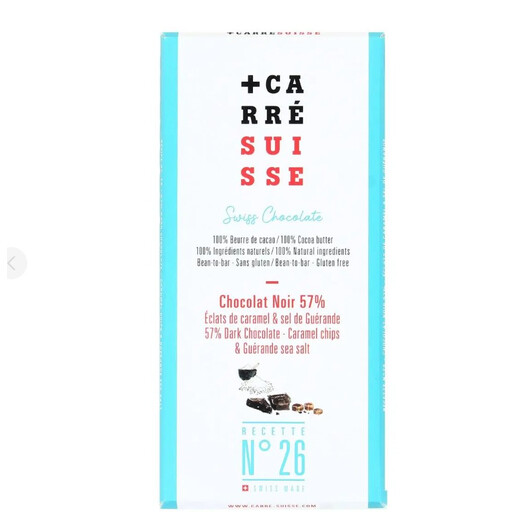 Image unavailable
Choose this sharing slab if you’re after a recipe with caramel and Guérande sea salt to enjoy with coffee.
Check the sugars, allergen information and organic mark for this product on its packaging.
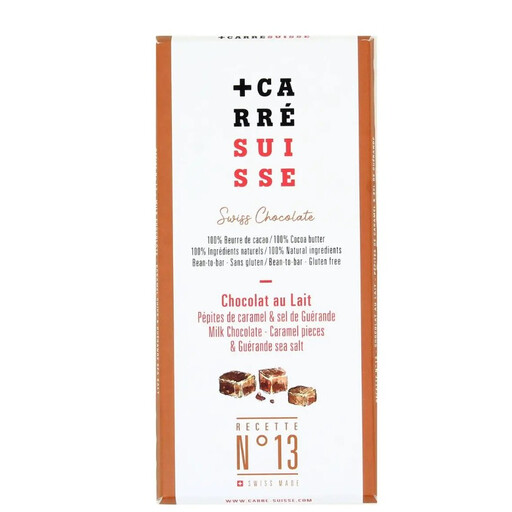 Image unavailable
This portionable slab is a good fit if you like milk chocolate with caramel and Guérande sea salt.
It contains milk ingredients. Check for possible traces, the sugar content and the organic mark on the packaging.
No. The European Commission says that front-of-pack nutrition labelling is not compulsory under current EU rules. The DGCCRF, France’s consumer protection authority, says that prepacked foods must have a nutrition declaration. Read it even if a Nutri-Score is displayed.
No. The French Ministry of the Economy describes this French levy as applying to sugary drinks. To compare chocolate bars, check their nutritional information instead, particularly the ‘of which sugars’ line.
Look for a certification mark on the product you’re buying, such as the EU organic logo, known as the Euro-leaf. The French Ministry of Agriculture says the logo identifies products that meet organic regulations. A term such as ‘natural’ is not a substitute for it.
Check the ingredients, allergens, may-contain statements, weight and nutritional information for each product. The European Commission says mandatory food information must be available before you buy online. When your order arrives, check the packaging again before serving.