Anyone hosting an afternoon get-together
If you want to put a bar in the middle of the table, the net weight matters just as much as the recipe. Alter Eco and Carrefour Bio each offer a 200 g bar. Check the ingredients before choosing one to share.


To serve chocolate squares to a group, first choose a bar whose weight and recipe suit the occasion. Alter Eco and Carrefour Bio both offer 200 g organic bars. If you’re mainly using the chocolate to make a dessert for everyone, look at couverture chocolate instead, as it may not come in a bar designed to be broken into squares. In either case, check the organic certification, allergens and nutritional information for the product you choose.
If you want to put a bar in the middle of the table, the net weight matters just as much as the recipe. Alter Eco and Carrefour Bio each offer a 200 g bar. Check the ingredients before choosing one to share.
To tell a certified organic bar apart from one that simply refers to organic produce, look for the EU organic logo, the code of the control body and details of the origin of the agricultural ingredients. The European Commission regulates the use of this logo.
Before serving a bar to a group, check the allergens in the specific recipe and any warnings about possible traces. An almond bar and a dark chocolate bar may have different information on their packaging.
First decide whether you’ll serve the chocolate in squares or use it in a recipe, then compare the labels of products suited to that purpose.
| What to consider | What to check | Who is it for? |
|---|---|---|
| Sharing format | Check the net weight and the form of the chocolate: a bar to break into squares, pieces or couverture chocolate for cooking. | When I’m serving chocolate straight from the pack to a group, I want to be able to divide it up easily. Around 25 % of consumers rank this sharing format as their top priority. |
| Organic certification | Look for the EU organic logo, the control body’s code and the stated agricultural origin. | When I’m shopping for organic products, I want to be able to identify the bar’s certification rather than rely on its name. This is the main priority for around 31 % of consumers. |
| Sugars and ingredients | Compare sugars and saturated fatty acids per 100 g across similar recipes, and check the ingredients too. | If I’m choosing between several recipes, I want to compare their nutritional information on the same basis. Around 25 % of consumers prioritise this comparison. |
| Allergens | Check the allergens highlighted in the ingredients list, as well as any warnings about possible traces for each product. | Before sharing the bar, I need to know whether the recipe is suitable for everyone present. Allergens are the top priority for around 19 % of consumers. |
Organic certification relates to how a product is made; it doesn’t tell you how much sugar or saturated fat it contains. For example, the product information for Carrefour Bio’s almond bar lists 31,72 g of added sugars per 100 g.
Once you’ve checked the certification, compare the nutritional information per 100 g for the recipes you’re considering.
According to Santé publique France, displaying the Nutri-Score is voluntary. Its absence alone doesn’t tell you what a bar contains.
If it appears on the packaging, use it as an extra guide, but also check the nutrition declaration and ingredients list.
A recipe containing nuts may not be suitable for everyone. Carrefour Bio’s almond bar, for example, contains almonds and hazelnut paste.
Ask about any dietary restrictions, then check the allergens and warnings about possible traces on the specific product.
A larger pack may be intended for baking rather than for serving as chocolate squares.
Check the product format and net weight before choosing it for a dessert to share or to enjoy at the table.
Alter Eco describes its chocolate range as made with ingredients from organic farming. It includes a 200 g dark chocolate bar with whole almonds.
Kaoka offers organic chocolate, including 250 g packs of dark couverture chocolate.
Ethiquable offers organic dark chocolate bars with stated cocoa percentages of 65 %, 70 % or 80 %.
Carrefour Bio offers a 200 g dark chocolate bar with almonds, with information about its recipe and added sugars.
Chocolaterie Castelain offers a 200 g organic dark chocolate bar for desserts, with 70 % cocoa.
These 100 g bars are suitable for enjoying in squares, but they’re smaller than the 200 g examples mentioned for sharing. If organic certification is essential to your purchase, check the EU logo, control code and agricultural origin on the packaging of the product you choose.
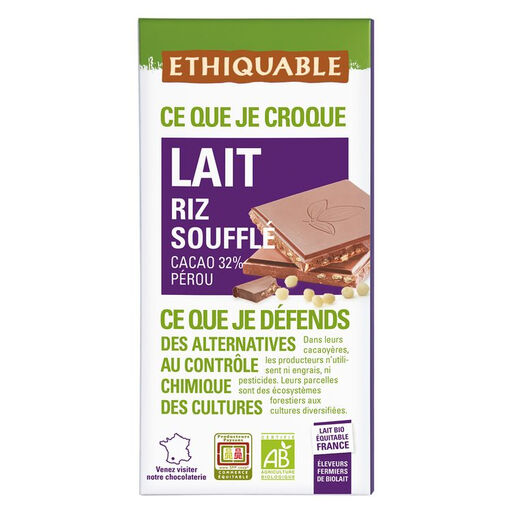 Image unavailable
A bar to break into squares, combining milk chocolate and puffed rice. It weighs 100 g; bear in mind that it contains milk and check for any warnings about possible traces before sharing.
 Image unavailable
This 100 g bar combines dark chocolate, lemon and green pepper, making it a good choice to share if those flavours appeal to everyone. Check the warnings about possible traces if milk, nuts, soya or gluten need to be taken into account.
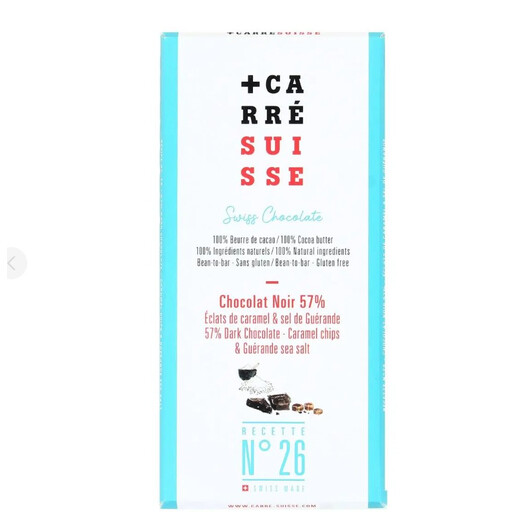 Image unavailable
A 100 g bar to consider if you’d like to share a recipe featuring caramel and Guérande sea salt. Check the caramel ingredients, as well as the warnings about milk and nuts on the packaging.
No. Santé publique France says that displaying it is voluntary. Pre-packed foods generally need to show a nutrition declaration. Use its values per 100 g and the ingredients list to compare bars, whether or not they display a Nutri-Score.
For a pre-packed bar sold as organic in the European Union, look for the EU organic logo, the control body’s code and details of the agricultural origin. According to the European Commission, the logo can only be used if the product meets requirements including having at least 95 % organic ingredients.
No. Organic certification alone doesn’t tell you which allergens a product contains. Check the allergens highlighted in the ingredients list and any warnings about possible traces for the specific product you plan to serve.